
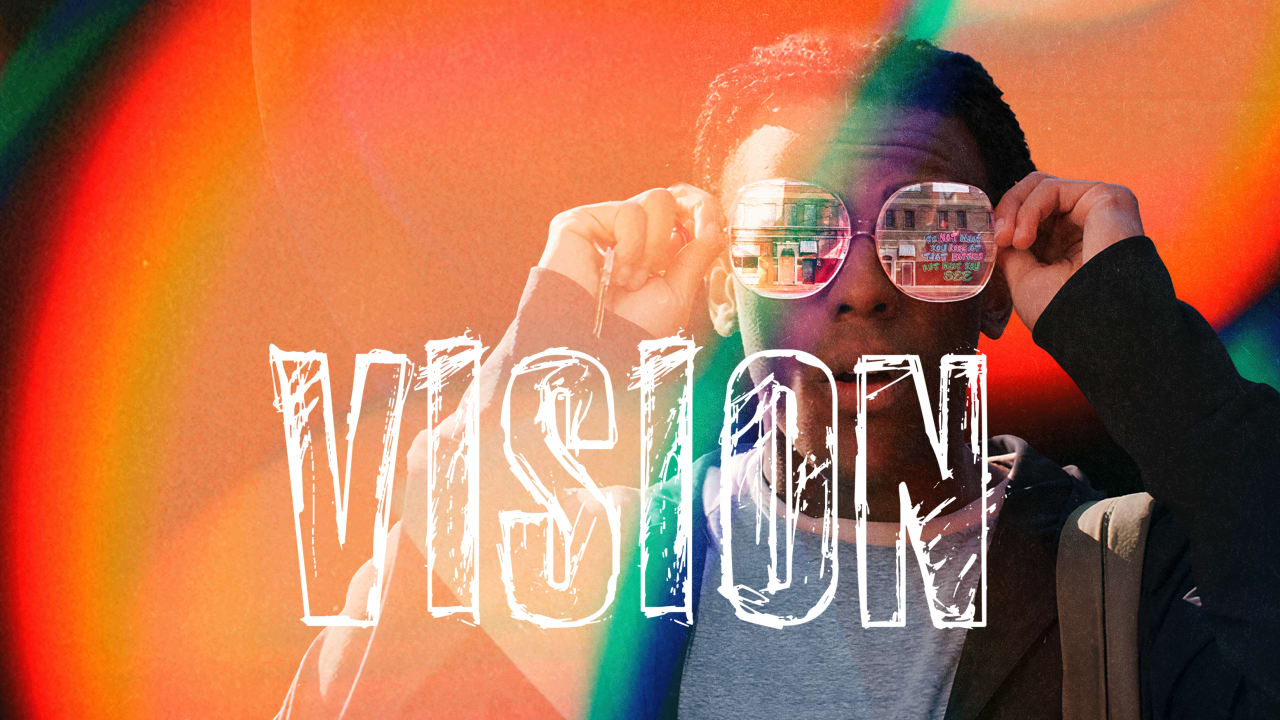
Vision
SHOW TYPE

MOVIE
SHOW LENGTH

PROTECTION

RELEASED


Louis is a 17-year-old visual artist from an under-resourced community. A mysterious man gives him a pair of eye-opening sunglasses but how will he use this newfound vision?
Vision is more than just a film.
It is a 20 minute conversation starter in story form meant to inspire individuals and communities to improve neighborhoods challenged with poverty, homelessness, and disinvestment.

Community rank — quality, not a gate. Low scores stay in the catalog.
Report a mistake
Same rule as woke labels: one report, a written reason, and the community +1 or −1 it — once per member. A net +5 applies the change. Editors can also apply it immediately.
No mistake reports yet.
Sign in to report a mistake. One report per field, per member.
Woke labels
Members can file a published criterion and itemized evidence. Other members +1 or −1 that reason — once. If 10% of members who weighed in file a label, and a reason reaches net +5, that rank keeps the title omitted from the database. Weak labels do not.
No labels filed yet.
Comments and reviews
June Pell
+1 cloutSep 2, 2026
I rewound the sunglasses. (I know. It's a twenty-minute movie and I still rewound.) Louis is seventeen and he draws. North St. Louis, or a street that wants to be. A blind older man named Elijah — that name is doing a lot, I said that out loud to the empty room — hands him a pair of glasses that are supposed to let him see what the neighborhood could be instead of what it is. It sounds like a pamphlet. Then the movie is short enough that it doesn't have time to become one, which is a trick I didn't expect to work. I got stuck on the handoff. Elijah's hands. The glasses are a little ridiculous, rose-colored on purpose, a joke the film is in on and also not. Louis puts them on and the block doesn't turn into a cartoon. It just looks attended-to. (I have been trying to write that sentence for ten minutes. Attended-to. Anyway.) They tell you up front it's a conversation starter. I usually hate being told that. Here it felt like somebody who actually makes things in a neighborhood got twenty minutes and didn't waste them on a villain. Poverty is the weather. Not a twist. There's a mural, or the idea of a mural, and I paused because I wanted the paint to be real paint. I think it was. I am a little scattered about the ending. It lands on hope the way short films land on hope, which is to say they have to, because there isn't a second hour to complicate it. I didn't mind. I minded the voice that creeps in, the one that wants to make sure I got it. I got it. Louis can see. Now what. The "now what" is the part I'd watch a feature of, and they didn't make that. Would I show it to someone. Yes, with the disclaimer that it's twenty minutes and a pair of glasses, and if they scoff I would rewind the handoff again and not explain it. (I already explained it. Sorry.)