



 MOVIE · 2019
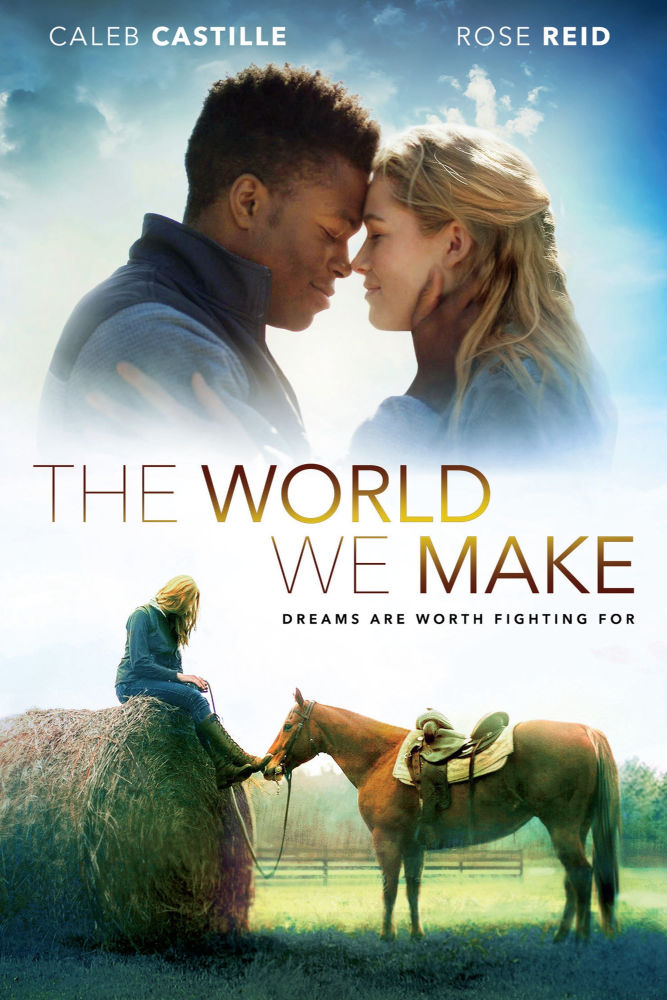
World We Make
Lee Grove, an 18-year-old spirited equestrian, and Jordan Bishop, an academic achiever and football standout, are poised to build a future together after high school.
As they navigate their relationship, they encounter unforeseen challenges when racial prejudices emerge within their seemingly progressive small town.
The couple must confront these biases, testing their bond and resilience as they strive to overcome societal obstacles and pursue their shared dreams.
Click any of the following icons below to rent or stream it!
Oops! Is this show WOKE?
Only an account holder or member can file. Cite a scene, a line, or a pattern. Other account holders +1 or −1 that argument, once each. The show is not WOKE until enough of them have given a +1. Enough −1s remove the write-up, and it is no longer shown.
Sign in to file a woke label. One of each criterion per member.
Comments and reviews
Report a mistake
Same rule as woke labels: one report, a written reason, and the community +1 or −1 it — once per member. A net +5 applies the change. Editors can hold it for review, or apply it immediately.
No mistake reports yet.
Sign in to report a mistake. One report per field, per member.
Member review
June Pell Member
Oct 7, 2026
★★★★★★★★★★World We Make sat on my list for a while before I finally put it on. I went in knowing the broad outline: two teenagers, one who lives for horses and one who lives for football, dealing with a sudden loss and then trying to sketch out a future while the place they grew up starts showing a colder face. That setup is simple enough that it shouldn’t need much dressing, and for stretches the film trusts it. Lee and Jordan feel like kids who already know each other’s rhythms, the kind of pair that finishes sentences in the barn or on the sidelines without making a big show of it. The early scenes after the tragedy stay quiet in a way I appreciated. Nobody launches into speeches. They just keep showing up for practice and for each other, which feels more honest than a lot of movies manage when grief is the starting gun.
I kept thinking about how much of young adulthood is just logistics dressed up as destiny. You finish school, you chase the sport that still has a clock on it, you try to decide whether the hometown is a soft landing or a trap. The movie gets that texture right in the middle stretch. Lee’s time in the ring has a real weight to it; you can tell the production spent time around actual horses and riders instead of just grabbing pretty shots. Jordan’s football life carries the usual local-hero pressure, the sense that every game is being watched by people who already decided what he owes them. When the two of them start talking about a shared plan, it lands because the film has already shown the separate worlds they move through. That part worked for me.
Where it loosens its grip is once the town’s attitudes come into clearer view. I don’t mind a story that wants to look at prejudice; small communities can close ranks in ugly ways, and pretending otherwise is its own kind of lie. But the shift here sometimes feels announced rather than discovered. A look here, a remark there, and suddenly the charming main street is doing double duty as a moral obstacle course. A few of those moments have bite. Others play like the script remembered it had a thesis and needed to underline it before the next act. I found myself wishing the film had trusted the couple’s private calculations more and the community’s public ones a little less. When Lee and Jordan are alone, deciding what they can live with, the movie has a pulse. When it cuts to another chilly reception or loaded silence, it starts to feel like it’s checking boxes it already checked.
There’s a side path I kept wandering down while watching. I grew up around people who treated sports and animals as serious work, not hobbies, and I know how quickly a town can rewrite your story once you step outside the expected lines. That personal echo made some scenes sting in a good way. At the same time, it made the broader strokes feel thinner by comparison. Real prejudice is often quieter and more bureaucratic than cinematic; it shows up in who gets the internship, who gets the knowing nod at the diner, who suddenly hears that “maybe this isn’t the right fit.” The film gestures at that, then reaches for cleaner confrontations. I didn’t hate the choice. I just noticed the difference between the lived-in parts and the constructed ones.
Performances hold it together more than the plotting does. The two leads sell the comfort and the strain without overselling either. Supporting players mostly stay in their lanes; a couple of parents and coaches get enough room to feel like people instead of positions. Technically it’s fine—clean enough photography, sound that doesn’t fight the dialogue, an edit that keeps the sports sequences from turning into highlight reels. Nothing flashy, which suits the material.
I landed at three stars because the movie earns its quieter half and then spends the rest of its runtime reminding you what it’s about instead of letting you sit with it. There’s a version of this story that stays closer to the barn and the practice field and still says everything it needs to say about belonging and the cost of wanting more. This version reaches for the larger statement and sometimes overshoots. I still finished it, still thought about the pair the next day, still respected the decision to keep the romance grounded in shared routine rather than grand gestures. That counts for something. It just doesn’t quite carry the whole weight the film asks it to. If you’re curious about the premise, it’s worth an evening. Just don’t expect the second half to surprise you the way the first half settles in.