
Find a mistake?
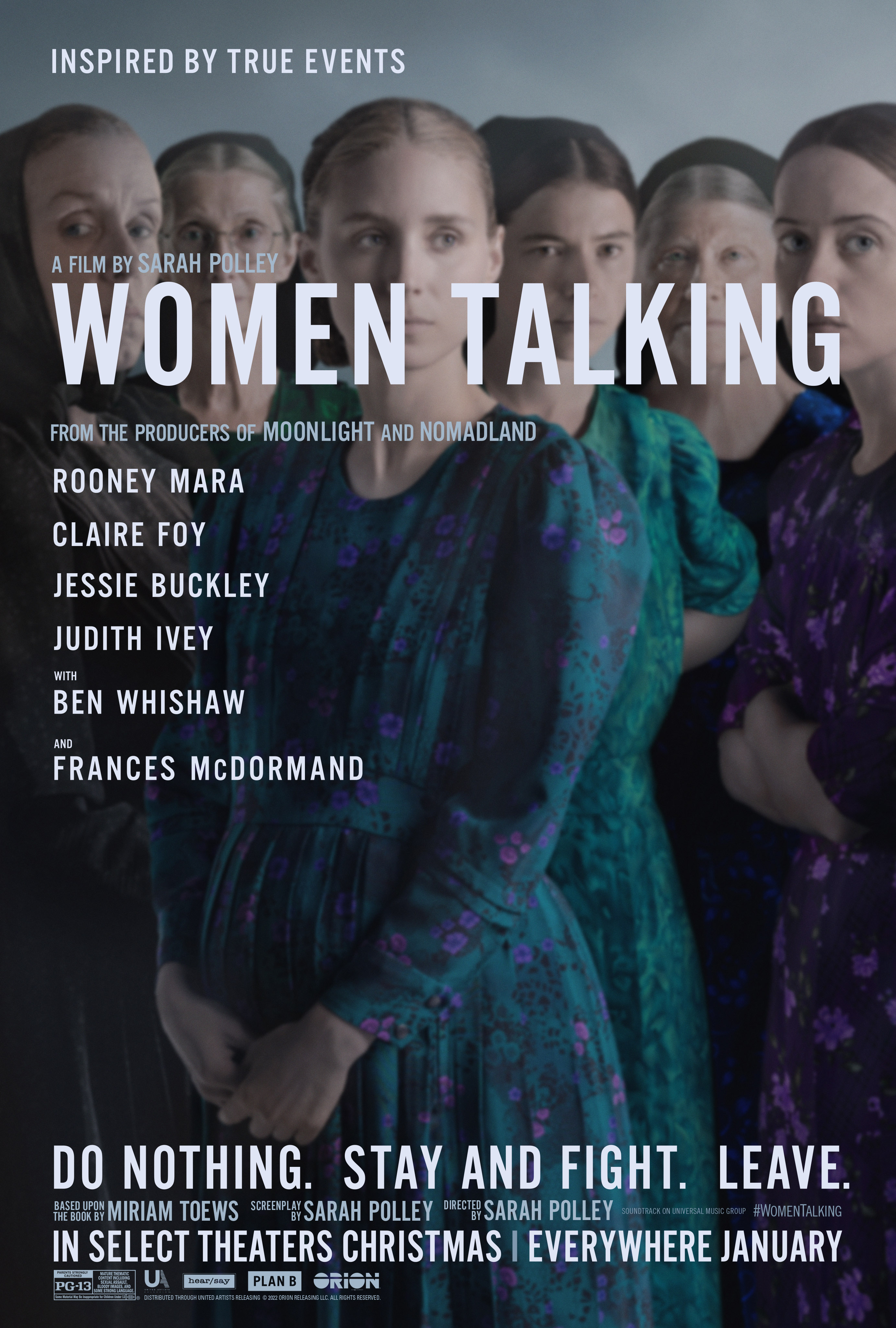


 MOVIE · 2022
Women Talking IS WOKE
–
Not ratedCommunity rating
Label it
IS WOKE
No summary on file yet. Know this one? Tell us.
WHAT CRITERIA MAKES IT WOKE?




Oops! Is this show WOKE?
Only an account holder or member can file. Cite a scene, a line, or a pattern. Other account holders +1 or −1 that argument, once each. The show is not WOKE until enough of them have given a +1. Enough −1s remove the write-up, and it is no longer shown.
Sign in to file a woke label. One of each criterion per member.
Comments and reviews
Report a mistake
Same rule as woke labels: one report, a written reason, and the community +1 or −1 it — once per member. A net +5 applies the change. Editors can hold it for review, or apply it immediately.
No mistake reports yet.
Sign in to report a mistake. One report per field, per member.
Member review
Toni Briggs Member
Sep 19, 2026
★★★★★★★★★★Women Talking sat with me longer than a lot of louder movies do, which is odd because almost nothing happens on screen except conversation in a barn. That is not an insult. The premise is heavy for a reason. In this closed religious colony the women and girls have been waking up injured and bleeding, told it was demons or their own hysteria, until it becomes clear that some of the men have been drugging them with animal tranquilizer and assaulting them in their sleep. The men are gone for a short window, and the women gather to vote on three options: stay silent and endure, stay and demand something different, or leave the only life they have ever known.
I landed at 3.5 because the performances do real work. Claire Foy, Rooney Mara, and Jessie Buckley keep the arguments from turning into pure lectures most of the time. You feel how little these women know of the outside world. Some can barely read. Money, maps, the idea of walking away from everything that has defined goodness and safety for them—it is not a simple exit. The movie is strongest when it lets that terror and practical ignorance sit in the room. Leaving is not framed as an automatic victory lap. That restraint matters.
Where it starts to thin out is how neatly the deck gets stacked. The men are mostly an off-screen force of pure harm. I get that the point is the women’s deliberation, but it makes the moral math easier than it should be. Specific men did specific evil things inside a particular closed system; treating manhood itself as the hovering threat flattens the problem. Ordinary male presence becomes the root rather than the actual criminals and the community structures that protected them. That choice keeps the talk clean and the conclusions cleaner than life usually allows.
The faith piece lands in a similar way. These women quote scripture about forgiveness, submission, and divine justice, and the film mostly lets those verses sound like the bars of a cage. I am not defending the assaults or the cover-ups. Those are indefensible. But the movie leans hard into the idea that the religious teaching itself is what keeps them obedient and quiet, almost as if sincere belief and the capacity for moral clarity cannot exist in the same person. I have known people in strict communities who are not cartoon bigots and who still wrestle with hard texts without becoming monsters. The broad brush here bothers me. It makes Christianity feel like a costume the story puts on the problem rather than a complicated force some of these characters might actually love and fear at the same time.
Even so, the central question holds: what do you owe your daughters when the place you were taught was holy is also the place that keeps breaking them? A few of the quieter exchanges between the older women and the younger ones carry real weight. The fear of the void outside the colony walls feels honest. Ben Whishaw’s character, the one man allowed into the barn to take notes, is gentle and useful to the plot, but he never quite becomes a full person either. He exists to facilitate and to soften the edges.
Visually it is spare, almost theatrical, which fits the barn and the limited time frame. After a while the static quality starts to work against it. I wanted more of the texture of daily colony life beyond the trauma—the work, the small comforts, the habits that made the place feel like home even while it was dangerous. Without that, the decision to leave or stay risks becoming more abstract than it should. The film knows the emotional destination it wants and mostly arrives there without many surprises. You can feel the hand on the scale.
I respect the craft and the seriousness. It does not turn the assaults into cheap spectacle, and the actresses commit fully. At the same time it never quite trusts the audience to sit with messier versions of faith, manhood, or community loyalty. Everything resolves toward the expected moral clarity. That is why 3.5 feels right to me—solid, often gripping, but not as searching as the subject deserves. It is a movie that talks well about freedom and protection while remaining a little too sure of its own answers. I walked away thinking about the women and the impossible clock they were under, and also wishing the story had left a few more doors cracked open instead of closing them so firmly for us.