



 MOVIE · 2024
Woman of the Hour IS WOKE
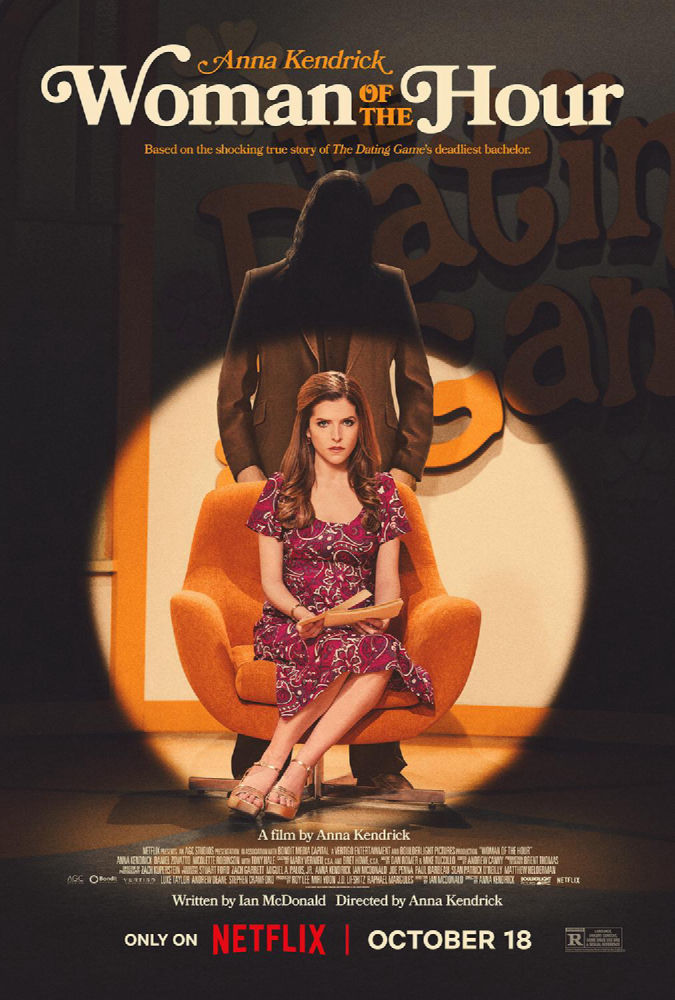
Sheryl Bradshaw, a single woman looking for a suitor on a hit 1970s TV show, chooses charming bachelor Rodney Alcala, unaware that, behind the man's gentle facade, he hides a deadly secret.
WHAT CRITERIA MAKES IT WOKE?



Oops! Is this show WOKE?
Only an account holder or member can file. Cite a scene, a line, or a pattern. Other account holders +1 or −1 that argument, once each. The show is not WOKE until enough of them have given a +1. Enough −1s remove the write-up, and it is no longer shown.
Sign in to file a woke label. One of each criterion per member.
Comments and reviews
Report a mistake
Same rule as woke labels: one report, a written reason, and the community +1 or −1 it — once per member. A net +5 applies the change. Editors can hold it for review, or apply it immediately.
No mistake reports yet.
Sign in to report a mistake. One report per field, per member.
Member review
Lila Marsh Member
Sep 20, 2026
★★★★★★★★★★Woman of the Hour sat with me longer than I expected, which is saying something for a true-crime piece I almost skipped. I went in knowing the broad outline—Sheryl Bradshaw on that 1970s dating show, the charming guy she picks, the name Rodney Alcala attached to something far worse—and still the movie found ways to keep the dread quiet instead of loud. Anna Kendrick directed this and also plays Sheryl, and you can feel both jobs in the way the camera hangs back. It doesn’t rush to the horror. It lets the studio lights and the forced smiles do a lot of the work first.
The dating-show sections have this thin, cheerful coating that starts to feel wrong almost immediately. Sheryl is there hoping for something ordinary, a decent man, a date that might turn into more. The bachelors answer the usual soft questions. Alcala comes off cultured and gentle. She chooses him. The show arranges the outing. Nothing in that stretch is played for cheap shocks, and that restraint is what makes it land. You sit there watching two people banter under bright lights and you already know the real man behind the smile, so every polite laugh has weight. Kendrick doesn’t overplay Sheryl’s unease. She just lets small instincts flicker and then get talked down, the way they often do when you’re trying to be a good sport on camera.
What I appreciated most is how the film handles the violence without turning it into spectacle. True crime loves to linger on the worst details like they’re entertainment. This one keeps the focus on the texture of ordinary risk instead. The aspects related to misogyny and violence, and how women deal with strange men, sit right under the surface. You watch Sheryl prepare for the off-camera meeting and the movie cuts away to other pieces of Alcala’s life, and the contrast does the heavy lifting. It never needs a speech about danger. The danger is already in the room every time a woman has to decide whether a soft-spoken stranger is safe. That choice—to stay demure about the exploitation rather than recreate it—feels deliberate and adult. A first-time director could have gone louder. She didn’t.
I won’t pretend every stretch moves at the same pace. There are slower passages where the film trusts silence and reaction shots, and those moments sometimes thin out. A couple of the side threads feel more sketched than fully built. Still, even the quieter scenes carry a low hum of threat that keeps you from drifting. It packs a punch when you least expect it, not with jump scares but with the simple fact of what this man was and how easily a public game show handed him a platform and a date. Knowing the real story afterward only sharpens that. Alcala wasn’t a cartoon monster on screen; he was the guy who knew how to answer the light questions.
Kendrick’s performance stays grounded. Sheryl wants to be seen, wants a shot at something better, and the movie never mocks that. She’s not a symbol and she’s not a superhero. She’s a woman calculating charm against gut feeling in real time, under pressure to be pleasant. That feels honest. The direction matches it—clean framing, no flashy tricks, just enough period texture to place you in the decade without turning the whole thing into costume cosplay. You get the sense that the point wasn’t to reenact every grim detail but to sit inside the ordinary hours that led up to them.
I keep coming back to how little the film needs to shout. A lot of recent true-crime adaptations chase a kind of performative justice, wrapping the story in music cues and moral signposts so the audience knows exactly when to feel righteous. Woman of the Hour mostly refuses that. It shows the game-show cheer, the polite date setup, the private aftermath, and lets the gap between those things do the talking. That gap is where the unease lives. You leave thinking about how many small social scripts ask women to override their own caution, and how a man who understands those scripts can move through them without raising an alarm until it’s too late.
Is it perfect? No. Some connective tissue between the timelines could have been tighter, and a few supporting faces blur together. At roughly the length it runs, it still finds room for a couple of beats that feel more dutiful than necessary. But the core stays clear-eyed. It treats the material as heavy and sad without turning the audience into tourists. I rated it 3.5 because the craft and the restraint are real, the central performances hold, and the movie understands that the scariest part isn’t always the violence itself—it’s the ordinary doorway that led there. If you already know Alcala’s history, you’ll feel the chill earlier. If you don’t, the film still works as a tightly held piece about charm, instinct, and the cost of second-guessing yourself in front of strangers. Either way, it earns the look it gives you when the credits roll. Not a casual night movie. A solid, thoughtful one that knows when to stop explaining.