
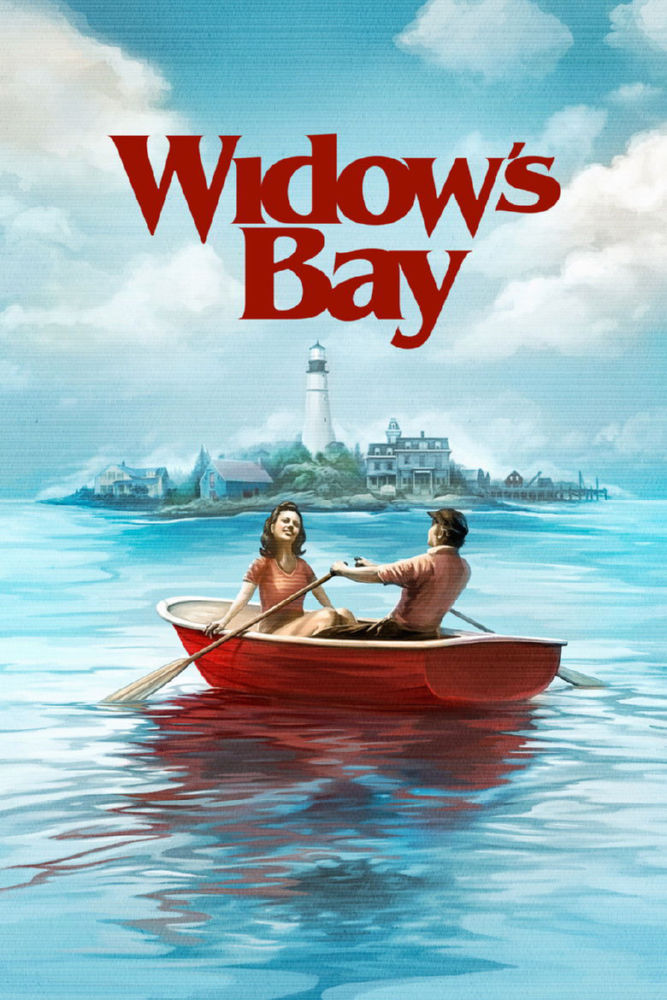



 TV · 2026
Widow’s Bay
A skeptical mayor leads the superstitious residents of a cursed New England island.
Set on a remote and fictional New England island, the Apple TV+ series Widow’s Bay follows Tom Loftis (played by Matthew Rhys), a skeptical, mainland-born widower who serves as the town’s well-meaning mayor. In an effort to revitalize the isolated community, Tom launches a high-stakes tourism initiative and tries to suppress local folklore regarding a centuries-old curse. However, his plans quickly derail when a glowing travel piece brings in visitors, triggering a wave of terrifying supernatural phenomena—including devouring mists, a malevolent sea hag, and a reanimated 18th-century founder. Alongside his eccentric assistant Patricia and a crusty mariner named Wyck, Tom is forced to confront the island’s dark history to protect both the tourists and the locals.
As the season builds toward its chaotic climax, the town’s horrific reality is laid bare: generations of islanders have secretly maintained a colonial-era covenant by sacrificing citizens to an ancient entity underneath the island whenever the church bell tolls. In the gripping finale, Tom attempts to break the curse by poisoning an elder named Ruth, whom he believes to be the final living descendant of the island’s founder. Instead, a heavily drugged Ruth reveals that she was actually the secret biological mother of Tom’s late wife, making Tom’s own teenage son, Evan, the true final descendant. Though an accidental sacrifice brings a temporary end to a raging storm, Tom chooses to keep Evan’s lineage a dark secret to protect his life, even as the church bell tolls eight more times to demand a fresh round of blood.
Creator: Matthew Rhys, Kate O’Flynn · IMDb
Click any of the following icons below to rent or stream it!
Oops! Is this show WOKE?
Only an account holder or member can file. Cite a scene, a line, or a pattern. Other account holders +1 or −1 that argument, once each. The show is not WOKE until enough of them have given a +1. Enough −1s remove the write-up, and it is no longer shown.
Sign in to file a woke label. One of each criterion per member.
Comments and reviews
Report a mistake
Same rule as woke labels: one report, a written reason, and the community +1 or −1 it — once per member. A net +5 applies the change. Editors can hold it for review, or apply it immediately.
No mistake reports yet.
Sign in to report a mistake. One report per field, per member.
Member review
Ray Okonkwo Member
Oct 19, 2026
★★★★★★★★★★Widow’s Bay got me because it doesn’t pretend the mayor is some genius outsider fixing backward locals. Tom Loftis shows up as a mainland widower who just wants the island to pay its bills, and Matthew Rhys plays that without the usual eye-rolling superiority. He launches the tourism push like any practical guy would—ads, glowing write-ups, ferry schedules—and you watch the whole plan buckle the second the visitors arrive and the old stories stop being stories.
There’s a stretch early on where the mist rolls in off the water and starts swallowing people in this quiet, almost polite way. No big orchestral sting, just the fog thickening and a tourist’s flashlight beam going out. Tom’s standing on the dock with Patricia, his assistant who keeps a notebook full of every superstition the town still whispers, and he keeps insisting it’s weather until the light simply vanishes. That beat stuck with me longer than the later set pieces. Rhys sells the moment by not overplaying the panic; he’s annoyed first, then scared, the way a real administrator would be when his revitalization project turns into a missing-persons problem.
Patricia herself is the quiet engine. She’s not the quirky sidekick who spouts lore for exposition. She just knows the island’s habits and keeps offering Tom the practical version of the old warnings—“don’t let them walk the north beach after dark, the hag takes the ones who sing”—and he keeps brushing her off until he can’t. Their office scenes have this dry rhythm where she’s already three steps ahead and he’s still trying to write a press release that doesn’t mention curses. I liked that the show lets her be competent without turning her into the secret hero who has to teach the man how to feel.
Wyck, the mariner, is pure salt and skepticism of a different flavor. He’s lived with the stories his whole life and treats them like bad weather you prepare for. There’s a night sequence on his boat where the water goes black and something big moves underneath, and instead of monologuing about ancient evil he just cuts the engine and tells Tom to shut up so he can listen. Small choice, but it makes the supernatural feel local instead of imported from a bigger studio checklist. When the 18th-century founder finally shows up reanimated and half-rotted, Wyck’s reaction is basically “yeah, he always was a bastard,” which undercuts any temptation to turn the whole thing into solemn mythology.
The sea hag sequence in the middle of the season is the one that almost tipped me over into full love. She’s not a jump-scare monster; she rises out of the surf during a poorly planned bonfire the tourism board organized, and the way the firelight hits her is more sad than terrifying at first. Then she starts calling people by names that haven’t been used in two hundred years, and the tourists who answered the travel piece start walking into the water like they’re late for something. Tom ends up waist-deep trying to haul a teenager back, and you can see him realizing the folklore wasn’t a branding problem—it was the operating system of the place. The show doesn’t lecture him for being wrong; it just lets the consequence sit there.
I do wish the later episodes didn’t lean quite so hard on the “everyone must believe or die” escalation. Once the curse is fully active, some of the townsfolk become walking cautionary signs, and the dialogue gets a little neat about faith versus reason. Still, the core triangle of Tom, Patricia, and Wyck keeps it grounded. They argue about whether to cancel the remaining ferry bookings or double down and sell “curse tours,” and those arguments feel like actual small-town politics mixed with genuine dread. Rhys never turns Tom into a convert who suddenly loves the old ways; he just becomes a man who has to protect people from something he still half-thinks is mass hysteria.
The island itself is shot like a real place that happens to be wrong. Fog banks that move against the wind, church bells that ring when nobody pulled the rope, tide lines that leave fish with human teeth. None of it feels designed for a trailer. It’s the kind of atmosphere that makes you check the windows after you turn the episode off. I rated it four because the central performances and the best set pieces carry the weaker mythology dumps, and because it never mistakes skepticism for stupidity or belief for purity. Tom’s still the mayor trying to keep the lights on; the curse is just another unpaid bill that keeps coming due. If the second season keeps that balance instead of turning every local into a prophet, I’ll be back for it. For now it’s a solid, uneasy watch that trusts its lead to look foolish and still stay likable while the water rises.