



 TV · 2026
Unbreakable Humans
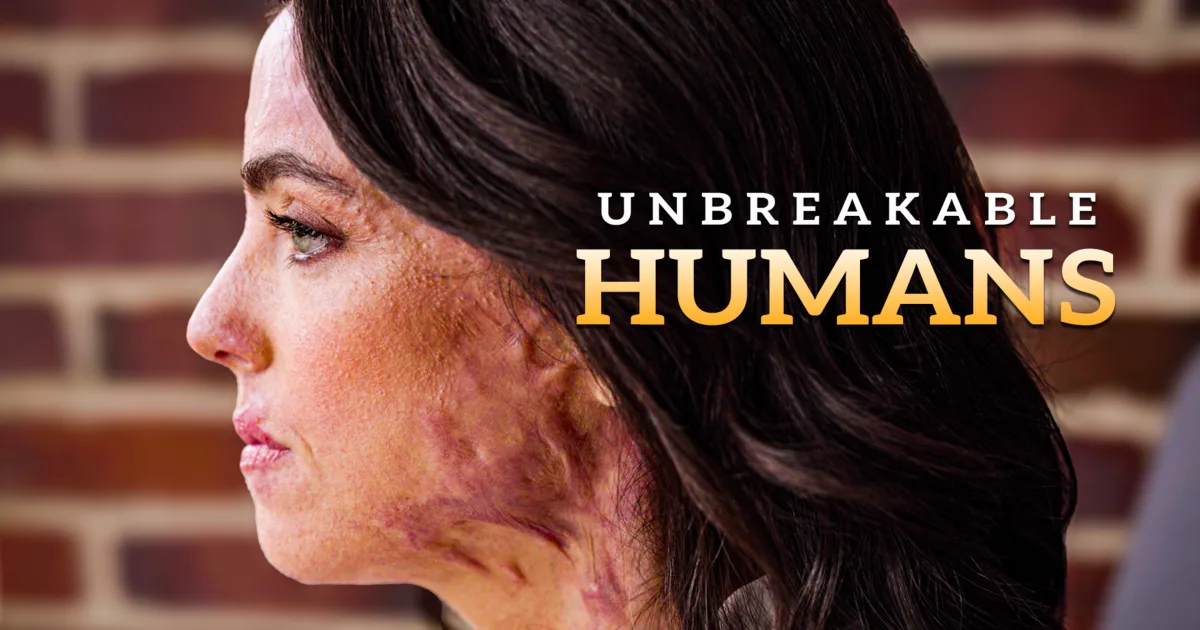
People who refuse defeat rebuild after life collapses and discover an inner fire of divine potential that makes them unbreakable. The series profiles unique individuals rising from personal ashes into renewed strength.
Unbreakable Humans follows extraordinary men and women who confront plans that fall apart and choose to reinvent themselves rather than surrender. Each subject faces a crushing setback that strips away former certainty, then begins the slow work of reconstruction. Along the way an interior shift occurs: they locate a deeper power described as a soul full of divine potential. The camera stays with these individuals as ordinary endurance turns into something larger. Moments of quiet resolve and sudden clarity mark the passage from brokenness toward a new foundation. Their stories illustrate the claim that a fire exists inside every person ready to reject defeat.
Later segments show the same people taking concrete steps to rebuild careers, relationships, and daily purpose after the initial crisis. They test new habits, lean on unexpected allies, and gradually reclaim agency over their circumstances. What begins as survival becomes participation in what the series calls the miracle of becoming. Viewers watch them move from isolation into renewed connection and from despair into deliberate action. The narrative stays grounded in these personal arcs without detouring into lectures or external agendas. By the close, the profiled humans stand as living proof of the unbreakable spirit the title names.
Oops! Is this show WOKE?
Only an account holder or member can file. Cite a scene, a line, or a pattern. Other account holders +1 or −1 that argument, once each. The show is not WOKE until enough of them have given a +1. Enough −1s remove the write-up, and it is no longer shown.
Sign in to file a woke label. One of each criterion per member.
Comments and reviews
Report a mistake
Same rule as woke labels: one report, a written reason, and the community +1 or −1 it — once per member. A net +5 applies the change. Editors can hold it for review, or apply it immediately.
No mistake reports yet.
Sign in to report a mistake. One report per field, per member.
Member review
Becky Soto Member
Oct 19, 2026
★★★★★★★★★★Unbreakable Humans caught me off guard in the best way. I went in expecting another round of polished inspiration stories, the kind that smile at the camera and move on, and instead found something quieter and more stubborn. The series sticks with people after the collapse has already happened, when the plans are gone and the old self does not fit anymore. That patience is what sold me.
One beat that has stayed with me belongs to a woman whose entire professional identity disappeared almost overnight. The episode does not rush her into a triumphant montage. You watch her sit at a kitchen table at odd hours, sorting through papers that no longer mean anything, then later catching herself humming while she works a job she never planned to take. Nothing dramatic happens in that sequence. No speech. Just the slow recognition that she still has a center that the loss could not touch. I kept thinking about that scene days later because it felt honest about how rebuilding actually starts, in small private decisions rather than big declarations.
The show’s central idea is that there is a fire inside people, something it calls divine potential, and that this fire becomes visible only after everything else has been stripped away. I am not usually drawn to language like that, but the way the series handles it feels grounded. It never turns the subjects into saints or slogans. You see the friction, the days they almost quit, the awkward conversations with family who still want the old version of them. Then you see the shift when they stop treating the setback as the final word. That interior change is filmed without flashy music cues or forced tears. The camera just stays long enough for you to notice the difference in how someone carries themselves.
What I appreciated most is the refusal to treat endurance as a personality type that only certain people possess. These are ordinary men and women who simply decided not to stay down. One man loses the business he built over decades and ends up mentoring younger workers in a completely different field. Another person walks away from a public role that had defined her and finds a quieter kind of usefulness that turns out to matter more. The series lets each story breathe on its own terms. You get the sense that the producers trusted the material enough not to dress it up with clever editing tricks or heavy narration telling you how to feel.
I liked that faith and inner life are allowed to surface without being treated as embarrassing or secondary. When someone speaks about a deeper power that carried them through the worst stretch, the show does not cut away or undercut it with irony. It simply records the claim and moves forward. That restraint makes the moments land harder. You are left to decide for yourself whether you recognize that same fire. For me it felt refreshing to watch people rebuild without being handed a political script or a list of approved grievances. The focus stays on personal responsibility and the stubborn decision to keep going.
There are stretches where the pacing slows more than some viewers will enjoy. A couple of episodes linger on the early days of the collapse longer than necessary, and I found myself wanting the reconstruction phase to arrive sooner. Still, even those quieter hours serve a purpose. They make the later clarity feel earned rather than manufactured. You understand why the subjects treasure the small victories once they start appearing.
I also noticed how the series treats strength as something that can look different on different people. For one man it is physical labor and routine. For a woman it is the decision to speak plainly about what she lost and what she will not lose again. Nobody is asked to shrink so someone else can look larger. That balance felt natural rather than engineered. The people on screen remain themselves, flaws and all, while they grow into something sturdier.
By the time I finished the season I kept returning to that kitchen-table scene and others like it. They reminded me that collapse is not the end of the story unless you decide it is. The show never pretends the process is neat or fast. It simply shows people locating a steadiness they did not know they carried and then building from there. I walked away feeling a little more hopeful about ordinary human capacity, which is rarer than it should be in television right now.
If you are tired of stories that celebrate brokenness as an identity and never move past it, this series offers a different path. It is not perfect. Some episodes could tighten their middle sections. A few of the interviews lean on familiar recovery language. Yet the core remains solid: people who refuse defeat, who discover they contain more than the disaster that hit them, and who quietly become unbreakable in the process. I am glad I spent the time with it, and I expect I will return to certain episodes when I need the reminder that starting over is still possible.