



 TV · 2025
Truth and Treason Series
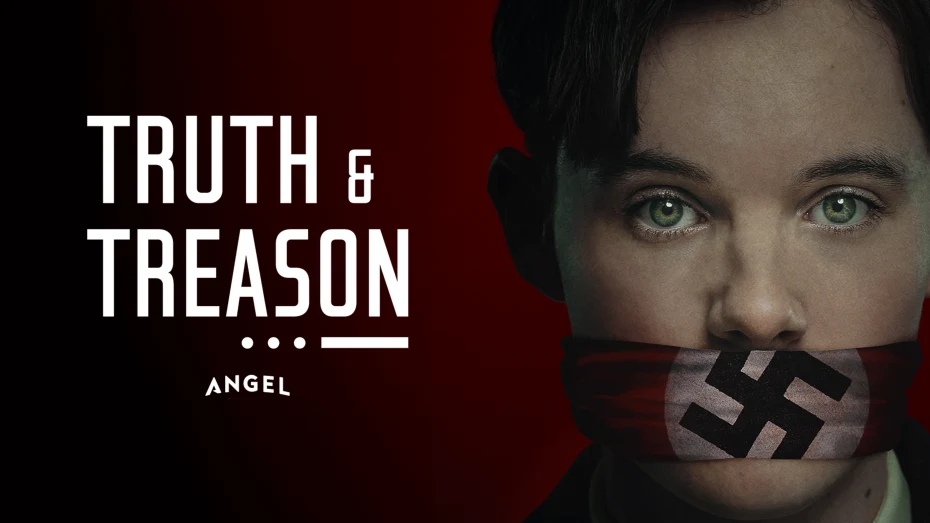
A Hamburg teenager risks everything to expose Nazi lies through underground leaflets while the Gestapo closes in. The four-part series expands the film’s account of conscience under a totalitarian regime.
Truth and Treason follows Helmuth Hübener, a sharp-minded German teen living under Nazi rule who begins to doubt the regime’s official story. After secretly listening to forbidden foreign broadcasts, he learns how thoroughly propaganda has twisted news of the war and daily life. Helmuth drafts blunt leaflets that name the lies and urge ordinary citizens to think for themselves, then enlists trusted friends to help copy and scatter them across the city. Each drop raises the chance of discovery as neighbors grow wary and authorities hunt for the source. The series tracks his resolve as loyalty to truth collides with the demand to be a “good German,” and as the circle of risk tightens around his family and co-conspirators.
As the leaflets spread, the Gestapo intensifies house searches and interrogations, forcing Helmuth to weigh silence against the cost of speaking out. His closest allies face their own choices when suspicion falls on the group and arrests become inevitable. Court proceedings and prison walls test what courage and faith mean when the state claims absolute moral authority. The later episodes stay with the consequences for Helmuth and those who stood with him, showing how a small act of defiance ripples through friendships, church ties, and a city living in fear. The narrative closes on the human price of refusing a lie rather than on slogans or tidy victory.
Click any of the following icons below to rent or stream it!
Oops! Is this show WOKE?
Only an account holder or member can file. Cite a scene, a line, or a pattern. Other account holders +1 or −1 that argument, once each. The show is not WOKE until enough of them have given a +1. Enough −1s remove the write-up, and it is no longer shown.
Sign in to file a woke label. One of each criterion per member.
Comments and reviews
Report a mistake
Same rule as woke labels: one report, a written reason, and the community +1 or −1 it — once per member. A net +5 applies the change. Editors can hold it for review, or apply it immediately.
No mistake reports yet.
Sign in to report a mistake. One report per field, per member.
Member review
Dan Reilly Member
Oct 7, 2026
★★★★★★★★★★The series stretches what could have been a tighter story across four episodes, and some of the added storylines start to feel like padding once the initial setup is done. The extended sequences meant to build emotional weight sometimes just slow the pace without adding much new insight into why the choices matter. That said, the core tension of living under constant suspicion still lands, especially in the quieter moments where ordinary decisions start to carry real consequences.
What stands out more is how the show handles the personal side of resistance. The teenager at the center begins with private doubts that grow through conversations and small acts rather than sudden heroism. The writing gives space to the cost of those acts on family and friends, and the performances keep the fear believable instead of turning everyone into instant martyrs. Faith appears as an actual force in the decisions rather than background decoration, which gives the later confrontations a different kind of weight.
The production stays grounded in period detail without overdoing the period-piece gloss. Streets and apartments feel lived-in, and the regime’s presence shows up in everyday restrictions instead of constant speeches. That choice keeps the focus on the characters’ growing isolation. At the same time, some of the new subplots around loyalty tests and shifting alliances could have been trimmed without losing the main thread.
One thing that works better than expected is the way the series shows the gradual shift from questioning to action. It avoids turning the lead into a symbol too quickly and lets the doubts stay visible even after the commitment is made. The supporting cast around him, especially those who choose silence or complicity, add friction that feels realistic rather than scripted for easy drama.
Where it falls short is in a couple of scenes that lean on exposition to explain the larger stakes. Those moments break the rhythm that the rest of the series works to build. Still, the final episode pulls the threads together with enough restraint to avoid turning everything into a grand statement. The ending registers the losses without trying to extract a tidy lesson.
Overall the four episodes give a fuller picture than a shorter version might have managed, even if the extra length is uneven. The emphasis on personal conviction over spectacle is what keeps it from sliding into standard resistance drama territory. It is easy to see why the story holds attention once the early stretches settle in. The quieter domestic scenes continue to do most of the heavy lifting, showing how ordinary routines fray under pressure without needing raised voices or sudden plot twists to make the point. Meals, shared glances, and half-finished conversations carry more weight than many of the larger set pieces, and the camera stays close enough to catch the hesitation in a face before anyone speaks. That restraint keeps the atmosphere consistent even when the pacing drifts.
Secondary characters who might have become simple foils instead keep their own logic. A neighbor’s careful neutrality, a teacher’s calculated silence, a sibling’s protective anger—all of these register as understandable positions rather than moral shorthand. The writing allows those positions to shift slowly, sometimes almost imperceptibly, so that later choices feel earned instead of convenient. Music stays sparse and rarely signals how a scene should be felt, which helps the more reflective passages breathe. When sound does swell, it usually comes from the environment itself—distant loudspeakers, footsteps in a hallway, the scrape of a chair—rather than an imposed score.
A few visual choices reinforce the same approach. Interiors are lit practically, with windows and single lamps doing the work, so that night scenes feel genuinely enclosed. Exteriors avoid sweeping establishing shots in favor of tighter frames that emphasize how little open space the characters actually control. These details never call attention to themselves, yet they accumulate. By the time the later episodes arrive, the sense of constriction is already built into the image, which means the story does not have to over-explain the stakes again.
The lead performance holds the center without demanding constant focus. Small changes in posture and eye contact chart the internal movement more clearly than any monologue could. Surrounding players match that register, so the ensemble never tips into melodrama even when the material edges toward it. Occasional dialogue that feels too neat is usually undercut by the delivery, which keeps the conversation sounding like people under strain rather than mouthpieces. The result is a piece that remains watchable through its uneven stretches because the human scale never quite disappears. Viewers who stay with it past the slower middle will find the final stretch settles into a clearer rhythm, one that trusts the accumulated detail to do its work rather than forcing a last-minute surge of intensity. That trust is what makes the whole more lasting than its structural flaws might suggest.