



 MOVIE · 2024
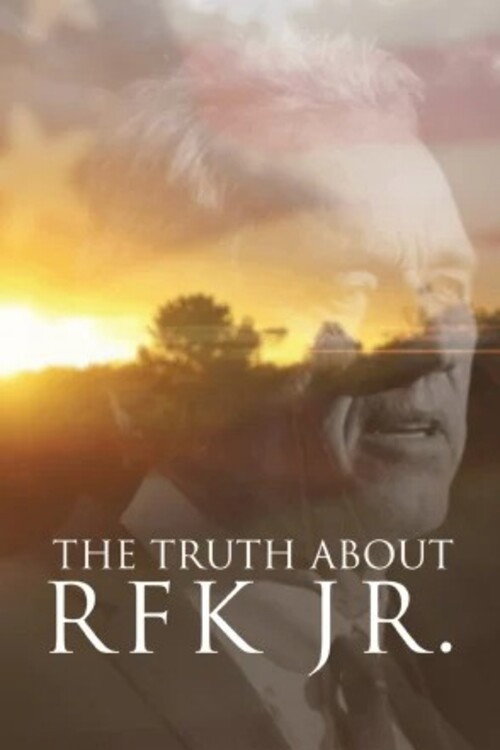
Truth About RFK Jr
Robert F. Kennedy Jr. turns childhood loss, addiction, and family legacy into a determined campaign as an environmental lawyer battling corporate polluters.
Truth About RFK Jr follows Robert F. Kennedy Jr. as he grows up inside a famous political family marked by profound personal losses that shape his early years. The documentary uses candid interviews and rare archival footage to show how those tragedies contribute to his later struggles with addiction. Kennedy confronts the addiction directly, working through recovery and seeking a new sense of purpose. He channels the pain into focused work as an environmental advocate determined to hold powerful interests accountable. Legal battles against corporate polluters become central to his path, revealing both the costs and the drive behind his choices. The film keeps the emphasis on his individual transformation rather than abstract causes.
Kennedy continues pressing cases that target pollution and corporate practices while still carrying the weight of his family's public history. Relationships and interviews in the film illustrate how allies and critics respond to his evolving role as a legal warrior. Archival material traces key moments when personal redemption intersects with courtroom and advocacy work. He persists in the fight even as the storied past remains a constant presence. The narrative closes on the ongoing tension between private healing and public confrontation with industrial harm, without tidy resolution.
Creator: Angel Studios
Oops! Is this show WOKE?
Only an account holder or member can file. Cite a scene, a line, or a pattern. Other account holders +1 or −1 that argument, once each. The show is not WOKE until enough of them have given a +1. Enough −1s remove the write-up, and it is no longer shown.
Sign in to file a woke label. One of each criterion per member.
Comments and reviews
Report a mistake
Same rule as woke labels: one report, a written reason, and the community +1 or −1 it — once per member. A net +5 applies the change. Editors can hold it for review, or apply it immediately.
No mistake reports yet.
Sign in to report a mistake. One report per field, per member.
Member review
June Pell Member
Sep 30, 2026
★★★★★★★★★★I sat down with Truth About RFK Jr mostly because the Kennedy name still carries a certain weight in my house, the kind of leftover gravity from parents who talked about the 60s like they had just happened last week. What I got was not a campaign ad and not a hit piece, which already put it ahead of half the political documentaries that float around. It stays pretty close to the ground: family legacy, the assassinations that shadowed his childhood, the early prosecutor years in Manhattan, the addiction that almost ended him, and then the long stretch of environmental law that actually defined most of his working life.
The film does not rush the personal wreckage. You see the young man trying to stand up inside a name that was already mythic, then watching that name become a burden when the public eye never really left. The substance struggles are treated as the near-derailment they were, not as colorful backstory. I appreciated that. Recovery is shown as the slow redirect it usually is—toward Riverkeeper, the Natural Resources Defense Council, the concrete fights over the Hudson and other waterways. Those sections have the most air in them. Court filings, polluted stretches of river, the nuts and bolts of teaching environmental law. It feels like the place where grief and competence finally sat down at the same table.
I kept thinking about how rare it is to watch someone of that lineage choose the long, unglamorous lane of litigation and nonprofit work instead of the obvious political escalator. The film does not pretend the choice was pure idealism; it suggests the personal collapse made conventional power look less appealing, or maybe just less possible for a while. Either way, the result is a career spent arguing over water quality and corporate polluters rather than chasing office in the usual way. That pivot is the spine of the thing, and it holds.
There is a stretch in the middle where the timeline jumps a little too cleanly from crisis to cause. I wanted one more beat on what the day-to-day of getting sober actually cost him before the activist armor went on. Still, the documentary does not linger in confession-booth mode, which is a relief. It moves forward into the work itself—founding groups, taking on specific industries, standing in courtrooms that most cable news never bothers to film. Those passages are quieter and better for it. You get the sense of a man who learned to measure progress in cleaner river miles instead of applause lines.
I am not an environmental lawyer and I do not follow every twist of Hudson River litigation, but the film made the stakes feel immediate without turning every hearing into a morality play. Polluters are named, statutes are cited, outcomes are shown. That concreteness matters. Too many documentaries about public figures float up into abstract virtue. This one stays closer to the filing cabinet and the shoreline.
Family lore inevitably creeps in—the assassinations, the public scrutiny, the impossible standard of the surname. The film handles it without turning the whole project into another round of Kennedy hagiography or Kennedy takedown. It simply notes that the losses were real and that they shaped the man who later showed up to argue about PCBs and sewage outfalls. I found that restraint useful. We already know the mythic version. Here the myth is background radiation, not the main event.
By the later passages the tone settles into something almost workmanlike: here is the case, here is the nonprofit, here is the classroom where he taught the next generation of environmental lawyers. It is not flashy. It does not need to be. The interest lies in watching someone redirect private damage into public utility without claiming sainthood for the transaction. That is rarer than it should be.
I walked away thinking about how many people never get a second act that looks like this one—messy, technical, stubbornly local, and largely outside the spotlight that once defined the family. The film does not ask you to vote for anyone or adopt a platform. It just traces the line from legacy and loss through addiction and out the other side into river protection. For a documentary that could easily have become either a puff piece or a demolition job, that middle path feels honest.
It is not perfect. A couple of transitions feel abrupt, and there are moments when the archival footage is asked to do more emotional lifting than it can carry. Yet the overall shape stays clear. You leave with a working picture of how one particular life bent away from the expected corridors of power and toward the slower grind of environmental advocacy. That is enough to make the two hours worthwhile. I would watch it again if only for the Hudson sections and the quiet insistence that recovery can look like paperwork and court dates instead of speeches. Not every story needs fireworks. Some just need the current to keep moving.