
Find a mistake?
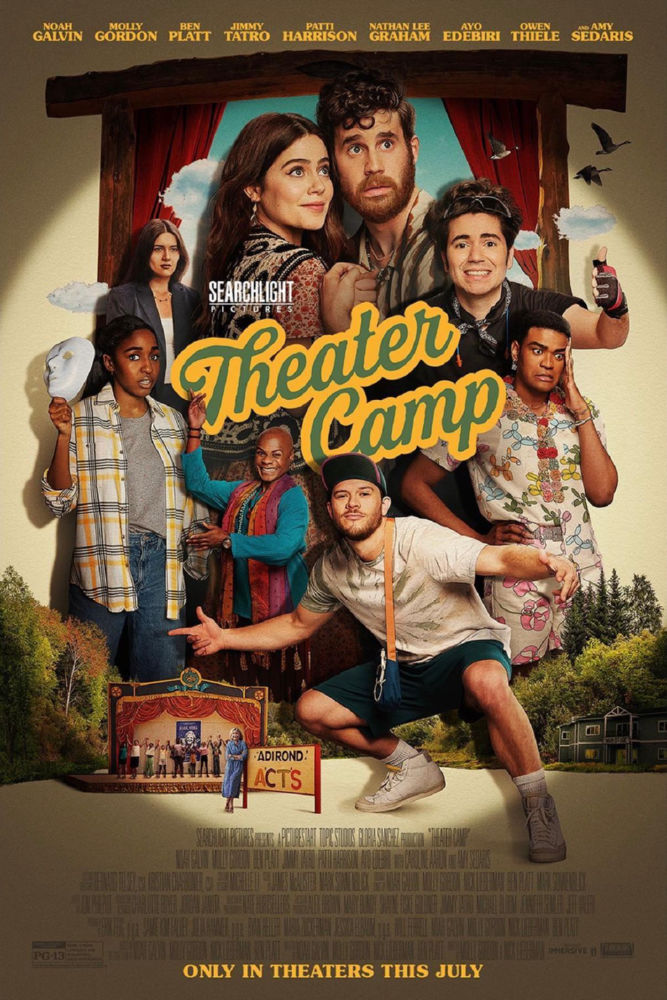


 MOVIE · 2023
Theater Camp IS WOKE
–
Not ratedCommunity rating
Label it
IS WOKE
No summary on file yet. Know this one? Tell us.
WHAT CRITERIA MAKES IT WOKE?



Oops! Is this show WOKE?
Only an account holder or member can file. Cite a scene, a line, or a pattern. Other account holders +1 or −1 that argument, once each. The show is not WOKE until enough of them have given a +1. Enough −1s remove the write-up, and it is no longer shown.
Sign in to file a woke label. One of each criterion per member.
Comments and reviews
Report a mistake
Same rule as woke labels: one report, a written reason, and the community +1 or −1 it — once per member. A net +5 applies the change. Editors can hold it for review, or apply it immediately.
No mistake reports yet.
Sign in to report a mistake. One report per field, per member.
Member review
Peg Harlan Member
Oct 10, 2026
★★★★★★★★★★Theater Camp landed on my watch list because I still have a soft spot for those summer-camp stories where everything is held together with duct tape and good intentions. This one is a mockumentary about AdirondACTS, a scrappy theater camp that’s about to go under after the founder collapses, and the counselors scramble to keep the place alive long enough to put on one last show. I settled in expecting something closer to the old Spinal Tap energy, and parts of it get there. When the jokes land they really land, especially once the kids and the adults are all in the same room trying to finish the production. Other stretches feel like they’re pushing for laughs a little harder than they need to, and the camera hangs around waiting for bits that don’t always pay off. Still, I came away liking it more than I didn’t. Three and a half stars feels right.
What held my attention was the way the adults try to keep the season going while the books are a mess and the land next door is being eyed by a richer camp. Amos and Rebecca-Diane are the ones who live and breathe the place. Amos throws everything into directing and coaching like the kids’ lives depend on it, and Rebecca-Diane is constantly juggling budgets, casting quirks, and the odd little traditions that make the camp feel like home to the people who show up every year. Troy, the founder’s son, wanders in with almost no theater background and has to figure out how not to sink the whole operation. Glenn keeps the lights and the tech side from falling apart. Those dynamics felt familiar if you’ve ever been around underfunded arts programs. People who care too much keep showing up even when the numbers say they shouldn’t.
I did notice how much the adult ensemble leans into gay and queer-coded counselors as the heart of the place. Ben Platt and Noah Galvin are right in the middle of that, and their roles make it clear the camp is meant to feel like a queer theatrical space first and foremost. It’s not a side note; it’s how the movie frames the whole community. The kids rehearse, the friendships form, the rivalries flare, and the adults improvise solutions around that center. If you grew up around community theater you probably recognize the vibe, even if the movie sometimes overplays it for the camera. I don’t mind that the film wants to celebrate that world. I just noticed how deliberately it stacks the counselor side that way, and it shapes every crisis and every late-night fix-it session.
The mockumentary style is hit or miss the way a lot of these are. When the final act clicks and the show has to go on no matter what, the energy picks up and you get genuine laughs out of the chaos. Earlier stretches can feel like they’re trying to manufacture the same spark instead of letting the characters just be ridiculous in a quieter way. Amy Sedaris gets a memorable early moment that sets the whole problem in motion, and Jimmy Tatro’s Troy is the perfect outsider who slowly realizes how much this odd little world means to the people who stay. I caught myself smiling at the small stuff more than the big set pieces: the way a counselor frets over a tradition no one outside the camp would understand, or the kids navigating friendships while the adults are busy putting out fires. Those moments felt closer to the real thing than the louder gags.
They used to make movies about these kinds of places without quite so much self-awareness about every identity marker, but the core scramble is still the same. Cash is short, egos are big, the rival camp wants the land, and somehow the kids still have to learn their numbers. I liked that Troy ends up partnering with Amos and Rebecca-Diane instead of just remaining the clueless outsider the whole time. It gives the story a little room to breathe. The production crises feel earned once you’ve watched them try to hold everything together for a few weeks. I didn’t need a heavy plot because the movie isn’t really about plot. It’s about whether this particular group of people can keep the lights on long enough for the final curtain.
Would I watch it again? Probably on a rainy afternoon when I want something light that still has a little heart. It doesn’t reinvent the mockumentary, and it isn’t consistently hilarious from start to finish, but the parts that work stay with you. The kids’ rehearsals and the adult improvising feel lived-in even when the framing device gets in its own way. I gave it 3.5 because the good stretches are honestly funny and the characters feel like people who would actually stick around a dying camp for one more season. The queer-centered ensemble of counselors is simply part of how the movie presents that world, and once you see it you can’t unsee how much of the story rests on it. For a movie about keeping a strange little theatrical haven alive, that choice makes sense inside the film even if it colors everything else. Plain and simple, it was good enough company for a couple of hours and left me remembering a few of the bits the next day. That’s enough for me.