
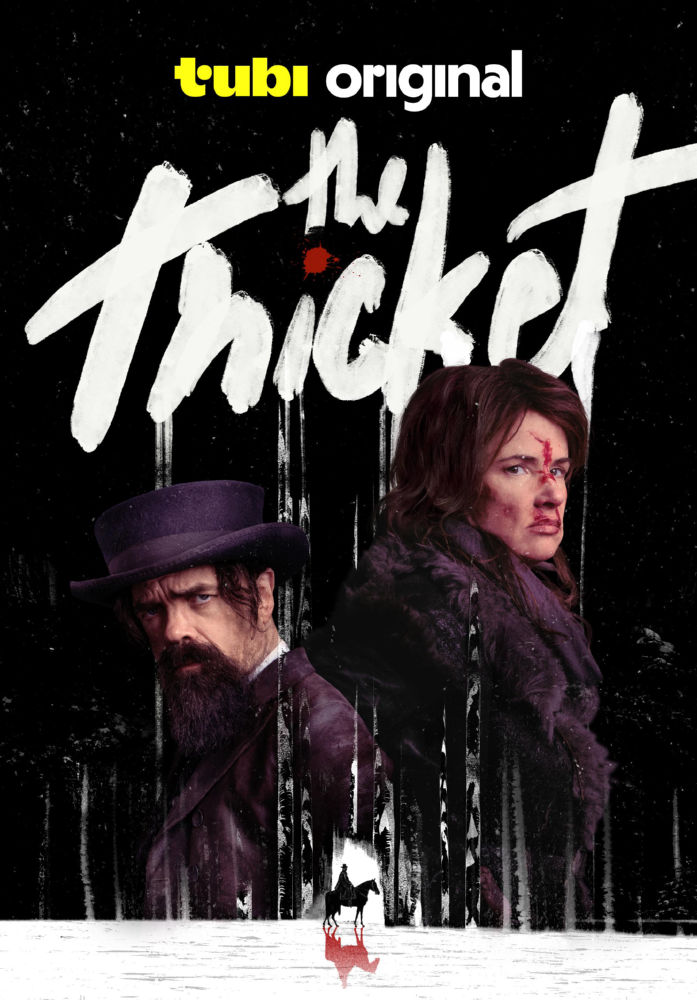



 MOVIE · 2024
The Thicket IS WOKE
When a bounty hunter and a band of unlikely heroes pursue a brutal killer, they find themselves in a deadly no-man's-land known as The Thicket.
WHAT CRITERIA MAKES IT WOKE?




Oops! Is this show WOKE?
Only an account holder or member can file. Cite a scene, a line, or a pattern. Other account holders +1 or −1 that argument, once each. The show is not WOKE until enough of them have given a +1. Enough −1s remove the write-up, and it is no longer shown.
Sign in to file a woke label. One of each criterion per member.
Comments and reviews
Report a mistake
Same rule as woke labels: one report, a written reason, and the community +1 or −1 it — once per member. A net +5 applies the change. Editors can hold it for review, or apply it immediately.
No mistake reports yet.
Sign in to report a mistake. One report per field, per member.
Member review
June Pell Member
Oct 9, 2026
★★★★★★★★★★I sat down with The Thicket last week mostly because the setup sounded like the kind of plain, hard-edged Western I still make time for. A sheltered kid loses his parents to a gang of killers, his sister gets taken, and he falls in with a bounty hunter and a grave robber to chase them through East Texas thickets and half-dead towns. That premise has legs. What I got was something that looks right and often feels right in the moment, then keeps undercutting itself.
Peter Dinklage plays the bounty hunter with that dry, watchful economy he brings to almost everything. He never oversells the cynicism or the competence; he just exists in the frame like a man who has already decided how far he will go and is waiting for everyone else to catch up. Juliette Lewis is the other performance that sticks. Her character is not the quiet companion or the traumatized passenger you might expect in this kind of story. She rides armed, makes real calls during the manhunt, and steers several of the group’s choices when the trail gets ugly. I noticed it right away because it shifts the weight of the scenes. She is an independent operator in the middle of the pursuit rather than someone the men are primarily protecting or dragging along. That choice gives her presence, but it also pulls focus from the kid’s raw grief and the simple question of how far he himself is willing to go.
The rest of the core group is assembled in a way that kept catching my eye for different reasons. You have Dinklage’s bounty hunter, Lewis’s character with her particular background as a sex worker, and then additional non-white members folded straight into the hero team. This is 1900s East Texas. The film never really sits with how unlikely or strained that combination would have been on the ground; it just presents the mix as the natural chasing party. It feels deliberate, like the casting and character choices were arranged first and the story had to walk around them. I kept waiting for the friction of that mix to become part of the drama—the mistrust, the different stakes, the way frontier justice actually sorted people—and it mostly does not. The movie wants the visual and moral variety without paying the historical or dramatic cost.
Atmosphere is the strongest suit. The woods feel dense and close, the light turns mean in the clearings, and the small towns look temporary and mean-spirited. Guillermo Garza’s camera work does a lot of the heavy lifting there; you believe the thicket can swallow people. But atmosphere alone cannot carry a revenge story. The main thread—the boy trying to get his sister back and settle the blood debt—keeps getting diluted by side business that never quite earns its screen time. Alliances shift, people scheme, but the extra turns do not deepen anyone so much as stretch the runtime. Character depth stays thin. Jack starts green and ends harder, yet I never felt I understood the precise moment he crosses into something he cannot take back. The bounty hunter’s methods clash with the grave robber’s angles, which should have been rich territory, but it plays more like plot machinery than moral pressure.
Elliott Lester stages the violence cleanly enough, yet none of the set pieces lodged in my head afterward. There is brutality, there is mud and blood, but it rarely feels surprising or revelatory. Westerns live or die on whether the violence teaches you something about the people committing it. Here it mostly confirms what you already guessed. I found myself thinking about older films that did more with less—stories where one decision in a clearing told you everything about a man’s code. The Thicket has the surface authenticity and the strong turns from Dinklage and Lewis, but it does not push far enough into the narrative or the thematic ground it opens. The emotional hit of the family slaughter and the sister’s fate stays muted because too much else is competing for attention and too little of it is examined.
I keep turning over that hero-team construction. In a period piece the group you ride with is half the meaning. When the film stacks a dwarf bounty hunter, an armed woman who drives decisions, a sex worker, and non-white members into the central pursuing force without letting the era’s realities press back on them, it starts to feel like the priority was the mix itself. That choice sits in the middle of an otherwise straightforward manhunt and makes the whole thing less grounded than the dirt and trees suggest. I still finished it. The bones of a good, mean little Western are visible. Performances hold stretches of it together. But the lack of real depth in the people and the way the extra threads dilute the central revenge left me at a remove. Three stars feels honest—worth seeing for the faces and the look of the place, not something that stays with you once the thicket closes back up.