
Find a mistake?
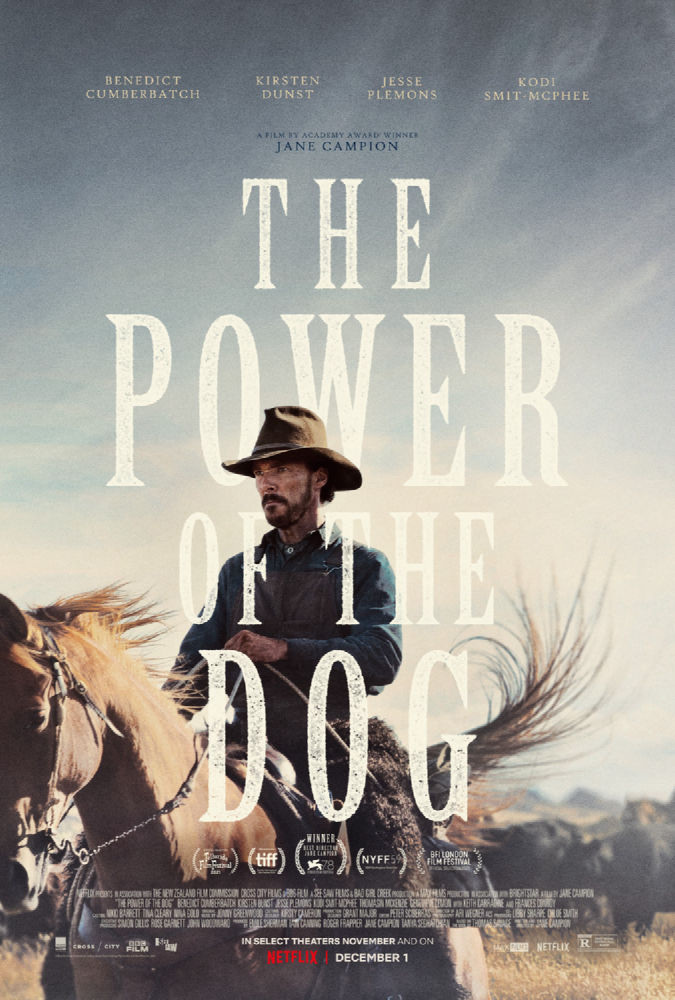


 MOVIE · 2021
The Power of the Dog IS WOKE
–
Not ratedCommunity rating
Label it
IS WOKE
No summary on file yet. Know this one? Tell us.
WHAT CRITERIA MAKES IT WOKE?



Oops! Is this show WOKE?
Only an account holder or member can file. Cite a scene, a line, or a pattern. Other account holders +1 or −1 that argument, once each. The show is not WOKE until enough of them have given a +1. Enough −1s remove the write-up, and it is no longer shown.
Sign in to file a woke label. One of each criterion per member.
Comments and reviews
Report a mistake
Same rule as woke labels: one report, a written reason, and the community +1 or −1 it — once per member. A net +5 applies the change. Editors can hold it for review, or apply it immediately.
No mistake reports yet.
Sign in to report a mistake. One report per field, per member.
Member review
Toni Briggs Member
Oct 10, 2026
★★★★★★★★★★The Power of the Dog sits with me as one of those Westerns that keeps insisting it is smarter than the genre it borrowed from. Jane Campion directs with a steady hand, Ari Wegner’s photography is genuinely striking in that dry Montana light, and Johnny Greenwood’s score slips under the scenes without shouting. Benedict Cumberbatch throws himself into Phil Burbank so completely you feel the man’s dirt and disdain in every frame. Jesse Plemons plays the softer brother with quiet patience, Kirsten Dunst frays convincingly under pressure, and Kodi Smit-McPhee makes Peter watchful and strange in a way that sticks. On craft alone this film earns its keep. I still gave it 3.5 because the story underneath the craft kept pulling the same two moves that wore me down.
Phil rules the ranch and the hands through calculated meanness. He needles Rose until her piano stops and the bottle starts. He mocks Peter’s hands, his books, the careful way the kid moves. That part lands as real tension for a while. What I noticed, though, is how the film frames every bit of that bullying as toxic hyper-masculinity rather than the kind of hard, imperfect authority you might actually meet on a working ranch in 1925. Phil’s toughness is never allowed to stand as authentic rancher behavior. It is presented almost immediately as a mask he polishes so no one sees the vulnerability underneath. The movie is far more interested in diagnosing the mask than in letting the cattle, the rope work, or the daily grind feel like their own world.
Then the arc with Peter takes over. Phil starts drawing the boy in—teaching him rawhide, sharing smokes, letting the conversation drift into something more personal. I saw the romantic intent clear as day. The grooming and the bonding are not side notes; they become the engine of Phil’s entire story. His hidden homosexual attraction is what the film circles around until the end. Everything cruel he does earlier is retrofitted as the desperate performance of a man terrified of that desire. Once you clock it, the rest of the runtime feels like it is waiting for that reveal to finish its work. I do not need every hard man on screen to be a straightforward cowboy. I do mind when the whole point of the character is to prove that the toughness was never real, only a cover for same-sex longing, and that the longing itself is the deeper truth the story has been chasing.
That choice flattens the ranch into a stage for the thesis. The hands stay mostly awed extras. George stays the gentle counterweight. Rose drinks. Peter observes and waits. The psychological game is intricate, I will give it that, and Campion never turns it into a lecture with title cards. Still, the framing is consistent enough that you feel the modern hand on the material. Masculinity here is interesting only when it is sick or secret. The open land and the cattle drive become pretty backdrops for that internal unraveling. A few of the longer landscape holds and the repeated shots of horses and grass could have been trimmed without losing a thing; the pacing already leans deliberate, and the finish arrives with a snap that does not quite match the slow burn that came before it. I wanted the last stretch to carry more weight than it managed.
I am not asking for a simple good-guys-and-bad-guys oater. Campion set out to make something denser and she mostly succeeded on the level of mood and performance. Cumberbatch’s Phil is magnetic even when he is repellent. The way he works a piece of rawhide or stares down a room tells you more than half the dialogue. Yet the film keeps returning to the same diagnosis: the cruelty is the costume, the attraction is the buried real self, and the audience is invited to watch the costume come apart. Once that pattern settles in, the tension thins. You start waiting for the next confirmation instead of wondering what these people might do next as people.
There is a version of this story that could have kept the brothers’ friction, the new wife’s arrival, and the quiet son’s presence without turning Phil’s ranch authority into a case study in concealed desire. That version might have felt less determined to rearrange 1925 Montana around today’s preferred reading of manhood. What we got is still handsome and well-acted, and it held my attention more often than not. It just never quite trusted the setting or the work itself to matter on their own terms. The result is a movie I respect in pieces and pull back from as a whole. 3.5 feels right—strong enough craft and performances to finish, not strong enough story under the thesis to push higher.