
Find a mistake?


 TV · 2019
The Platform IS WOKE
8
8/10Community rating
Label it
IS WOKE
No summary on file yet. Know this one? Tell us.
WHAT CRITERIA MAKES IT WOKE?


Oops! Is this show WOKE?
Only an account holder or member can file. Cite a scene, a line, or a pattern. Other account holders +1 or −1 that argument, once each. The show is not WOKE until enough of them have given a +1. Enough −1s remove the write-up, and it is no longer shown.
Sign in to file a woke label. One of each criterion per member.
Comments and reviews
Report a mistake
Same rule as woke labels: one report, a written reason, and the community +1 or −1 it — once per member. A net +5 applies the change. Editors can hold it for review, or apply it immediately.
No mistake reports yet.
Sign in to report a mistake. One report per field, per member.
Member review
Becky Soto Member
Sep 20, 2026
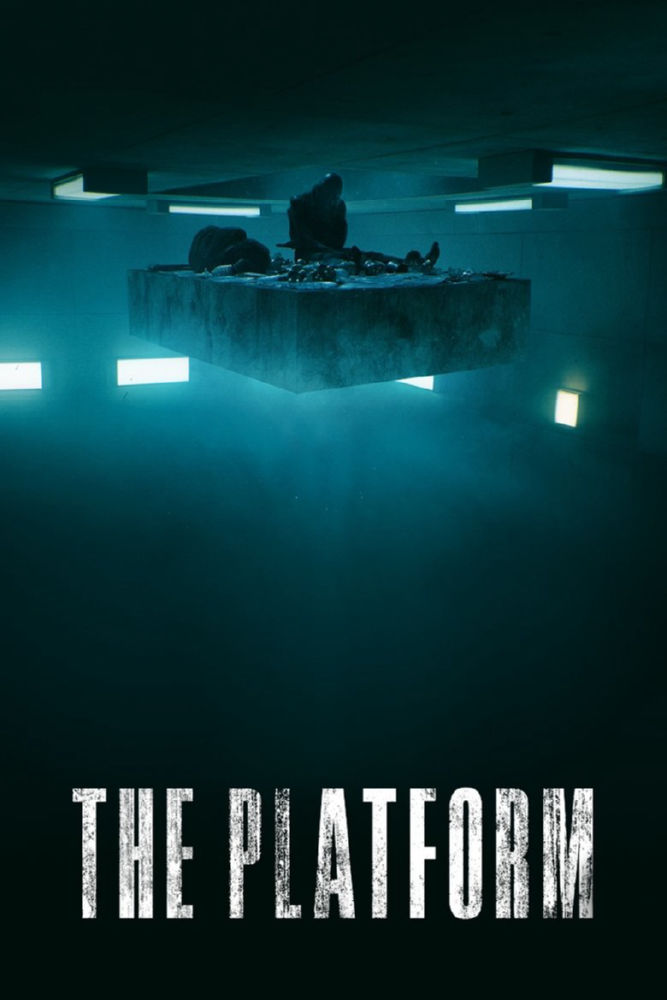
★★★★★★★★★★I put on The Platform a couple evenings ago expecting something lean and mean, and it mostly delivered on that promise even if it left me sitting with mixed feelings afterward. The whole idea of a concrete shaft with a platform of food dropping level by level is so straightforward it almost feels like a thought experiment someone sketched on a napkin, yet it keeps working on you. People higher up dig in first, take what they want, and the ones farther down get whatever is left or nothing at all. That simple mechanic does a lot of the heavy lifting, and I kept thinking about it after the movie ended.
What stuck with me most was an early stretch where Goreng is still figuring out the rules of the place. There’s this quiet dread when the platform arrives and you realize how quickly people settle into taking more than they need. It’s not jump-scare horror. It’s the kind of grim that sits in your chest. You watch someone who starts out mostly indifferent slowly shift toward wanting to do something better, or at least something that might matter beyond his own cell. That change feels like the real center of the film for me. The prison itself never explains its own existence very clearly, and that vagueness actually helps; it keeps the whole thing feeling off-kilter and a little mythic instead of like a detailed instruction manual for dystopia.
I like survival stories that force characters into hard moral corners, and this one does that without offering easy outs or comic relief. There really isn’t traditional humor here. The tone stays locked in on desperation and the choices people make when the next meal might not come. Some of the violence is rough, and a few moments go further than I needed, but they serve the idea rather than just stacking gore for its own sake. You can feel the movie asking what you would do if you woke up on a higher floor one month and a lower one the next. Would you hoard, share, fight, or try to send some kind of signal upward? Those questions land harder because the setting is so stripped down.
At the same time, the film leans hard into its metaphor about those above and those below. I get why people reach for big statements about greed and systems that crush the people underneath. The problem is that once you notice how deliberately the movie wants to hammer the point about hierarchy and selfishness, it starts to feel a little single-minded. It wants you to see the structure itself as the root evil and collective restraint as the only decent path forward. That framing can work in small doses, yet here it sometimes crowds out the messier human stuff that made the early sections so gripping. I found myself wishing it trusted the characters more and the lecture a little less.
Goreng’s arc still carries a lot of emotional weight for me. Watching him move from pure self-preservation toward something closer to principle gives the story a pulse. The limited space of each cell and the endless vertical drop create a real sense of claustrophobia; the camera doesn’t need fancy tricks to make you feel trapped. Certain images linger—the way food is ruined out of spite, the sudden alliances that form and break, the quiet moments when someone just stares at the empty platform knowing what it means for the floors underneath. Those beats feel honest even when the larger message gets pushy.
I walked away impressed by the craft and the commitment to its own bleak rules, but not fully satisfied. The ending keeps things deliberately open and symbolic in a way that undercuts some of the tension the movie built so carefully. Loose threads and big gestures replace the cleaner moral reckoning I kept hoping for. It raises sharp questions about how people behave when scarcity is engineered and then refuses to land anywhere solid. That choice will work for some viewers. For me it left a slight hollow feeling after all the intensity.
Still, this is the kind of movie that stays in your head longer than most slicker thrillers. The concept is strong enough that I can already imagine recommending it to a friend who likes dark speculative stories, with the caveat that they should expect philosophy and cruelty more than tidy answers. I’ll probably watch it again at some point just to sit with certain scenes a second time. It doesn’t always stick the landing, and its view of how systems and people interact can feel stacked toward one particular moral, yet the core experience of watching ordinary desperation play out floor by floor is hard to shake. That alone makes the three-and-a-half stars feel right. It’s flawed, memorable, and worth the time if you’re in the mood for something that refuses to look away from the worst versions of ourselves.