



 MOVIE · 2025
The Last Rodeo
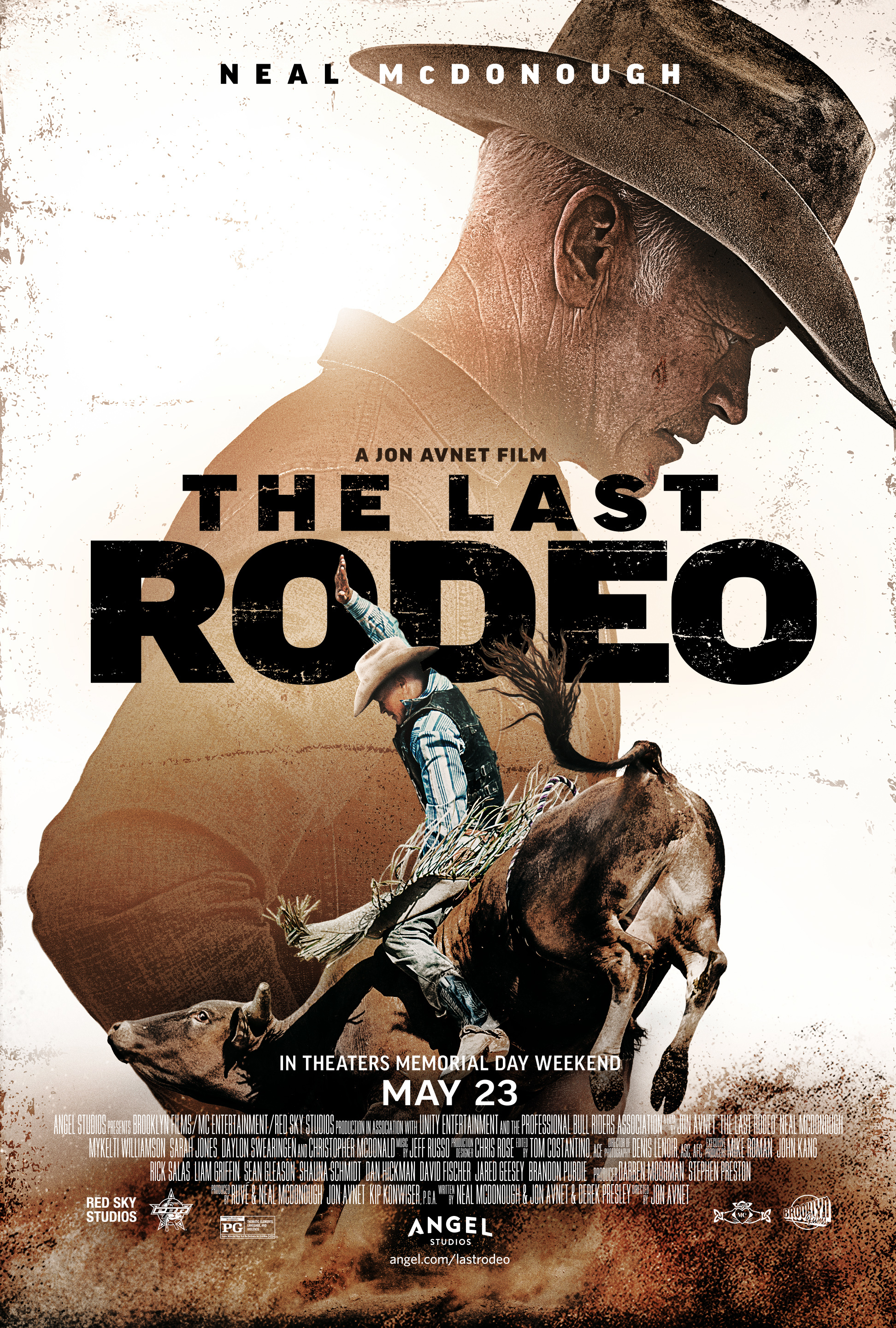
Retired bull rider Joe Wainwright returns to a high-stakes rodeo to raise money for his grandson’s medical needs, confronting old wounds and rediscovering faith through family.
The Last Rodeo follows Joe Wainwright, a retired rodeo champion who left the arena years earlier and now lives with the weight of past choices. When his young grandson faces a serious health crisis that the family cannot afford, Joe decides the only path left is to re-enter a major bull-riding event with a substantial purse. He begins training again despite age and old injuries, reconnecting with people from his former circuit who remember both his skill and his failures. Early practice sessions expose how much the sport has changed and how little margin he has for error. At home, strained conversations with his daughter reveal lingering resentment about the years he put riding ahead of family. Joe keeps pushing toward the competition date while trying to prove he can still protect the people who matter most.
As the event nears, Joe spars with longtime figures on the circuit, including a former rival who questions whether a comeback at his age is courage or stubborn pride. Mykelti Williamson’s character becomes an uneasy ally who forces Joe to talk through the accidents and absences that still define him. Sarah Jones’s character anchors the family side of the story, making clear that money alone will not repair trust. During the competition itself Joe draws increasingly dangerous bulls and must decide how far he is willing to go when one ride could end his chance or his life. A turn in the grandson’s condition raises the stakes beyond the scoreboard and pushes Joe toward an open reckoning with faith he had set aside. In the final rides he measures success less by the purse than by whether he can stand upright for the family waiting outside the arena.
Creator: Jon Avnet
Click any of the following icons below to rent or stream it!
Oops! Is this show WOKE?
Only an account holder or member can file. Cite a scene, a line, or a pattern. Other account holders +1 or −1 that argument, once each. The show is not WOKE until enough of them have given a +1. Enough −1s remove the write-up, and it is no longer shown.
Sign in to file a woke label. One of each criterion per member.
Comments and reviews
Report a mistake
Same rule as woke labels: one report, a written reason, and the community +1 or −1 it — once per member. A net +5 applies the change. Editors can hold it for review, or apply it immediately.
No mistake reports yet.
Sign in to report a mistake. One report per field, per member.
Member review
June Pell Member
Oct 22, 2026
★★★★★★★★★★The Last Rodeo sat with me longer than I expected for a sports movie built around bull riding. I went in knowing the bare bones—retired legend climbs back on for his grandson, old wounds with his daughter, faith showing up somewhere in the middle—and what stuck was how cleanly it sticks to that simple spine. It feels like a callback to those older underdog pictures where the stakes are personal and the finish line is less about a trophy than about whether a man can still stand up for the people who need him. Not perfect, not pretending to be, but the core story of love, sacrifice, and a kind of quiet desperation lands more often than it misses.
I kept noticing the budget in little seams. Some of the competition sequences have a thinness to them, and a few moments with the professional riders feel stiff, like people stepping into lines rather than living them. Then the camera will settle on a practice pen at dusk or a quiet kitchen conversation and suddenly it looks and feels like it cost more than it probably did. That unevenness never fully disappears, yet the movie usually plays above its means. The emotional through-line carries the weight when the production can’t. You can pick at the seams all day—wooden patches, a couple of convenient beats—but by the end the better parts outnumber the weaker ones.
What I appreciated most was the refusal to dress ordinary manhood up as the problem. The grandfather isn’t framed as toxic for having been hard or absent; he’s just a man who left pieces of himself in the arena and is now trying to gather what’s left for the kid. The daughter’s anger makes sense without turning into a lecture. Their reconciliation isn’t tidy or sudden. It comes in short, awkward steps that feel earned because the movie lets both of them stay stubborn for a while. Faith enters the same way—not as a sudden light show or a cartoon conversion, but as something he reaches for when the body starts failing and the old pride isn’t enough. I don’t need every film to do that, but when one does it without sneering or overselling, I notice.
There’s a stretch near the middle where I wandered off a little, thinking about how rarely we get stories that treat family obligation as courage instead of a burden to escape. Most current pictures would rather the hero learn to “put himself first.” Here the opposite holds: the risk is the point. Getting back on a bull at that age is reckless on paper, yet the movie understands why he does it. The grandson’s situation isn’t milked for tears every other scene; it’s simply there, urgent enough that the choice makes sense. I liked that restraint. It kept the film from tipping into pure melodrama even when the score swelled.
The bull-riding itself is shot with enough respect for the danger that I felt the impact in my shoulders a couple of times. You see the wear on him—the slower recovery, the way the younger riders look at him with a mix of awe and pity. Those glances do more work than any monologue. A couple of the supporting faces are thin, and yes, some dialogue lands flat, especially when non-actors are asked to carry a quiet scene. Still, the central performance holds the thing together. He sells the ache of knowing this is probably the last time and choosing it anyway.
I landed at three stars because the movie is better than its flaws yet never quite shakes them. It wants to be bigger than the budget allows, and every so often you can hear the effort. At the same time, the premise is honest, the emotions are straightforward without being simple-minded, and it remembers that courage can look like an old man climbing into a chute for a child. That alone put it ahead of a lot of louder, slicker fare I’ve sat through lately. I didn’t walk out changed, but I walked out glad I’d stayed with it. Sometimes a clean story told with more heart than polish is exactly enough. I’ll remember the quiet kitchen scenes longer than the arena lights, and that feels right for what this one set out to do.