
Find a mistake?
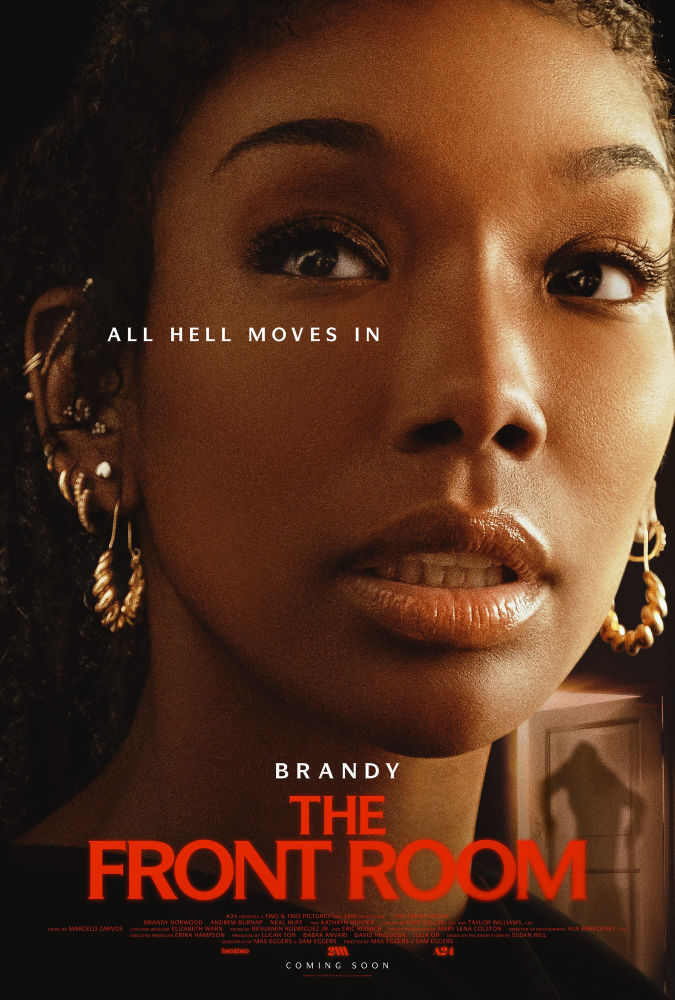


 MOVIE · 2024
The Front Room IS WOKE
–
Not ratedCommunity rating
Label it
IS WOKE
No summary on file yet. Know this one? Tell us.
WHAT CRITERIA MAKES IT WOKE?

Oops! Is this show WOKE?
Only an account holder or member can file. Cite a scene, a line, or a pattern. Other account holders +1 or −1 that argument, once each. The show is not WOKE until enough of them have given a +1. Enough −1s remove the write-up, and it is no longer shown.
Sign in to file a woke label. One of each criterion per member.
Comments and reviews
Report a mistake
Same rule as woke labels: one report, a written reason, and the community +1 or −1 it — once per member. A net +5 applies the change. Editors can hold it for review, or apply it immediately.
No mistake reports yet.
Sign in to report a mistake. One report per field, per member.
Member review
Toni Briggs Member
Oct 10, 2026
★★★★★★★★★★I sat through The Front Room expecting a tight little domestic thriller about a household falling apart, and what I got was something that kept drifting away from its own premise into a lecture I never asked for. Belinda is newly pregnant and trying to hold things together when her husband’s ailing stepmother shows up needing a permanent spot under their roof. I noticed right away how the whole story centers on this newly pregnant lead who has to manage the arrival and care of her estranged stepmother while the household tensions pile up around her. That is the engine of the movie: her trying to keep routines, protect her space, and push back as the older woman claims the front room and starts rewriting every rule. It is framed as Belinda’s fight for safety and autonomy inside her own home, the strong-woman setup where she has to shoulder the emotional labor and the physical risk while everyone else wavers. Fine premise on paper. In practice it gets buried.
What actually plays out feels less like a story about boundaries and more like a checklist. The mother-in-law, Solange, is played with real venom by Kathryn Hunter—she is tiny, walks with two big sticks, and still manages to dominate every scene through pure spite and religious ranting. She claims she is doing it all in the name of Jesus Christ, but the movie makes her look like a mentally unstable cartoon of faith. That is the first place it lost me. Nearly every white character except the husband Norman comes across as a brainwashed religious zealot loonie. It plays like open mockery of religious people and of white people in general. Belinda, played by Brandy Norwood, is positioned as the sane center who has to endure this invasion, and the film leans hard into the interracial household dynamics in a way that keeps scoring points about race mixing and who really belongs. Norman is caught in the middle, loyal to his mother yet worried about his wife, but even that conflict gets used mostly to underline how the white family structure is rotten or outdated. The everyday fights over meals, privacy, and whose house it actually is stop feeling like character work and start feeling like the movie’s real goal: deliver the propaganda.
I kept waiting for the tension to tighten around Belinda’s pregnancy and the simple horror of sharing a small space with someone who refuses to leave or yield control. Isolation does set in, and after the baby arrives the antics get more disturbing—the laugh, the physical invasions, the constant rewriting of rules. There is a captivating quality to watching that non-biological mother-in-law go after the protagonist, especially once the infant is in the picture. The low budget and odd script cannot hide how committed Hunter is to being odious and manipulative. But the rest of the cast and the writing around them feel thin. Story almost does not matter here. The main purpose is the message, not the people. You can feel the producers and writers steering every scene toward anti-white jabs and anti-religion sneers instead of letting the domestic siege breathe on its own terms. Belinda’s attempts to accommodate for the sake of the baby read less like a rounded person under pressure and more like the designated strong woman who must rise above the zealotry and the bigotry the film keeps assigning to everyone else.
I am not against a movie that wants to explore control and resentment inside a family home. That is fertile ground. What I am against is watching that ground get paved over so the film can mock an entire group of people as religious nuts while quietly celebrating the race-mixing angle as moral progress. It turns the stepmother’s campaign into a stand-in for larger cultural grievances rather than a specific, scary personality. Norman’s loathing of her and Belinda’s growing realization that the guest has no intention of leaving should have been enough. Instead the movie keeps pausing to make sure you understand who the real villains are supposed to be—the white religious types—and who the resilient center is. That choice drains the suspense. By the time the power struggles go fully open and hostile, I was more irritated by the sermon than gripped by the threat.
Hunter’s performance is the one thing that keeps it from being a total wash. She makes Solange entertaining in a train-wreck way, and there are stretches where the sheer relentlessness of the invasion almost works as pure discomfort. Brandy Norwood is game, returning to this kind of tense material, but she is stuck carrying a script that cares more about its points than about her character’s interior life. The husband remains a soggy middle. Money troubles and the terms of the will that force the living arrangement get mentioned and then mostly abandoned so the film can return to its preferred targets. I rated it 2.5 because the central idea of a pregnant woman losing her home inch by inch still has a pulse, and a couple of sequences after the birth land with ugly force. Everything else is undercut by the constant need to sneer at faith and at white characters who are not Norman. It is a garbage delivery system for leftist talking points dressed up as a household thriller. I finished it feeling like I had been lectured more than scared, and that is not what I came for. The front room itself ends up feeling less like a contested space in a marriage and more like a stage for the movie’s real agenda. Not worth the time if you want an actual story instead of a scold.