
Find a mistake?
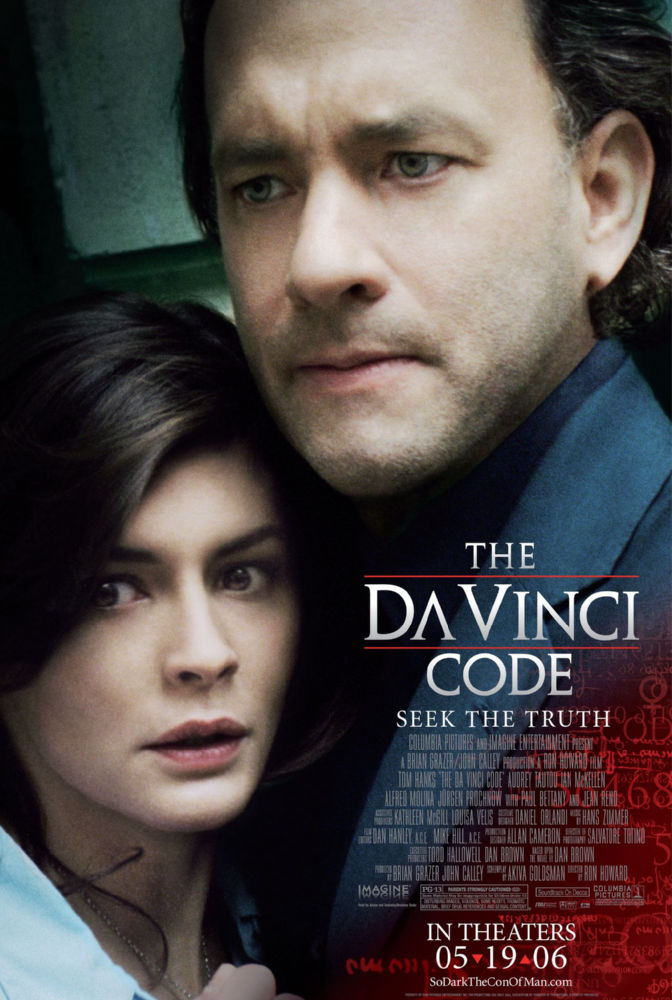


 MOVIE · 2006
The Da Vinci Code IS WOKE
–
Not ratedCommunity rating
Label it
IS WOKE
No summary on file yet. Know this one? Tell us.
WHAT CRITERIA MAKES IT WOKE?

Oops! Is this show WOKE?
Only an account holder or member can file. Cite a scene, a line, or a pattern. Other account holders +1 or −1 that argument, once each. The show is not WOKE until enough of them have given a +1. Enough −1s remove the write-up, and it is no longer shown.
Sign in to file a woke label. One of each criterion per member.
Comments and reviews
Report a mistake
Same rule as woke labels: one report, a written reason, and the community +1 or −1 it — once per member. A net +5 applies the change. Editors can hold it for review, or apply it immediately.
No mistake reports yet.
Sign in to report a mistake. One report per field, per member.
Member review
Stu Kline Member
Sep 19, 2026
★★★★★★★★★★The Da Vinci Code hit theaters when the book was still everywhere, and I went in already knowing the basic setup. Tom Hanks as Robert Langdon works better than I expected. He plays the Harvard guy who gets dragged to the Louvre after that curator turns up dead in a strange pose, and he keeps the whole thing grounded instead of turning into pure cartoon smarts. Audrey Tautou as Sophie Neveu pairs with him cleanly. She is not trying to out-act anyone; she just keeps the cryptology side moving without slowing the pace.
The movie runs on codes, anagrams, and those layered clues left behind. That part still holds up as pure chase fuel. You get pulled through Paris streets and later out into the countryside while the police and that albino assassin stay on their heels. Paul Bettany goes hard as Silas. The self-flagellation and the single-minded hunt make him memorable even when the character edges into caricature. Ian McKellen shows up later with the calm rich-man knowledge and steals a few scenes just by talking.
Ron Howard keeps the camera moving and the edits tight enough that the two-plus hours do not feel endless. The Louvre opening has real weight. The body, the symbols on the floor, the first rush of decoding—that stretch is the strongest section. Once they leave the museum the energy dips in places. Big chunks of dialogue exist only to dump history and theory on you. Some of it lands, some of it feels like the script is reading footnotes out loud. You sit there waiting for the next physical threat or the next puzzle piece because the talk starts to circle.
I never treated the central claim about the Holy Grail and the bloodline as anything more than a plot engine. The movie sells it hard, and the Church comes off looking like a centuries-long cover-up machine. That is the Dan Brown formula, and the film follows it without apology. It did not convert me to any secret history, but it did keep me watching to see how they would stage the next reveal. The cryptex gadget, the mirrored writing, the church visits—all of that still scratches the mystery itch even when the underlying ideas are pure invention.
Hanks never overplays the professor bit. He looks tired and cornered in the right ways, and the few quiet moments between him and Tautou feel human rather than forced romance. The supporting cast fills the edges well enough. Alfred Molina as the bishop brings a cold bureaucratic menace that works against Bettany’s raw fanaticism. You get two different flavors of threat running at the same time, and that helps the middle act stay alive when the explanations start stacking up.
Visually it is clean 2006 studio work. Nighttime Paris looks good, the interiors of the churches and the chateau have the right shadows, and the flashbacks or vision moments never go full cheese. The score pushes the urgency without screaming at you. None of it is groundbreaking, but none of it gets in the way either. You can tell Howard wanted a straight thriller first and a culture bomb second.
Where it loses me a little is the back half. After so much buildup the final confrontations and the big answers arrive with less punch than they should. Some twists feel telegraphed once you have sat through the earlier lectures. The movie also has to compress a dense book, so certain side characters and threads get shortchanged. You sense the missing pages. Still, it never collapses. It stays a solid two hours of smart-people-on-the-run entertainment that knows how to use locations and riddles.
I landed on 3.5 because it delivers the goods without ever becoming something I would rewatch every year. It is better than most book-to-screen cash-ins from that era. The central duo holds it together, the set pieces have weight, and the constant decoding keeps your brain lightly engaged. At the same time the heavy exposition and the slightly soft landing keep it from feeling essential. If you like puzzle-box thrillers and do not mind a thick layer of speculative history, it still works. If you want tight character work or deeper stakes, you will notice the gaps. For what it set out to be on a big studio scale, it earns the middle-high mark without pretending to be more.