
Find a mistake?
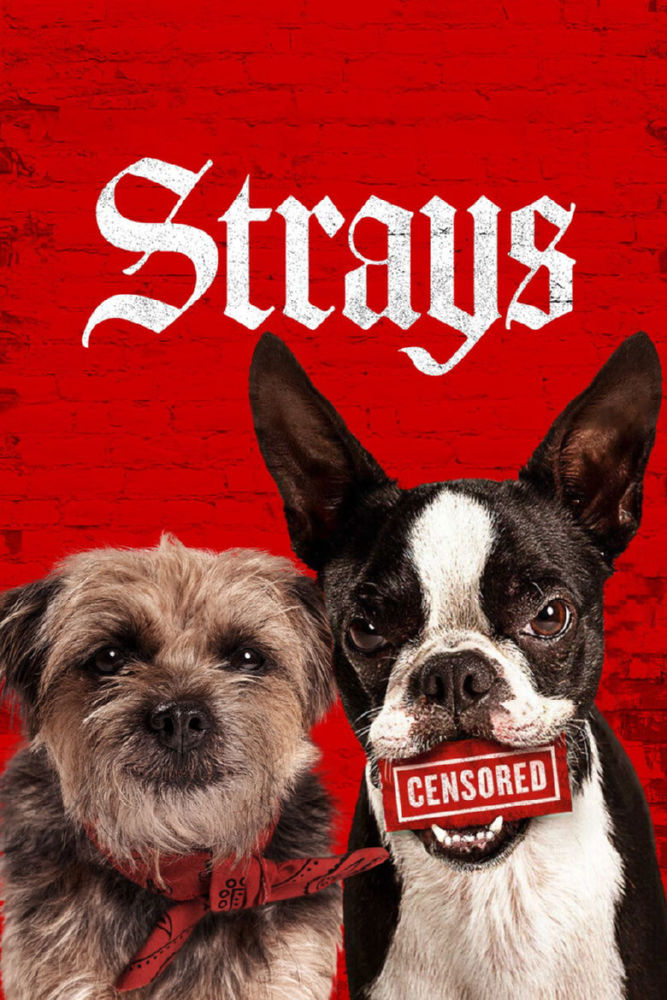


 MOVIE · 2023
Strays IS WOKE
–
Not ratedCommunity rating
Label it
IS WOKE
No summary on file yet. Know this one? Tell us.
WHAT CRITERIA MAKES IT WOKE?


Oops! Is this show WOKE?
Only an account holder or member can file. Cite a scene, a line, or a pattern. Other account holders +1 or −1 that argument, once each. The show is not WOKE until enough of them have given a +1. Enough −1s remove the write-up, and it is no longer shown.
Sign in to file a woke label. One of each criterion per member.
Comments and reviews
Report a mistake
Same rule as woke labels: one report, a written reason, and the community +1 or −1 it — once per member. A net +5 applies the change. Editors can hold it for review, or apply it immediately.
No mistake reports yet.
Sign in to report a mistake. One report per field, per member.
Member review
Ray Okonkwo Member
Sep 20, 2026
★★★★★★★★★★Strays sat with me longer than I expected for a talking-dog revenge comedy. I went in mostly curious about how they would handle the talking itself without turning every animal into a stand-up comic, and for stretches it works because the dogs stay dogs first. Reggie’s cheerful ignorance after Doug dumps him is the hook that actually lands. He still thinks it’s a long game of fetch. That loyalty is so pure it makes the later anger feel earned instead of forced. When the pack finally breaks it to him that Doug never planned to come back, the scene doesn’t overplay the heartbreak; it just lets the realization sit there while the other dogs watch him process it.
Bug is the one who keeps the whole thing moving. Streetwise without turning into a cartoon tough guy, he lays out the rules of the neighborhood the way an older cousin would explain how not to get jumped. Maggie’s no-nonsense attitude cuts through the nonsense whenever the plan starts to spiral, and Hunter’s purebred panic gives the group a nervous energy that feels right. I liked how they scout the blocks and steal food—not as cute animal hijinks, but as real logistics. They map routes, watch schedules, argue over whether a dumpster is worth the risk. Those stretches feel more alive than the broader revenge beats.
The crude jokes are thick on the ground, which is the movie’s biggest swing and miss for me. Some of the body-function humor lands because dogs are dogs and the film doesn’t pretend otherwise. A few lines about what they’ve eaten or what they’ve smelled made me laugh out loud in the theater because they feel observed rather than written for shock. But the movie keeps going back to the well until the shock thins out. Once you’ve heard the third or fourth variation on the same anatomical gag, it stops being funny and starts feeling like the script is stalling. I wanted more of the pack figuring out how to move through human spaces without getting caught, less of them circling the same dirty punchlines.
The revenge plan itself escalates in a way that kept me watching even when the jokes missed. Locating Doug and watching how he treats everyone else—animals and people—turns the personal slight into something larger without speeches. The dogs just observe. That quiet watching works better than any monologue about betrayal. Concrete setbacks force them to stick together: a near-miss with animal control, a bad decision that almost splits the group, a moment where Reggie has to decide whether pure payback is still what he wants. Those pressure points give the second half some weight. I never felt like the film was lecturing me about abandonment or ownership; it just lets the dogs’ anger drive the action and trusts that the audience will feel the unfairness.
What kept it at three stars instead of higher is the uneven tone. When it stays grounded in the pack’s day-to-day survival and the slow burn of the plan, it’s sharp and weirdly affecting. When it lunges for the loudest possible dirty joke or the broadest physical bit, it feels like it’s trying too hard to prove it’s not a kids’ movie. I get the impulse—talking dogs come with a lot of baggage—but the better scenes already proved it didn’t need to shout. The ending settles the score in a way that felt consistent with who these animals had become, not just a final gross-out for its own sake. I walked out still thinking about Reggie’s shift from blind loyalty to clear-eyed fury more than any single gag.
It’s the kind of movie I’ll probably recommend with a shrug and a specific warning: go for the pack dynamics and the quiet observation scenes, brace for the raunch that overstays. Not every joke sticks, the revenge sometimes tips into excess, yet the core idea of a dog who finally stops making excuses for the person who left him is strong enough to carry the weaker stretches. I didn’t love it, didn’t hate it, and I’m still replaying a couple of those street-level planning moments in my head. That’s enough for a solid middle-of-the-road rating from me.