
Find a mistake?
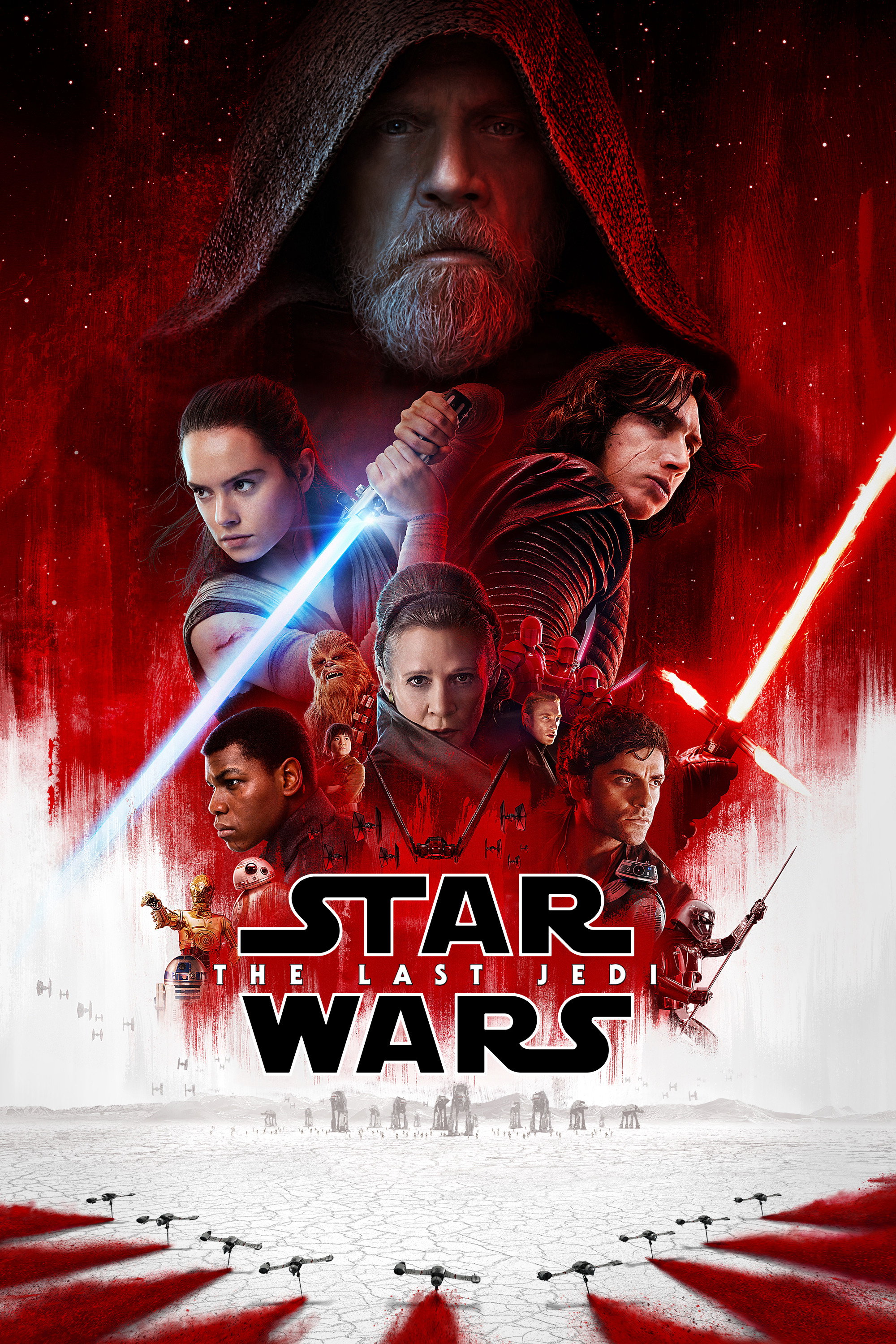


 MOVIE · 2017
Star Wars: The Last Jedi IS WOKE
–
Not ratedCommunity rating
Label it
IS WOKE
No summary on file yet. Know this one? Tell us.
WHAT CRITERIA MAKES IT WOKE?



Oops! Is this show WOKE?
Only an account holder or member can file. Cite a scene, a line, or a pattern. Other account holders +1 or −1 that argument, once each. The show is not WOKE until enough of them have given a +1. Enough −1s remove the write-up, and it is no longer shown.
Sign in to file a woke label. One of each criterion per member.
Comments and reviews
Report a mistake
Same rule as woke labels: one report, a written reason, and the community +1 or −1 it — once per member. A net +5 applies the change. Editors can hold it for review, or apply it immediately.
No mistake reports yet.
Sign in to report a mistake. One report per field, per member.
Member review
Lila Marsh Member
Sep 20, 2026
★★★★★★★★★★I put The Last Jedi back on last weekend mostly because I still haven’t settled on how I feel about it, and the 3.5 I gave it the first time still feels honest. It’s the entry that refuses to sit still in my head. Some nights I catch myself defending the ambition. Other nights I just want the old rhythms back.
The movie looks expensive in the best way. Ahch-To is all green cliffs and gray stone and that little stone hut that somehow feels lived-in. The throne-room sequence with the red guards is pure kinetic craft; you can feel the care in every spin and clash. Johnson knows how to move a camera through a fight. Even the salt-planet chase at the end has this weird beauty to it, red plumes against white ground, like someone decided the final image should burn into your retina. I never get tired of that visual language.
What keeps me at 3.5 is the way the story handles the people we already knew. Luke lands wrong for me. Not the acting—Hamill sells the weariness—but the writing decision to turn him into a man who once stood over his sleeping nephew with a lit blade. I understand the impulse to show failure and regret. I just don’t buy that this particular failure belongs to the Luke who threw his lightsaber away rather than kill his father. It feels like the movie needed a broken mentor more than it needed continuity with the man we left in Return of the Jedi. Once that choice is locked in, everything else about his arc has to work overtime to justify it, and it never quite gets there for me. The projection trick at the end is clever and moving in the moment, yet it still feels like a beautiful bandage on a wound the script inflicted on purpose.
Rey’s side of things is stronger. Her hunger to understand the Force, the quiet lessons that keep getting interrupted by her own impatience, the strange Force-bond conversations with Kylo—that material has electricity. I liked that the movie let two lonely people talk across light-years without needing a big speech every time. Their connection is the one new idea that feels like it belongs in this universe. The “nobody” reveal about her parents is the kind of swing I respect even when it doesn’t fully land. Destiny-by-bloodline has been done; saying the Force can pick anyone is cleaner in theory. In practice it arrives after so much mystery-box teasing that it feels like a shrug instead of a revelation. Still, Daisy Ridley plays the search for belonging without tipping into self-pity, and that helps.
The Resistance half is messier. Poe’s mutiny and Holdo’s secret-keeping create conflict that feels manufactured so the movie can scold the hotshot pilot. I don’t mind a cocky character getting humbled; I mind when the chain of command is written as chaotic just so the lesson can land. Finn and Rose’s side trip to the casino planet is the clearest example of runtime that should have stayed with the fleet. The war-profiteer point is obvious the second you see the fancy clothes and the racing creatures, and then the story has to sprint back to the main action. Benicio del Toro’s slicer is entertaining for the short time he’s around, but the betrayal is so clearly telegraphed I spent the escape sequence waiting for the other shoe. Rose herself is fine—earnest, angry about the right things—but the arc never deepens past the mission brief.
Leia still holds the center whenever she’s on screen. The survival-in-space moment is pure spectacle and pure Carrie Fisher; I tear up a little every time even while part of my brain is arguing with the physics. That’s the split this movie lives in. It can produce an image that hits me square in the chest and then undercut it with a joke or a plot turn that feels like it’s arguing with the audience about what Star Wars is allowed to be.
Humor is hit-or-miss in the same way. A couple of the lighter beats with Chewie and the porgs actually made me smile. Others yank me out—the ironing gag, the caretaker nuns, the general sense that someone is nervously filling silence. Star Wars always had goofy corners, but here the goof sometimes feels like it’s papering over uncertainty about tone.
I keep coming back to the fact that the movie is trying. It doesn’t coast on nostalgia the way a safer sequel might have. It wants to say something about failure, about legends being human, about the next generation not waiting for permission. Some of those ideas are worth the attempt. The execution just leaves too many of the old characters smaller than they arrived, and too many of the new plot threads half-sewn. I never feel bored, exactly. I feel tugged in two directions at once—impressed by a shot or a quiet conversation, then frustrated by the next character choice.
So 3.5 stays. I’ll rewatch the throne room and the Force connections and Luke’s final stand without hesitation. I’ll probably skip Canto Bight on the next pass. It’s not the disaster some people treated it as, and it’s not the bold reinvention others claimed. It’s a middle chapter that swung hard, connected on a few clean hits, and left me caring enough to keep arguing with it in my own head. That counts for something. It just doesn’t count for more than three and a half stars on my scale.