



 MOVIE · 1999
Sleepy Hollow
IN REVIEW · the community verdict is still open
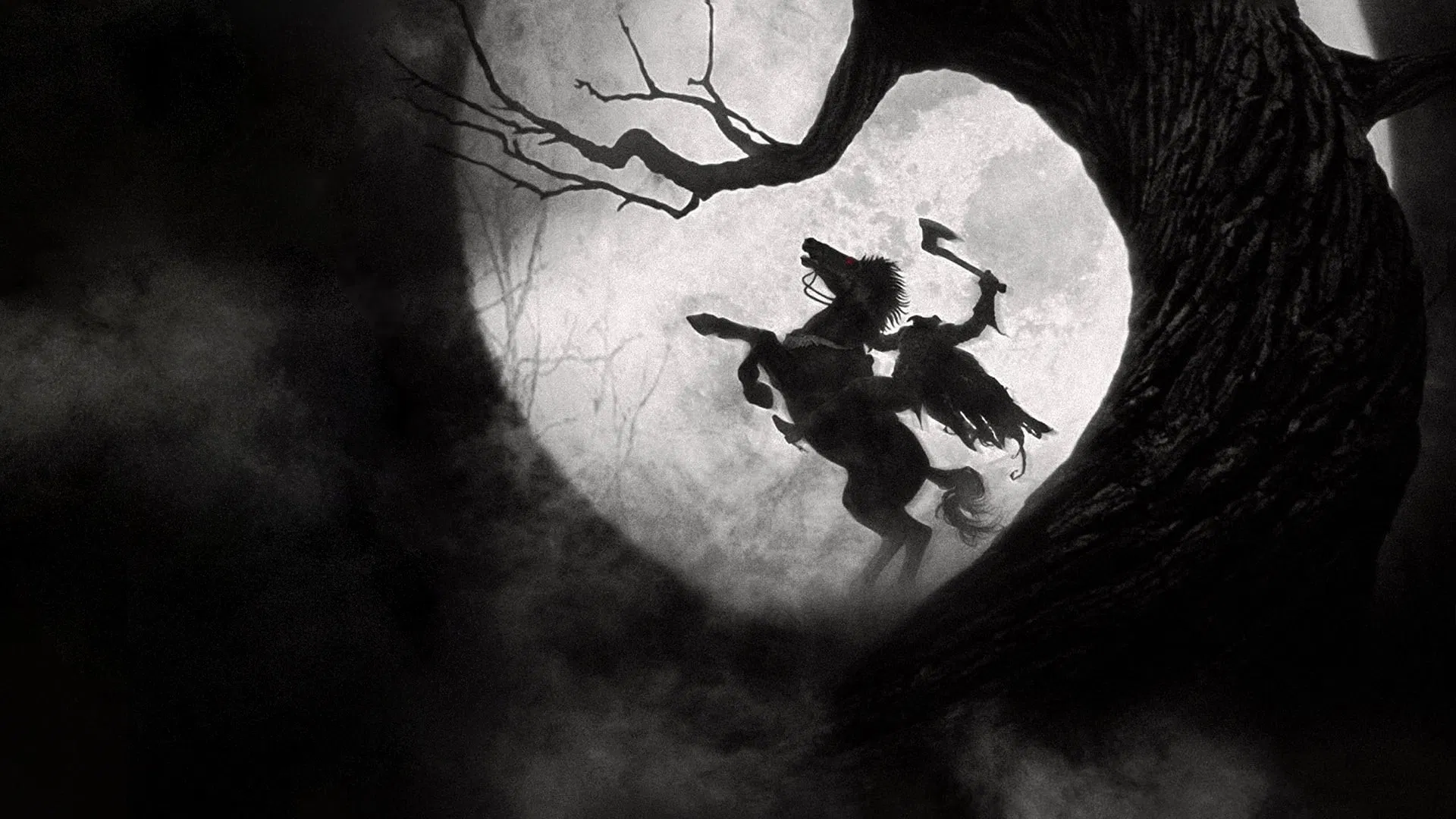
Ichabod Crane is sent to Sleepy Hollow to investigate the decapitations of three people; the culprit is legendary apparition The Headless Horseman.
In the fall of 1799, pragmatic New York City constable Ichabod Crane is sent to the upstate Dutch village of Sleepy Hollow to investigate a series of brutal decapitations of its residents, which included landowner Peter Van Garrett, his son Dirk, and widow Emily Winship. Received by the insular town elders—wealthy farmer Baltus Van Tassel; doctor Thomas Lancaster; the Reverend Steenwyck; notary James Hardenbrook; and magistrate Samuel Philipse—Ichabod learns that the locals believe the killer is the undead apparition of a headless Hessian mercenary, who is trying to find his missing head. Skeptical of the paranormal explanation, Ichabod begins his investigation and settles in the house of the Van Tassels, becoming romantically attached to Baltus’ spiritual daughter, Katrina. After Van Garrett’s servant, Jonathan Masbath, becomes the next victim, his teenage son volunteers as Ichabod’s assistant. On a tip from Philipse, Ichabod and Young Masbath exhume the bodies of the victims and learn that the widow died pregnant. Shortly after, Ichabod witnesses the Hessian killing Philipse. Together with Masbath and Katrina, Ichabod goes to the Western Woods, where a crone reveals the location of the Hessian’s grave at the “tree of the dead”, his portal into the living world. Ichabod digs up the grave and discovers the Hessian’s remains without a skull, deducing that it has been taken in order to control him.
That night, the Hessian kills town midwife Beth Killian and her family, as well as Katrina’s suitor, Brom Van Brunt, when he attempts to intervene. Ichabod hypothesi
Creator: Tim Burton
Oops! Is this show WOKE?
Only an account holder or member can file. Cite a scene, a line, or a pattern. Other account holders +1 or −1 that argument, once each. The show is not WOKE until enough of them have given a +1. Enough −1s remove the write-up, and it is no longer shown.
Sign in to file a woke label. One of each criterion per member.
Comments and reviews
Report a mistake
Same rule as woke labels: one report, a written reason, and the community +1 or −1 it — once per member. A net +5 applies the change. Editors can hold it for review, or apply it immediately.
No mistake reports yet.
Sign in to report a mistake. One report per field, per member.
Member review
June Pell Member
Oct 22, 2026
★★★★★★★★★★Sleepy Hollow sits in that odd spot for me where I enjoy putting it on when the leaves start turning, and then I spend half the runtime arguing with myself about what it actually is. Tim Burton wants a gothic fairy tale with fog thick enough to chew and a hero who faints at the sight of blood, and he mostly gets there. The problem is he also wants you to believe he is wrestling with Washington Irving, when he is really just using the name and the horseman the way a kid uses a plastic sword from a thrift store. There was not a great deal of plot machinery in the original tale to begin with, so pretty much any take can feel legitimate; an Easter Bunny version would probably still work if the production design stayed this committed. That does not mean the film earns every liberty it takes.
Johnny Depp’s Ichabod is the clearest example. I have heard people call this their favorite Depp performance, and I understand the affection. He plays the man as a bundle of nerves and Enlightenment gadgets, someone who trusts measuring tools more than local legends and then gets those tools broken against something he cannot catalog. The squeamishness is funny without tipping into full clown mode most of the time. Still, there are stretches where the gesturing and the soft voice start to feel like Depp inventing a character rather than finding the one the story needs. He is more skittish than scientifically stubborn, and that tilts the investigation scenes into comedy before the decapitations have fully settled into dread. Christina Ricci gives him something solid to bounce off; Katrina is watchful and warmer than the usual Burton ingenue, which helps when the plot starts stacking secrets around the Van Tassel household.
The village itself is the real achievement. Those bare trees, the pale skin of the townsfolk, the way every interior looks like it has never seen a proper noon—Emmanuel Lubezki and the production team sell a place that believes in curses the way other places believe in weather. Danny Elfman’s score leans hard into the ceremonial without becoming cartoonish. When the Headless Horseman finally rides, Christopher Walken’s brief living sequences give the ghost a nasty human origin that the film remembers at the right moments. The kills are abrupt and wet in a way that still startles; Burton has always been better at the sudden image than at sustained suspense, and here the sudden images are worth the ticket.
Where it frays is the middle hour’s conspiracy. The town elders all have something to hide, the will and the land and the church politics pile up, and you can feel the screenplay working overtime to turn a short ghost story into a mystery with enough scenes for a two-hour feature. Some of that labor pays off in the final reveal; some of it just feels like homework assigned to characters who would rather be running from a sword. I kept thinking of how often Burton “artistically reinterprets” material he seems to have absorbed through posters and tone rather than the page. It is not malice. It is a kind of confident laziness that produces beautiful surfaces and then asks those surfaces to carry themes they only half understand. The dark tone is one of the things I actually like in his work, the scruffy period detail and the refusal of sunshine, yet darkness alone is not the same as having something specific to say about fear or reason or inheritance.
I rated it 3.5 because the pleasures are genuine and the shortcomings are the familiar ones rather than fresh disasters. You get a fall atmosphere that few studio films bother to build anymore, a horseman who looks like he crawled out of a bad dream and stayed there, and a lead performance that is interesting even when it overreaches. You also get a script that keeps explaining itself past the point of necessity and a director who confuses mood boards with adaptation. I do not need perfect fidelity; I need the feeling that someone cared what the source was doing before they painted over it. Sleepy Hollow cares about looking haunted. It cares less about why the haunting mattered in the first place. That is enough for an October night and not quite enough for the pedestal some people want to put it on. I will watch it again when the weather turns. I will not pretend the second half is as sharp as the first ride through the woods.