
Find a mistake?
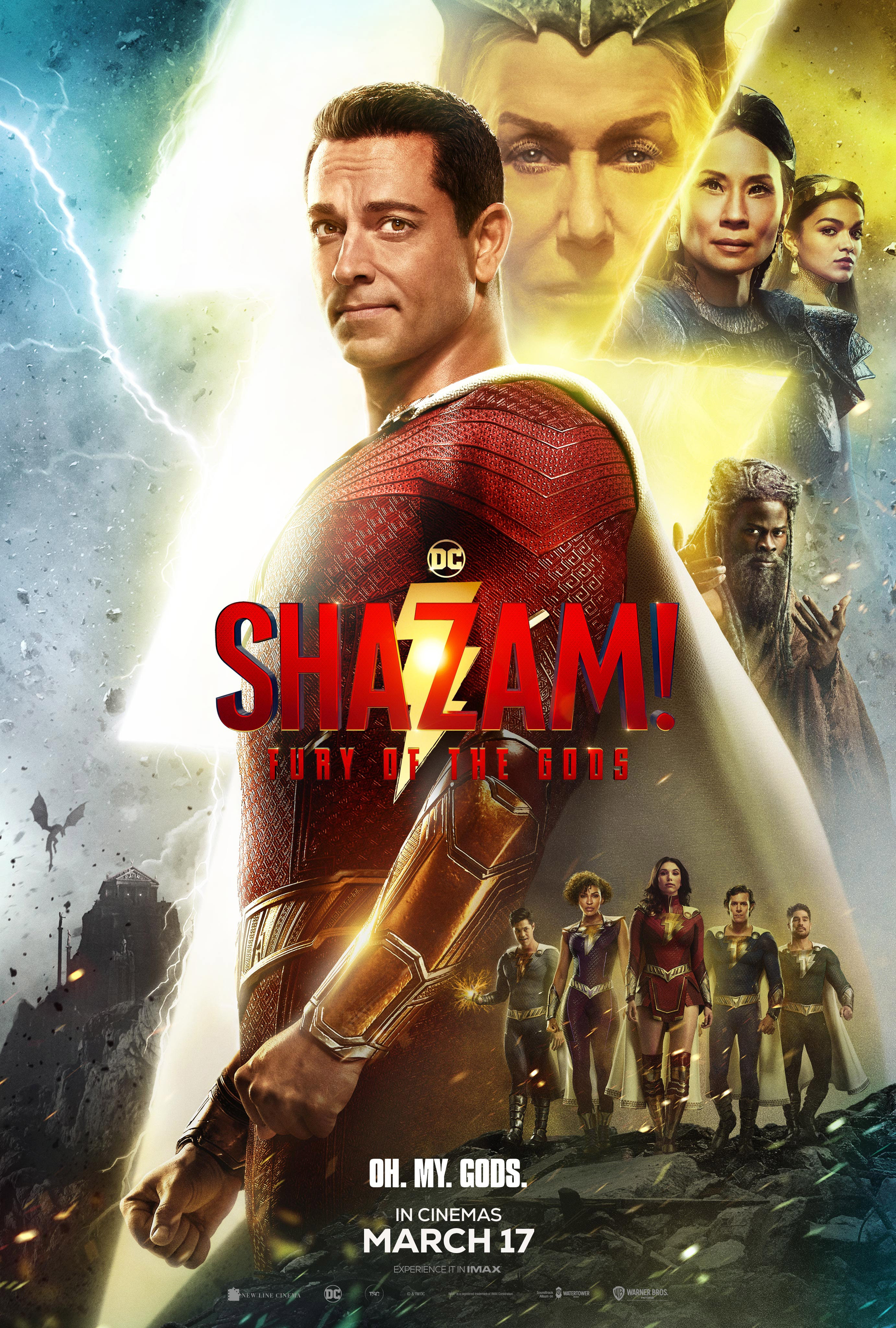


 MOVIE · 2023
Shazam: Fury of the Gods IS WOKE
–
Not ratedCommunity rating
Label it
IS WOKE
No summary on file yet. Know this one? Tell us.
WHAT CRITERIA MAKES IT WOKE?

Oops! Is this show WOKE?
Only an account holder or member can file. Cite a scene, a line, or a pattern. Other account holders +1 or −1 that argument, once each. The show is not WOKE until enough of them have given a +1. Enough −1s remove the write-up, and it is no longer shown.
Sign in to file a woke label. One of each criterion per member.
Comments and reviews
Report a mistake
Same rule as woke labels: one report, a written reason, and the community +1 or −1 it — once per member. A net +5 applies the change. Editors can hold it for review, or apply it immediately.
No mistake reports yet.
Sign in to report a mistake. One report per field, per member.
Member review
Ray Okonkwo Member
Sep 24, 2026
★★★★★★★★★★Shazam: Fury of the Gods keeps the same basic setup that worked in the first one, and that’s both the comfort and the limit. Billy still turns into the big guy with the lightning and the dumb grin, and the foster kids still get their own versions of the power. I like that the movie doesn’t pretend they’re all equally ready for it. Freddy’s still the loud one who wants the spotlight, Mary’s the responsible one trying to hold everything together, and the younger ones bounce between treating it like a game and realizing someone could actually get hurt. Those family beats are where the movie feels most like itself.
There’s a stretch early on where they’re just messing around with the powers in ordinary places—school, the house, trying to keep the secret while life keeps throwing normal teenage garbage at them. Those scenes have a looseness I responded to. It’s not trying too hard to be mythic yet. Billy’s still figuring out how to be the guy people look to without turning into a lecture. Zachary Levi plays the adult body with the kid energy in a way that still works for me; the timing on some of the jokes is off, but the physical comedy of a grown man reacting like a teenager lands more than it doesn’t.
When the Daughters of Atlas show up, the tone shifts and the movie has to carry more weight than it fully knows how to handle. Helen Mirren and Lucy Liu bring a cold certainty that the heroes don’t match at first, which is fine in theory. The problem is the revenge plot never quite digs in. They’re after the power that was taken, they want to unmake what was done to their father, and the movie states that clearly enough. But the personal stakes stay a little abstract. I wanted more friction between what they believe they’re owed and what Billy’s family has actually built with that same power. Instead it turns into big set pieces and glowing effects that look expensive without always feeling dangerous.
One sequence that stuck with me is the attack on the city where the siblings have to split up and cover different problems at once. You get little pockets of personality in the chaos—someone panicking, someone overconfident, someone trying to protect civilians while still being a kid underneath the magic. That multi-perspective approach is smarter than just lining everyone up for one big punch-out. It also exposes the unevenness. Some of the kids get clearer moments than others, and a couple of them feel like they’re along for the ride rather than driving anything. The movie wants the found-family idea to do a lot of emotional work, and sometimes it does. Other times it just reminds you the first film already covered that ground with more surprise.
The humor is hit or miss in the way these movies usually are. A few lines about the awkwardness of dual lives made me laugh out loud because they feel true to being a teenager who suddenly has cosmic responsibilities. Other jokes sit there and wait for a reaction that doesn’t come. I never got the sense the film was ashamed of being silly, which I appreciate. It just doesn’t always know when to quit while it’s ahead. The serious myth stuff and the candy-colored superhero antics keep bumping into each other instead of blending. When it leans into the absurdity of gods and teenagers sharing the same story, it has charm. When it tries to sound epic for too long, the air goes out of it.
Visually it’s busy. Lightning, portals, ancient power, collapsing structures—you’ve seen versions of this before, and the movie doesn’t reinvent any of it. What works better are the quieter costume and transformation beats, the way the kids still light up a little when they call the lightning even though they’ve done it before. There’s still wonder in that for them, and the camera sometimes catches it. I wish more of the runtime had stayed in that register instead of racing toward the next collision.
By the end I wasn’t angry at the movie. I was just aware of how much it was repeating its own best ideas without finding a sharper second layer. The family still matters. Billy still has to choose what kind of champion he wants to be when the easy win isn’t available. Those pieces are solid. The larger threat and the goddesses’ campaign never become as specific or as memorable as the kitchen-table and living-room stuff. That’s why it lands at three for me. It’s watchable, it has a handful of scenes I’ll remember fondly, and it doesn’t betray the tone that made the first one fun. It also doesn’t push hard enough in any new direction to feel necessary. If you liked hanging out with these characters before, you’ll get more of that. If you needed the sequel to raise the mythic stakes in a way that actually sticks, you’ll feel the gap. I left satisfied enough to not regret the time, and clear-eyed enough to know it won’t be the one I rewatch first when I want Shazam energy again.