



 MOVIE · 2025
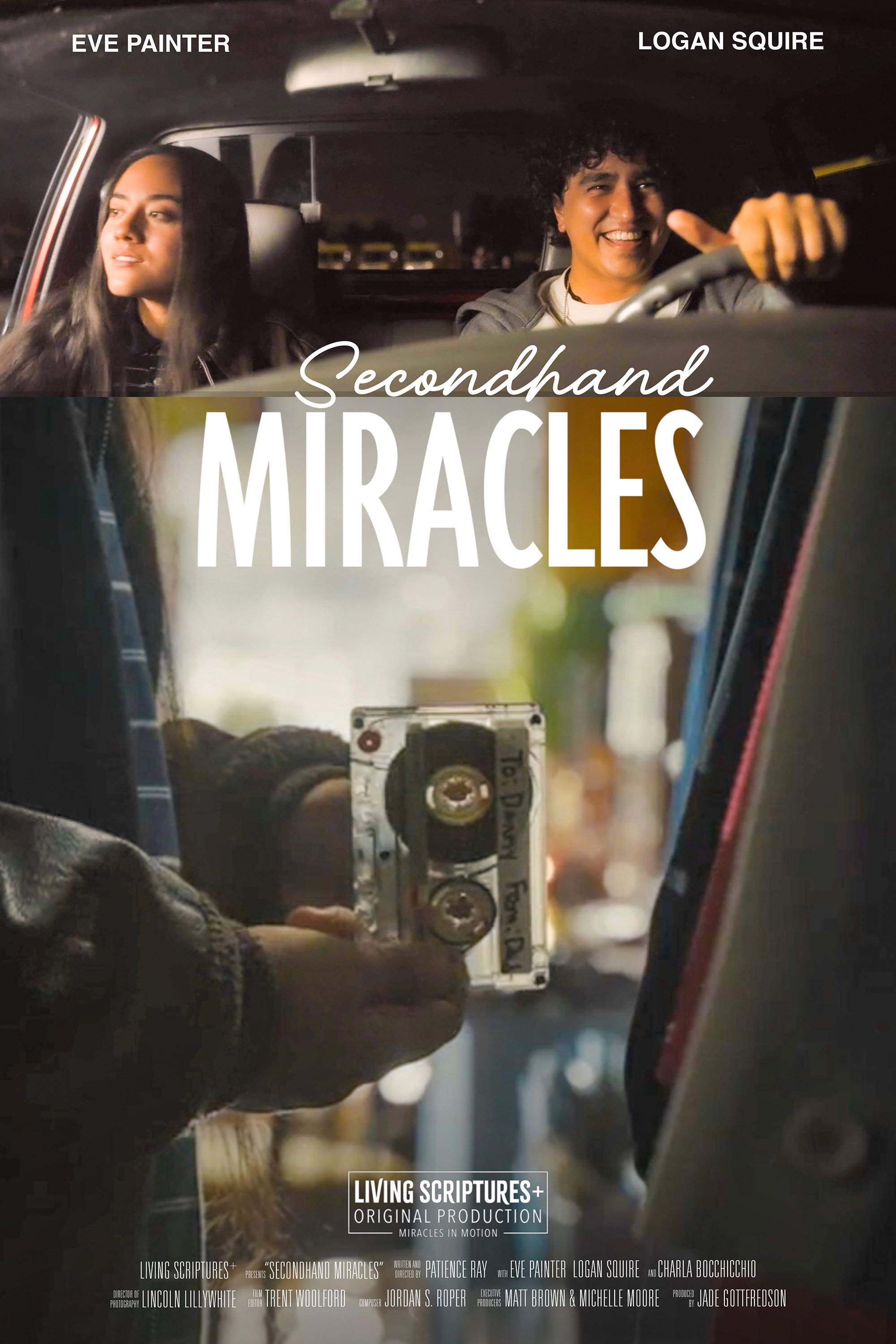
Secondhand Miracles
While struggling to move forward after her father’s accident, a teenage girl feels stuck in grief and uncertainty.
When she discovers a thrift store jacket with an unexpected message tucked inside, it sparks a quiet shift in her outlook.
As she shares her feelings with her brother, the two begin to reconnect, rebuild trust, and rediscover hope together.
Oops! Is this show WOKE?
Only an account holder or member can file. Cite a scene, a line, or a pattern. Other account holders +1 or −1 that argument, once each. The show is not WOKE until enough of them have given a +1. Enough −1s remove the write-up, and it is no longer shown.
Sign in to file a woke label. One of each criterion per member.
Comments and reviews
Report a mistake
Same rule as woke labels: one report, a written reason, and the community +1 or −1 it — once per member. A net +5 applies the change. Editors can hold it for review, or apply it immediately.
No mistake reports yet.
Sign in to report a mistake. One report per field, per member.
Member review
Wes Calder Member
Sep 30, 2026
★★★★★★★★★★Secondhand Miracles stays small on purpose, and that choice is what kept me with it. The setup is straightforward enough: a teenage girl whose father has been in an accident drifts through days that feel heavier than they should, then picks up a thrift-store jacket with a message inside that she didn’t expect. The jacket does not solve anything by magic. It just gives her and her brother a reason to look at each other again and talk about the quiet that has settled over the house. I rated it four because it trusts ordinary moments more than big speeches, and that trust mostly pays off without turning precious.
I keep coming back to how little the film forces. Grief after an accident can easily become a parade of monologues or montage music cues, but here the weight sits in the stalled routines and the way both kids move around each other without quite connecting. The thrift-store find interrupts that isolation in a way that feels accidental rather than engineered. She tries the jacket on, finds the note or whatever the message is, and suddenly the day has a different shape. Her brother notices. They start sharing the thing instead of carrying separate versions of the same worry. Simple conversations follow. Shared silences loosen. None of it is sold as a breakthrough therapy session. It is just two people remembering they live in the same place and that the next small step might be possible.
What works is the refusal to inflate the jacket into a symbol that lectures the audience. It is a secondhand object with someone else’s words in it, and those words happen to land at the right time. The girl tests a few acts of moving forward—nothing dramatic, just the kinds of choices that feel large when everything else has stopped. Her brother does the same in his own quieter register. The short runtime helps; there is no room for the story to circle back and explain itself twice. You get the household quiet, the discovery, the bridge it builds, and the sense that hope is being reclaimed in increments rather than declared. I appreciated that the film lets the siblings sit with the message without rushing them toward a tidy emotional finish line.
There is a dry honesty in how the accident itself stays mostly offscreen and in the past. We feel its effects in the stalled atmosphere more than in flashbacks or hospital scenes. That choice keeps the focus on what the kids can actually do now. Everyday life has gone heavy, and the jacket’s unexpected scrap of meaning gives them a shared object to hold while they talk about what comes next. I have seen plenty of stories that treat a found object like a destiny token. This one treats it more like a useful interruption. The girl starts paying attention outward again. The brother joins her. The grip of worry loosens because they are no longer carrying it alone in the same rooms. That is enough story for a short film, and it is handled with a light enough hand that it does not feel like homework.
If I am being precise about the four instead of a full five, it is because the piece occasionally leans on the gentleness a little too steadily. The emotional temperature stays even, which is a virtue until you notice you are waiting for one sharper edge or one moment that risks awkwardness. The conversations around the jacket are open and useful, yet they stay safely within the range of what a careful short film would allow. Still, underselling the drama is better than overselling it, and the film never pretends the jacket rewrites the accident or the uncertainty that follows. It only helps them reclaim a bit of forward motion together. That restraint is rarer than it should be.
I also liked that the thrift-store setting is allowed to be ordinary. No mystical lighting, no destiny soundtrack swell when she finds the jacket. It is just a place where other people’s coats hang, and one of them happens to contain something that shifts her attention. From there the siblings do the real work: sitting with the message, talking more openly, testing small acts. The short keeps its camera on those steps without cutting away to larger social lessons or external villains. The isolation was personal; the way out is personal too, shared between brother and sister. Watching them reclaim a little hope through something as plain as a secondhand jacket felt earned rather than assigned.
In the end the film left me with the sense that recovery after a sudden accident is less about grand gestures and more about finding any object or phrase that lets two people start speaking again. The jacket supplies that. The kids use it. Life remains unfinished and the father’s situation is still there, but the household quiet is no longer total. That is a modest claim, and Secondhand Miracles makes it cleanly. I do not need every short to reinvent the form. I need one that knows when to stop explaining and simply let the ordinary steps matter. This one does. Four stars feels right for a piece that stays true to its scale and trusts the audience to notice the small bridge being built without a billboard pointing at it. The message inside the jacket is unexpected; the film’s own quiet confidence is almost as welcome.