
Find a mistake?
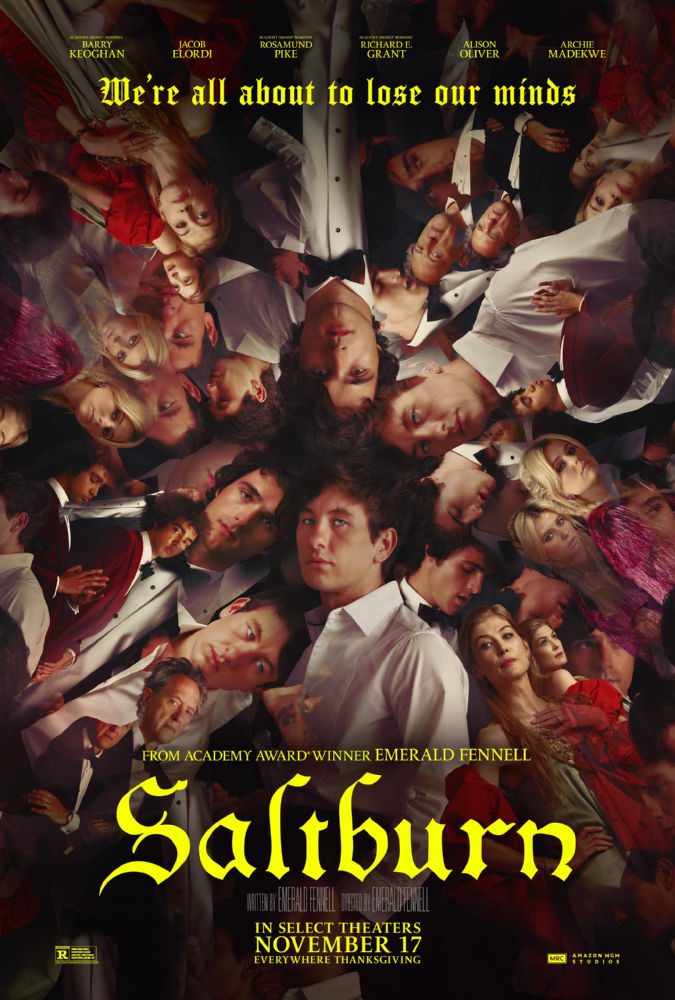


 MOVIE · 2023
Saltburn IS WOKE
–
Not ratedCommunity rating
Label it
IS WOKE
No summary on file yet. Know this one? Tell us.
WHAT CRITERIA MAKES IT WOKE?

Oops! Is this show WOKE?
Only an account holder or member can file. Cite a scene, a line, or a pattern. Other account holders +1 or −1 that argument, once each. The show is not WOKE until enough of them have given a +1. Enough −1s remove the write-up, and it is no longer shown.
Sign in to file a woke label. One of each criterion per member.
Comments and reviews
Report a mistake
Same rule as woke labels: one report, a written reason, and the community +1 or −1 it — once per member. A net +5 applies the change. Editors can hold it for review, or apply it immediately.
No mistake reports yet.
Sign in to report a mistake. One report per field, per member.
Member review
Peg Harlan Member
Oct 11, 2026
★★★★★★★★★★I went into Saltburn expecting something closer to the old country-house stories I grew up on, the kind where a outsider gets pulled into a grand family and everything slowly frays. They used to make them like this with a little more restraint, but this one takes the setup and runs it hard into darker territory. Oliver is the scholarship kid at Oxford who never quite fits, Felix is the golden aristocrat who takes a shine to him, and before long Oliver is spending the summer at the enormous Saltburn estate with the rest of the Cattons. Idle days, drinking, sunbathing, long dinners. On the surface it works as a story about desire and envy and the hunger to belong. I stayed with it because the direction keeps things moving and you do keep wondering what is going to happen next.
Barry Keoghan plays Oliver with this quiet, watchful energy that never quite settles, and Jacob Elordi makes Felix magnetic enough that you understand why someone would latch on. Rosamund Pike as the mother is brittle and glamorous in a way that feels lived-in, and the rest of the household has their own sharp edges. The place itself looks expensive and slightly decaying at the same time, which fits. There is real craft in how the camera sits on these people and the grounds. Lighting and framing do a lot of quiet work carrying the mood from playful to something sourer.
What I noticed, and what kept pulling me out, was how heavily the film leans on Oliver’s obsession with Felix. It is not just longing or class envy; the movie keeps pushing repeated homoerotic tension and then full explicit male sexual scenes that go well past what the story actually needs. The bathtub sequence and the grave encounter in particular feel like they exist to make a point rather than to move anything forward. I am not squeamish about sex on screen, but these moments sit there in a way that feels incongruent, almost forced, as if the film is checking a box about desire between the two men instead of letting the darker relationship grow out of character. Once you see that pattern it is hard to unsee. It turns what could have been a sharp study of hanging onto someone richer and more beautiful into something that keeps pausing to underline the queer heat. That choice is what makes the whole thing register as woke to me. The rest of the plot has its own holes and some of the late reveals land softer than they should, but the good bones of the story still carry you through.
I found myself oddly connected to Oliver even while he was doing worse and worse things, then the film cut that connection clean and left me sitting there a little adrift. That is effective when it works. The uncomfortable stretches are handled with enough control that they feel deliberate rather than random shock. At the same time the final stretch has a case of explaining too much; once the pieces are laid out you can feel the air go out of the room. A tighter ending without the lecture would have helped. Still, the characters around the edges stay interesting, and the summer atmosphere is thick enough that you feel the heat and the boredom and the slow rot.
Overall it was a refreshing watch more often than not. Well put together, performances that hold, and a plot that mostly earns its turns even when you can see a few of them coming. The forced nudity and the overplayed sexual fixation on Felix are real shortcomings, yet the better parts of the storytelling make up for them enough that I did not walk away angry. I would not call it a favorite, and I would not put it on again tomorrow, but it earned the time. Three and a half stars feels right: entertaining, occasionally unsettling in the ways it means to be, and weighed down by that unnecessary gay-ratio emphasis that keeps announcing itself. If they had trusted the class and belonging material more and dialed back the explicit male scenes that exceed the story’s needs, it might have sat cleaner. As it stands, it is a solid, strange summer at the big house that never quite decides how much it wants to shock versus how much it wants to say something real.