



 MOVIE · 2021
Sabina
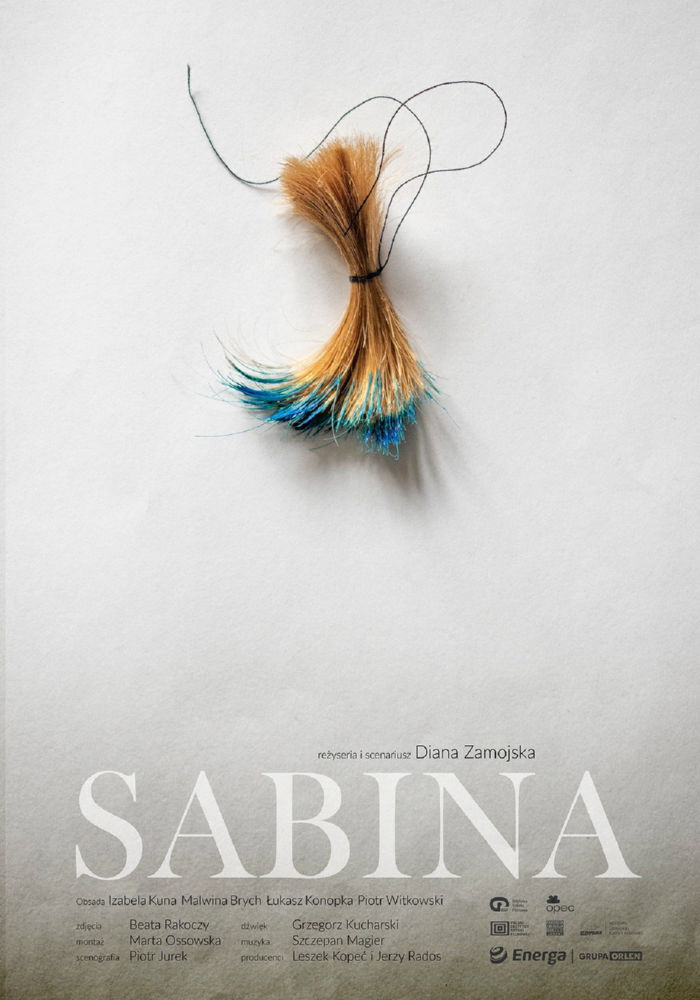
Fifty-year-old Sabina leaves a disappointing evening with a younger lover and is stopped by a blue-haired girl named Anka who suddenly needs her help. Their chance encounter pulls Sabina into an unexpected personal crisis.
Sabina follows Sabina, a fifty-year-old woman reeling from a lousy evening spent with a younger lover. She steps into a taxi intending to put the night behind her when a blue-haired girl named Anka suddenly runs into the street and begs for assistance. The abrupt plea interrupts Sabina’s retreat and forces an immediate decision about whether to get involved. What begins as a simple request for help quickly draws the older woman out of her own frustrations and into Anka’s urgent situation. The two strangers, separated by age and circumstance, are thrown together by the roadside encounter. Sabina must weigh her desire to escape the evening against the clear need standing in front of her.
As the night continues, Sabina and Anka navigate the consequences of that sudden meeting. Sabina’s recent disappointment with her younger lover lingers while she tries to understand what Anka truly requires. The blue-haired girl remains dependent on the older woman’s willingness to stay involved rather than drive away. Their uneasy partnership tests Sabina’s patience and sense of responsibility. Small choices about trust and assistance shape how far each is willing to go for the other. The story stays centered on the immediate human connection formed after the taxi stop rather than on larger external plots.
Click any of the following icons below to rent or stream it!
Oops! Is this show WOKE?
Only an account holder or member can file. Cite a scene, a line, or a pattern. Other account holders +1 or −1 that argument, once each. The show is not WOKE until enough of them have given a +1. Enough −1s remove the write-up, and it is no longer shown.
Sign in to file a woke label. One of each criterion per member.
Comments and reviews
Report a mistake
Same rule as woke labels: one report, a written reason, and the community +1 or −1 it — once per member. A net +5 applies the change. Editors can hold it for review, or apply it immediately.
No mistake reports yet.
Sign in to report a mistake. One report per field, per member.
Member review
Lila Marsh Member
Oct 2, 2026
★★★★★★★★★★I put Sabina on because I kept seeing the name Wurmbrand pop up in older books about underground churches, and I finally wanted the earlier half of that story instead of jumping straight to Richard’s prison years. What I got was quieter than I expected and, for once, not embarrassed by its own subject.
Sabina starts as an atheist in a world that is collapsing in real time. Nazi occupation is not background flavor here; it is the daily weather. People disappear. Neighbors become liabilities. Being Jewish and being outspoken both carry the same cold arithmetic. The film does not dress that up with speeches about the arc of history. It just lets the fear sit in the room while she still has her old certainties intact. That part felt honest to me. Plenty of stories rush the conversion so the audience can feel uplifted by minute forty. This one lets the old outlook fail first.
What shifted her was not a single lightning bolt. It was a string of concrete choices under pressure—hiding people when it could have cost her everything, holding to prayer when there was no visible rescue coming, standing next to Richard when the safer move would have been distance. Faith arrives as something that has to be lived before it can be declared. I liked that. Abstract theology can float; this version had weight because the risks were immediate and personal. Family bonds matter more than manifesto moments. You watch her decide, again and again, that the new conviction is worth the danger, and the decisions themselves do the convincing.
I am not usually drawn to faith films that treat belief like a costume change. Too many of them either sneer or over- sweeten. Sabina mostly avoids both. Christianity is not framed as the hobby of simpletons or the mask of the bigot. It is treated as a costly allegiance that people actually bleed for. In a climate where religious conviction on screen so often gets the cartoon treatment, that restraint stood out. The movie does not need to lecture you about why prayer matters under occupation; it simply shows people praying when the alternative is despair or collaboration, and lets the picture do the work.
Production-wise it is modest. No sweeping budget flex, no attempt to look like a prestige war epic. The performances stay close to the ground. You believe the fear in the small rooms and the stubbornness once the decision is made. A few scenes lean a little tidy—moments where the dialogue wants to underline what the faces already told you—but they are not fatal. I would rather have a slightly earnest true story than another sleek production that is ashamed of the faith it is supposedly depicting.
The prequel framing works. Knowing that Richard’s longer imprisonment comes later gives these earlier years a particular edge. You are watching the foundation get poured under fire. Their marriage is not a subplot; it is part of how the resolve hardens. Shared belief under threat is different from private belief in safety, and the film understands that without turning every conversation into a seminar.
I finished it thinking about how rare it is to see atheism portrayed as something a person can actually leave behind without the exit being mocked or pathologized. Sabina’s earlier outlook is not cartoon villainy; it is simply insufficient for what the occupation demands of her. The Christian turn is not sold as a personality upgrade or a political brand. It is survival of a different kind—moral and spiritual continuity when the state is trying to erase both. That landed cleanly for me.
Would I call it perfect? No. Pacing drags in a couple of stretches, and anyone allergic to sincere religious drama will bounce off it early. But if you can sit with a story that takes conviction seriously and refuses to apologize for it, this one holds up. It left me more interested in the rest of the Wurmbrand record, not less. That is usually my test. When a film about real people makes me want the next chapter instead of checking my phone, it did its job.
Clear take: Sabina is a steady, unfashionable account of a woman whose atheism could not survive the century she was handed, and whose faith was forged in the only conditions that really test it. I respected it. Four stars feels right—strong enough to recommend, honest enough not to pretend it is something flashier than it is.