
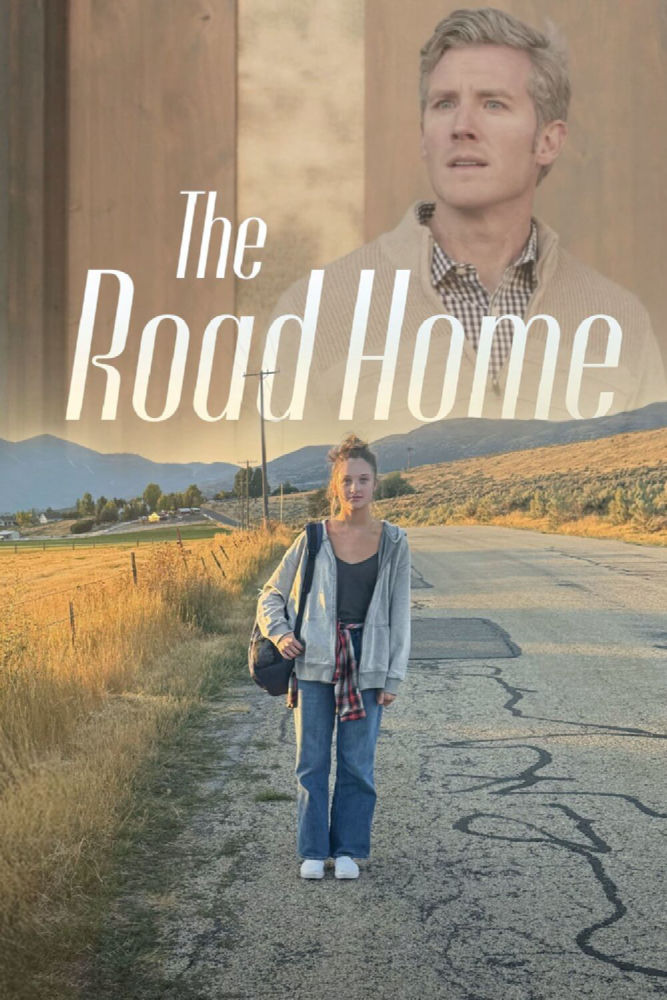



 TV · 2025
Road Home
A mother uproots her family from the city to return to her North Carolina hometown and help keep the family farm running after her father falls ill.
The Road Home follows Alison Matson, a wife and mother who leaves Detroit with her husband and children after her father suffers a serious health scare. She arrives back in the small North Carolina community where she grew up, determined to stabilize the family farm and business that have defined her parents’ lives. Alison must relearn the rhythms of rural work while her husband adjusts to unfamiliar neighbors and slower days. Their children, including a teenage daughter and younger son, confront new schools, local expectations, and the sudden closeness of extended family. Early episodes center on practical crises around the farm, old friendships Alison left behind, and the quiet strain of three generations sharing one household.
As the weeks unfold, Alison’s father tries to reclaim authority over the land even as his strength falters, forcing difficult conversations about succession and pride. Her husband takes on unfamiliar chores and begins to form his own ties to the town, while the children test boundaries with local kids and discover both the comforts and limits of hometown life. Relationships with longtime residents reopen old wounds and unexpected alliances. The family repeatedly chooses whether to stay and rebuild or retreat to the life they left, measuring each decision against the farm’s survival and their own sense of home.
Oops! Is this show WOKE?
Only an account holder or member can file. Cite a scene, a line, or a pattern. Other account holders +1 or −1 that argument, once each. The show is not WOKE until enough of them have given a +1. Enough −1s remove the write-up, and it is no longer shown.
Sign in to file a woke label. One of each criterion per member.
Comments and reviews
Report a mistake
Same rule as woke labels: one report, a written reason, and the community +1 or −1 it — once per member. A net +5 applies the change. Editors can hold it for review, or apply it immediately.
No mistake reports yet.
Sign in to report a mistake. One report per field, per member.
Member review
Peg Harlan Member
Oct 2, 2026
★★★★★★★★★★Road Home is the kind of picture that reminds you how much weight a simple story can still carry when nobody is trying to turn it into a lecture. Gui and Lu were college sweethearts who lost each other for a decade, found their way back, and decided the marriage was worth the fight even when the relatives dug in their heels. That setup alone could have gone soft or soapy, but the movie keeps its feet on the ground. You feel the years that passed between them without endless flashbacks explaining every missed birthday. They just pick up the thread and start building something real, and the resistance from family feels like the ordinary kind of pressure people still deal with when two lives don’t line up the way elders expected.
I liked that the wedding wasn’t sold as some grand statement. It was two people choosing each other against the grain, and then the story moves on to the harder part: what happens when the body fails you right as you’re trying to start a family. Lu’s injury and the coma land without a lot of medical jargon or fake urgency music. Gui has to keep going—care for him, keep the household from falling apart, and then deliver their daughter while he’s still under. That stretch could have turned into pure misery porn, but it doesn’t. You watch her hold the line day after day, and it feels earned because the earlier scenes already showed you who these two were to each other before the hospital bed entered the picture.
They used to make them like this more often—stories about ordinary endurance instead of people discovering their true selves through some checklist of modern virtues. Gui isn’t written as a superhero mom who instantly masters everything. She’s tired, stubborn, sometimes short with the relatives who never fully came around, and still she stays. The birth of the daughter while Lu is unconscious isn’t played for cheap tears either. It’s quiet, a little raw, and it lands because the movie has already spent time on the small ways they had begun to plan a life together. You understand what she’s protecting.
Family opposition is handled with a light hand too. Nobody turns into a cartoon villain. Some of the pushback comes from pure habit and fear of change; some of it feels like genuine worry that the old wounds from those ten years apart never fully healed. The film lets those arguments sit in the room without forcing a tidy speech that solves everything. By the time Gui is managing a newborn and a comatose husband, those earlier tensions just become another weight she has to carry, not a subplot that needs its own victory lap.
I gave it four stars because the core holds. The reconnection after a decade feels believable—awkward at first, then steady. The marriage decision has real stakes without turning into melodrama about destiny. And the medical crisis tests the bond in a way that doesn’t rely on miracles or sudden personality transplants. You see Gui make the daily choice to stay present, and that choice matters more than any big monologue. The newborn scenes have a tenderness that doesn’t tip into syrup. A lesser movie would have milked every close-up of the baby for all it was worth. This one trusts the audience to sit with the silence and the waiting.
Where it loses the fifth star is in a few stretches that linger a little too long on the same emotional note. Once Lu is in the coma, the rhythm slows, and a couple of hospital sequences repeat the same quiet despair without adding much new information. I never checked out, but I did feel the runtime in those spots. A tighter cut of the middle act would have kept the momentum sharper. There’s also a slight softness in how some of the extended family resolve their feelings; a bit more friction left on the table might have felt truer. Still, those are quibbles against a film that mostly knows what it’s doing.
What stayed with me was the sense of two people who had already lost each other once and refused to lose the second chance, even when one of them couldn’t speak or open his eyes. Gui’s care isn’t glamorous. It’s meals, waiting rooms, figuring out how to hold a baby and still talk to a man who might not hear her. That kind of love doesn’t need to announce itself. The movie understands that. It doesn’t dress the story up with fashionable side issues or try to make the couple stand in for larger social arguments. They’re just Gui and Lu, trying to keep a home standing when half of it is suddenly silent.
I walked away glad I spent the time. It’s not flashy. It won’t give you a dozen quotable lines. But it treats commitment and patience as something worth filming without apology, and that feels rarer than it should. If you’ve ever watched someone you love go through a long recovery—or waited for news that refused to come on schedule—you’ll recognize the texture here. The early college history, the contested wedding, the sudden injury, the birth that happens without the father awake: all of it serves the same quiet point. Some bonds survive the years apart and then survive the hospital corridor too. Road Home doesn’t oversell that idea. It just lets you live with it for a couple of hours, and most of those hours are honest ones. Four stars feels right—strong work that could have been even tighter, but still the real thing.