
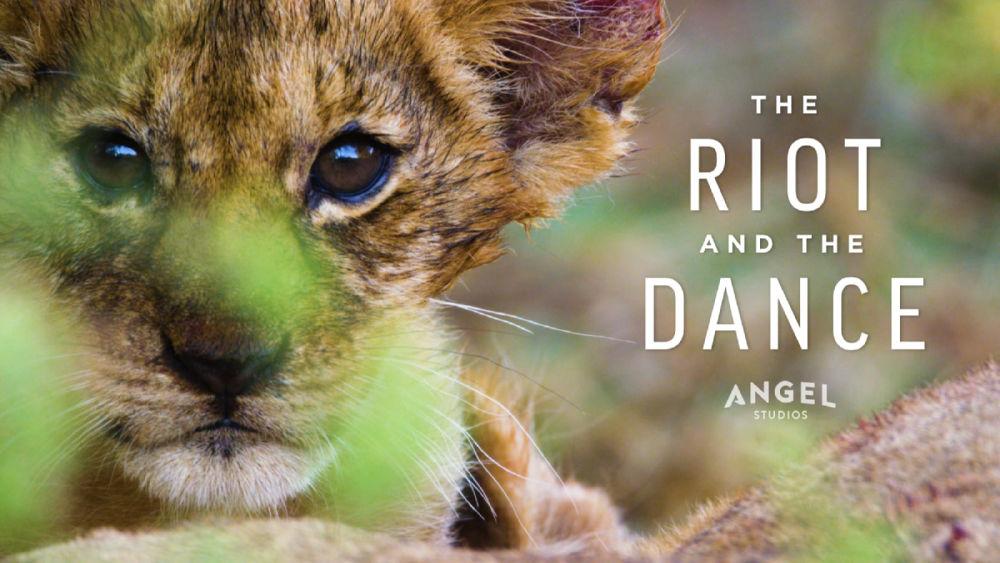



 TV · 2024
The Riot and the Dance Series
An enthusiastic biologist travels across diverse global ecosystems to showcase the incredible beauty, intricate design, and survival mechanisms of the animal kingdom from a faith-centered, creationist perspective.
The narrative functions as an educational and visually vibrant journey through the natural world, exploring the profound complexities of wildlife and their habitats. Operating as a nature documentary with an optimistic, celebratory tone, the series follows its primary guide as he explores distinct environments ranging from local backyards to wild landscapes. The overarching storyline is structured around demonstrating the harmony and artistry found within nature, arguing that the wild behaviors and physical designs of creatures are evidence of a purposeful creator rather than random evolutionary chance.
Throughout the episodes, the focus centers on up-close encounters with a wide array of animals, including reptiles, birds, and insects, highlighting how they adapt to challenges like predation, camouflage, and climate extremes. The production balances scientific facts about biology and ecology with accessible, family-friendly narration that encourages viewers to appreciate the outdoors. By examining the often-overlooked wonders of lesser-known species alongside majestic apex predators, the series aims to foster a sense of environmental stewardship and spiritual reflection through the lens of natural science.
Click any of the following icons below to rent or stream it!
Oops! Is this show WOKE?
Only an account holder or member can file. Cite a scene, a line, or a pattern. Other account holders +1 or −1 that argument, once each. The show is not WOKE until enough of them have given a +1. Enough −1s remove the write-up, and it is no longer shown.
Sign in to file a woke label. One of each criterion per member.
Comments and reviews
Report a mistake
Same rule as woke labels: one report, a written reason, and the community +1 or −1 it — once per member. A net +5 applies the change. Editors can hold it for review, or apply it immediately.
No mistake reports yet.
Sign in to report a mistake. One report per field, per member.
Member review
Peg Harlan Member
Oct 7, 2026
★★★★★★★★★★I sat down with Riot and the Dance Series mostly because I wanted something quiet that still had some life in it. An enthusiastic biologist packing up and heading out to different corners of the world to look at animals up close, talking about how they are put together and how they manage to keep going. He frames the whole thing around the idea that what you are seeing is design, not accident, and that the patterns and the instincts point somewhere intentional. That part landed with me. It feels like a straight conversation instead of a lecture that pretends to be neutral while quietly ruling certain conclusions out of bounds.
The camera work is clean and patient. You get time with the creatures instead of constant cuts meant to keep you from getting bored. Local yards turn into little stages for insects and birds, then the show opens up into wider country where the same attention is paid to bigger animals and the way their bodies and habits fit the place they live. He does not rush past the odd details. A particular way a joint bends, the timing of a migration, the camouflage that actually works—he slows down enough to let you notice them. I found myself pausing a couple of times just to look again. That kind of care is rarer than it should be.
What keeps it from going higher for me is the sameness that creeps in after a few episodes. The core argument is clear early on, and it stays clear. Purposeful creation over random process. Fair enough, and I am glad someone is willing to say it without hedging. But the structure starts to feel familiar: arrive, observe, connect the dots back to the same foundation. I never got tired of the animals themselves, yet I did start anticipating the next sentence before it arrived. A little more variation in how the idea is approached would have helped. Some nights I wanted him to simply stay quiet longer and let the footage carry more of the weight. They used to make them like this in spots—long looks, fewer explanations—and those stretches are still the ones that stick with me.
Tone-wise it stays optimistic without turning syrupy. He is clearly glad to be out there, and that gladness is not performed. You can tell he has spent real time learning the habits of whatever he is filming that day. The faith angle is present and open, not sneaked in at the end as a surprise moral. For me that honesty is a plus. Too many nature programs treat any mention of a Creator as something to be embarrassed about or gently corrected. This series does the opposite and does not make a big production out of the choice. It just proceeds as if the question of origin matters and as if beauty and function are allowed to mean something.
I did not need it to convert anyone. I needed it to hold my attention while treating the living world as worth careful notice, and on that score it mostly succeeds. The weaker stretches are the ones that circle the same point without adding a new angle or a sharper example. When it stays close to the particular animal in front of the lens, the hour goes by easily. When it pulls back into broader statements I had already heard two episodes earlier, my mind wandered toward the laundry or the next cup of coffee. That is why it settles at three rather than four. Solid, sincere, worth watching when you want something that does not apologize for its starting point, yet not quite tight enough across the whole run to keep every installment feeling fresh.
There is a steadiness here that I appreciate. No frantic editing meant to manufacture excitement. No sudden turn into scolding about how everything is collapsing. Just a man who likes biology enough to drag cameras into the heat and the mud so the rest of us can see what he sees. I would watch another season if they found ways to vary the rhythm and trust the pictures a little more. As it stands, it is a decent series that knows what it believes and is not afraid to show its work. That is rarer than good lighting, and it is enough to make the evenings I spent with it feel like time well used even when I wished a few of the monologues had been shorter.