



 MOVIE · 2014
Redemption of Henry Myers
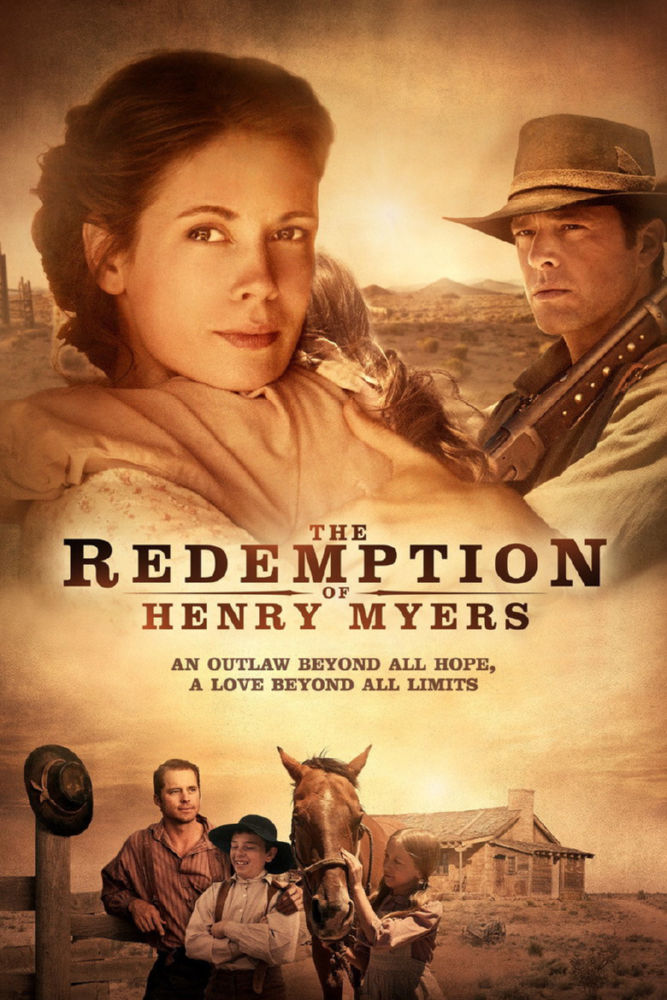
Henry Myers faces a challenging life after a heist goes wrong, betrayals, and death. Upon finding kindness from a widow and her children, he questions his choices.
The Redemption of Henry Myers follows the tumultuous life of a bandit seeking a second chance at morality. After a bank robbery goes wrong and results in the death of his partner, Henry Myers is betrayed and left for dead by his own ruthless gang. Stripped of his loot and severely wounded, his fate takes an unexpected turn when he is found and nursed back to health by a deeply religious widow and her two children. Their unconditional kindness and faith spark a profound internal conflict in Henry, forcing him to confront the dark reality of his past crimes and question whether he is truly capable of change.
As Henry begins to embrace this newfound sense of family and purpose, his dark past inevitably catches up with him. His former gang tracking him down forces him to make a definitive choice between returning to his violent ways or standing up to protect the innocent people who saved his life. Through themes of forgiveness, faith, and accountability, the film delivers a classic tale of frontier justice and spiritual renewal. It ultimately illustrates that while the path to redemption is fraught with danger, true transformation comes from the willingness to sacrifice oneself for others.
Click any of the following icons below to rent or stream it!
Oops! Is this show WOKE?
Only an account holder or member can file. Cite a scene, a line, or a pattern. Other account holders +1 or −1 that argument, once each. The show is not WOKE until enough of them have given a +1. Enough −1s remove the write-up, and it is no longer shown.
Sign in to file a woke label. One of each criterion per member.
Comments and reviews
Report a mistake
Same rule as woke labels: one report, a written reason, and the community +1 or −1 it — once per member. A net +5 applies the change. Editors can hold it for review, or apply it immediately.
No mistake reports yet.
Sign in to report a mistake. One report per field, per member.
Member review
June Pell Member
Sep 30, 2026
★★★★★★★★★★Redemption of Henry Myers sat on my list for a while because the title does half the work already, and I wasn’t sure I needed another frontier story about a man trying to put down the gun. I watched it anyway on a quiet night and came away feeling it earns its place more than it surprises. It knows the beats of this kind of tale and mostly stays honest with them, even when the honesty gets a little thin.
Henry Myers is the kind of outlaw the West has always made room for: hard, practical, not given to speeches. The collision with a widow and her boy is the hinge, and the film doesn’t pretend it’s destiny so much as friction. He lands near their lives after violence that should have sent him riding hard in the other direction, and then he doesn’t. That choice is the whole movie. You watch him notice the boy’s fear and the mother’s steadiness, and you watch him start to measure his old code against something quieter. It isn’t soft. The land still feels lawless, and the past still has hands on him. Partners from the trail don’t vanish just because he found a porch to sit on.
What worked for me was the patience in those middle stretches. A lot of these pictures rush the turn from killer to caretaker so you can get to the shootout. This one lets the discomfort sit. Myers isn’t suddenly wise or pure; he’s awkward in a household, aware he doesn’t belong, and still pulled by the chance to protect rather than take. I liked that the widow isn’t written as a sermon. She’s practical, tired, and clear-eyed about risk. The boy’s presence matters without turning into a mascot for virtue. You feel the cost in small ways—how long Myers stays when an outlaw shouldn’t, whether he confesses anything, whether he will stand between the family and the men who know what he used to be.
The trouble is that the film sometimes trusts the idea of redemption more than it builds the pressure around it. When the old life comes back, the conflict is familiar: ride on, or stay and pay. I didn’t need a brand-new structure, but I wanted sharper edges on the choices. A few scenes lean on the gravity of the theme instead of earning another turn of the screw. You can sense the ending approaching before the characters fully force it. That left me at a remove in the last act, even when the stakes on paper were high. The violence, when it comes, is blunt enough, but it doesn’t always feel like the inevitable bill for everything that came before so much as the required chapter.
Performance-wise, the lead carries the weight without grandstanding. You believe the muscle memory of a man who solved problems with a gun, and you believe the hesitation that creeps in once there’s a table and a child in the room. Supporting turns are steady rather than flashy. Nobody is trying to win an award speech; they’re trying to make a hard life look lived-in. The frontier itself is treated as weather and distance and scarce law, not a postcard. I appreciated that. It keeps the story from floating into myth too early.
I keep circling back to whether redemption is possible on these terms. The movie asks it straight and doesn’t fully dodge the bill. Myers has to face what he already did, not just decide to be better tomorrow. That matters. Too many stories treat a changed heart like a clean slate. Here the slate is scored. Still, I wished for one or two harder reckonings—moments where the family sees him more clearly, or where his old partners force a choice that can’t be walked back with silence. Without those, the arc feels a shade smoother than the premise promises.
Pacing is mostly even. It doesn’t drag in the quiet parts, which is where a film like this lives or dies. Dialogue stays plain. People say what they need and stop. I prefer that to monologues about the soul of the West. There is a short side path early on with the aftermath of the bloody encounter that first ties him to the widow’s household; it grounds the rest, then the film returns to the daily pull of staying versus running. That rhythm suited me.
I rated it three because it does solid work inside a well-worn frame without embarrassing itself or reaching past its grasp. It isn’t the deepest cut on guilt and belonging I’ve seen, and it isn’t empty either. If you like outlaw stories that pause long enough for a man to notice he might want a different life, and you’re willing to accept some familiar turns, it holds. If you need the theme to cut bone-deep every time, you may leave wanting more pressure on the final choices. I left thinking about the boy’s face more than the gunfire, which is probably the point, and also about how hard it is to make redemption feel costly without turning the whole thing into a lecture. This one mostly avoids the lecture. It just doesn’t always make the cost sting as much as it could.
Would I revisit it soon? Probably not. Would I recommend it to someone who likes quiet westerns with a moral spine and no need for modern cleverness? Yes, with the caveat that it’s a steady three, not a hidden gem. The title tells you the destination. The film’s job is the road there, and the road is honest enough, if a little worn in the ruts.