
Find a mistake?
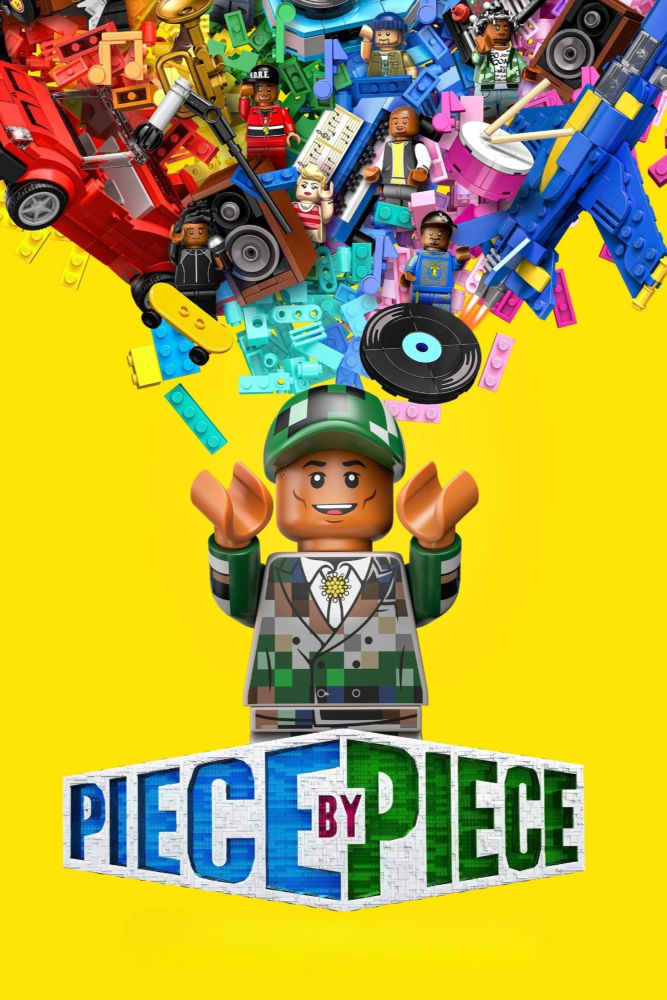


 MOVIE · 2024
Piece By Piece IS WOKE
–
Not ratedCommunity rating
Label it
IS WOKE
No summary on file yet. Know this one? Tell us.
WHAT CRITERIA MAKES IT WOKE?


Oops! Is this show WOKE?
Only an account holder or member can file. Cite a scene, a line, or a pattern. Other account holders +1 or −1 that argument, once each. The show is not WOKE until enough of them have given a +1. Enough −1s remove the write-up, and it is no longer shown.
Sign in to file a woke label. One of each criterion per member.
Comments and reviews
Report a mistake
Same rule as woke labels: one report, a written reason, and the community +1 or −1 it — once per member. A net +5 applies the change. Editors can hold it for review, or apply it immediately.
No mistake reports yet.
Sign in to report a mistake. One report per field, per member.
Member review
June Pell Member
Sep 20, 2026
★★★★★★★★★★Piece by Piece sat with me longer than I expected a Lego documentary about Pharrell to. I went in mostly curious about the format—brick versions of real people telling a music story—and came out feeling like I’d spent an evening with someone who actually loves the process of making things more than the finished product. That tracks with what I know of Pharrell, or at least the version of him that keeps showing up in interviews over the years. The film doesn’t try to turn him into a myth. It just follows the thread from a kid in Virginia Beach doodling and daydreaming to the guy who could walk into a session and leave with a beat that still gets played twenty years later.
The Lego choice is the obvious hook, and for a while it works better than it has any right to. There’s something disarming about watching tiny plastic figures stand in for Timbaland, Chad Hugo, or whoever else floated through those early circles. It keeps the tone light even when the story hits the usual stretches of hustle, rejection, and late-night studio grind. I kept thinking about how animation lets you show the inside of a creative moment without needing grainy B-roll or talking-head solemnity. A brick Pharrell can literally build a song in front of you. That felt closer to how music actually gets made than most glossy docs manage.
Still, the novelty thins out. After a certain point I wanted more texture from the people around him and less of the same upward arc. The Neptunes years and the N.E.R.D. detours get their space, and the crossover hits are treated with the right mix of pride and slight amazement that anyone ever green-lit some of those experiments. Fashion gets a look-in too, which makes sense if you’ve followed how Pharrell treats clothes like another kind of beat. But the film sometimes skates across the harder edges—money fights, creative rifts, the plain exhaustion of staying relevant—like it’s afraid the plastic medium can’t hold them. I don’t need misery porn, but a little more friction would have made the wins feel less inevitable.
What I liked most was the insistence that small ideas compound. A sketch, a half-melody, a weird sample choice, a conversation that goes nowhere until three months later it becomes the hook. The movie keeps circling back to that without turning it into a TED Talk. You see it in the way the brick figures huddle over consoles or just sit with the silence between takes. That part felt personal to me. I’ve never produced a chart topper, but I’ve sat in rooms where the good idea only arrived after everyone stopped trying so hard. The film gets that quiet enough that I didn’t feel lectured.
Pharrell’s own voice anchors it. The remote interviews are cut in a way that feels conversational rather than curated for maximum inspiration. He talks about curiosity the way other people talk about muscle memory. There’s a stretch where he describes hearing something in a track that nobody else clocked yet, and the animation just lets the bricks rearrange themselves around the sound. No big speech. Just the sense that attention is the real skill. I found myself replaying a couple of those moments later, not because they were flashy, but because they matched how I remember my own better creative days—less lightning bolt, more patient tinkering.
The original songs woven through don’t all land equally. A few feel like they were written to underline a montage rather than stand on their own. Others catch a genuine spark and remind you why Pharrell’s ear still matters. I won’t pretend every collaborator came through as a full person; some are mostly name-checks in brick form. That left certain stretches feeling like a greatest-hits scroll instead of a lived story. Yet the core relationship with the work itself stays clear. This isn’t a film that pretends the industry is pure or that talent alone opens every door. It just keeps returning to the pleasure of building something that didn’t exist that morning.
I rated it 3.5 because the charm and the craft are real, but the emotional range stays narrower than the life it’s covering. It never quite risks looking uncool or unresolved. There’s a safety in the Lego world that protects the narrative from the messier human weather. For a lot of runtime that protection is a gift—it keeps the focus on invention instead of gossip. Toward the end I wanted one or two moments where the plastic cracked a little and let the actual cost of the climb show through. Without that, the film lands as warm and inventive rather than lasting.
Even so, I walked away glad I watched it. Not because it reinvented the music documentary, but because it found a playful way to honor the stubborn, almost childlike part of making art that most career retrospectives sand down. Pharrell has always seemed most himself when he’s still chasing the next weird combination. Piece by Piece catches that chase in yellow bricks and studio light, and for long stretches that’s enough. I’ll probably think about those small building scenes the next time I’m stuck on something of my own. That feels like a fair trade for an evening.