
Find a mistake?
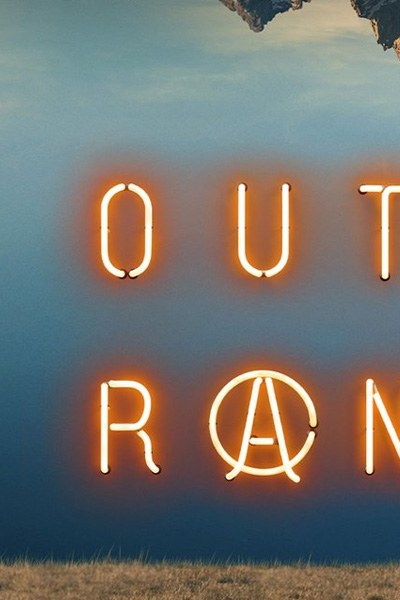


 TV · 2022
Outer Range IS WOKE
8
8/10Community rating
Label it
IS WOKE
No summary on file yet. Know this one? Tell us.
WHAT CRITERIA MAKES IT WOKE?



Oops! Is this show WOKE?
Only an account holder or member can file. Cite a scene, a line, or a pattern. Other account holders +1 or −1 that argument, once each. The show is not WOKE until enough of them have given a +1. Enough −1s remove the write-up, and it is no longer shown.
Sign in to file a woke label. One of each criterion per member.
Comments and reviews
Report a mistake
Same rule as woke labels: one report, a written reason, and the community +1 or −1 it — once per member. A net +5 applies the change. Editors can hold it for review, or apply it immediately.
No mistake reports yet.
Sign in to report a mistake. One report per field, per member.
Member review
Wes Calder Member
Sep 20, 2026
★★★★★★★★★★Outer Range keeps its feet planted in the dirt longer than most shows with similar ambitions. The Wyoming ranch setting feels lived-in, with the usual pressures of land disputes and family friction showing up before anything stranger arrives. That grounding helps when the story starts leaning into bigger unknowns, even if those unknowns do not always resolve in ways that feel earned.
Josh Brolin carries the central role with the kind of quiet weight that fits the material. He does not overplay the rancher’s stubbornness or the growing confusion, and that restraint lets smaller scenes land without extra emphasis. The supporting cast around him handles the domestic side competently, though a few secondary characters drift in and out without leaving much impression. The show benefits when it stays close to those daily tensions rather than reaching for larger set pieces.
Pacing is the main drawback. Episodes often stretch scenes that could tighten, and the mystery builds in fits rather than steady increments. Some stretches feel like they are marking time until the next revelation, which makes the stronger moments stand out more by contrast. The western landscape gets used well enough visually, but the series does not lean on it as a character the way a few older films managed.
The blend of ordinary ranch life and something harder to explain creates an odd tone that occasionally works. Family arguments continue even as stranger events unfold, and that overlap keeps the story from floating off into pure speculation. At the same time, the speculative side never quite settles on a clear shape, leaving some threads dangling in a way that feels more unfinished than intriguing.
There is little in the way of forced messaging or identity-driven shortcuts. The characters behave according to their circumstances and choices rather than serving as stand-ins for broader arguments. That absence of preaching lets the material focus on its own questions instead of outside ones.
Still, the series stops short of making those questions feel urgent. The central conflict over the land holds attention, yet the larger elements introduced later do not always connect back with the same weight. It ends up as something that holds together scene by scene without fully cohering into a single strong impression.
A few individual episodes move with more purpose than others, particularly when they stay with one or two characters rather than cutting between multiple threads. Those tighter sections suggest what the show might have been with stricter editing. The rest remains watchable for anyone interested in slow-burn stories that mix familiar settings with unexplained events, though it asks for patience that is not always rewarded.
The overall result sits in the middle. It has moments that stick and a lead performance that carries the quieter stretches, but the story never quite gathers the momentum its premise seems to promise. Three and a half stars feels about right for something that is neither a misfire nor a standout. The dialogue stays close to the ground most of the time, avoiding the kind of overwritten speeches that can sink similar material, yet it also rarely sharpens into something memorable on its own. Conversations about fences, cattle, and unpaid bills sit next to half-formed theories about what lies beyond the ordinary, and the shift between those registers can feel abrupt rather than seamless. When the show trusts the smaller stakes it does better work; when it reaches for cosmic weight the footing gets less sure.
Certain plot turns arrive with more declaration than buildup, which undercuts the sense that everything has been carefully prepared. Viewers who prefer mysteries that click into place may find the later stretches frustrating for that reason. Others may appreciate the willingness to leave some doors open, even if the open doors start to look like unfinished construction. The production design and location work help paper over some of those gaps by keeping the physical world consistent and tangible. Dust, weather, and distance remain present even when the narrative drifts.
Secondary storylines involving neighboring ranches and local authorities add texture without always adding pressure. They remind the audience that the central family does not exist in isolation, yet they rarely force meaningful choices that alter the main path. That pattern repeats often enough that the show starts to feel circular rather than progressive. A tighter focus on fewer conflicts might have given the unexplained elements more room to matter. As it stands, the ordinary and the extraordinary share the screen without fully arguing with each other.
Brolin’s performance remains the most reliable anchor throughout. He registers doubt and determination in equal measure without tipping into melodrama, which keeps the quieter domestic scenes from collapsing under the stranger ones. The rest of the ensemble is serviceable but uneven; some faces register strongly for a few episodes and then fade. That unevenness contributes to the sense that the series is assembling pieces without always deciding which ones belong in the final picture.
In the end the show occupies a workable middle ground: grounded enough to hold interest, strange enough to stay distinct, and loose enough that it never becomes essential. It rewards a certain kind of patience and frustrates another. Viewers drawn to ranch dramas with an extra layer of uncertainty will find enough here to finish the run. Those looking for either a pure western or a tightly wound speculative puzzle may come away wishing the two sides had been joined with a firmer hand. The result is solid television that stops short of being distinctive television, which is exactly where a 3.5-star assessment lands.