



 TV · 2021
Odo
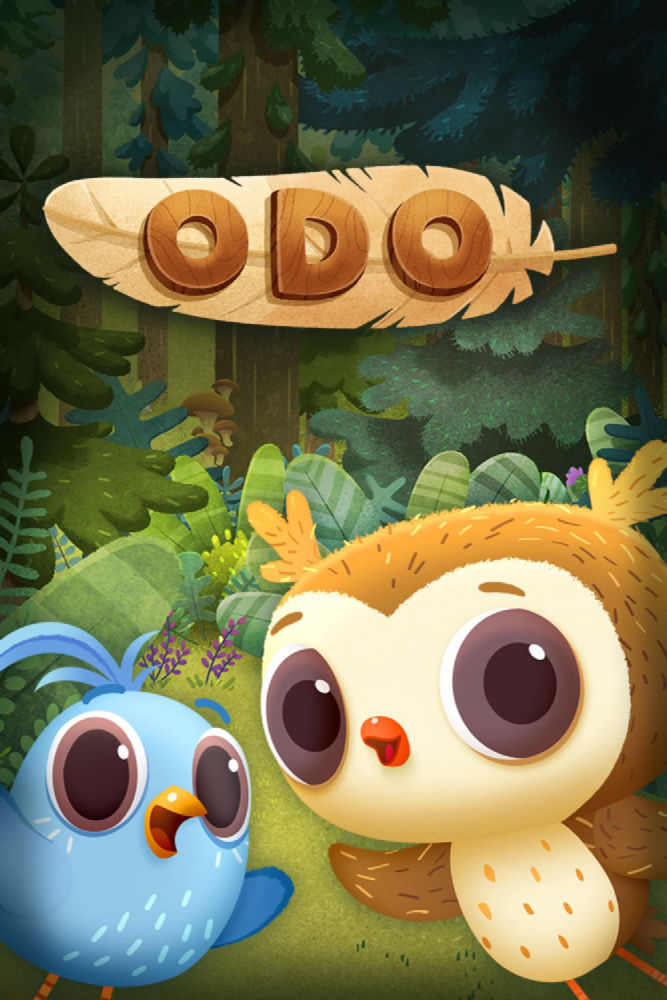
A curious little owl named Odo turns everyday life at Forest Camp for Young Birds into playful adventures with his feathered friends. Short episodes follow big ideas, friendship, and simple camp discoveries.
Odo follows Odo, the little owl with big ideas, as he arrives at Forest Camp for Young Birds ready to explore every path and activity. He meets other young birds who share cabins, games, and outdoor challenges under the trees. When a camp task looks ordinary, Odo invents a clever twist that pulls the group into a new game or mini-quest. Friends join him to build dens, race along branches, or solve small problems that pop up during free time. Each short story stays close to camp routines while letting Odo’s curiosity lead the way. The focus stays on teamwork, laughter, and the simple joys of being outdoors together.
As the days continue, Odo keeps suggesting bold plans that stretch a quiet afternoon into something memorable for the whole flock. One bird might hesitate at a new skill while another rushes ahead, and Odo finds a way to include everyone. Camp counselors stay in the background so the young birds can try ideas themselves and learn from small mistakes. Later episodes circle back to favorite spots in the forest and the bonds formed over shared play. Odo’s energy keeps the group moving from one light adventure to the next without heavy lessons. The series closes each outing on friendship and the fun of trying something new at camp.
Creator: Cast (4 or more)
Oops! Is this show WOKE?
Only an account holder or member can file. Cite a scene, a line, or a pattern. Other account holders +1 or −1 that argument, once each. The show is not WOKE until enough of them have given a +1. Enough −1s remove the write-up, and it is no longer shown.
Sign in to file a woke label. One of each criterion per member.
Comments and reviews
Report a mistake
Same rule as woke labels: one report, a written reason, and the community +1 or −1 it — once per member. A net +5 applies the change. Editors can hold it for review, or apply it immediately.
No mistake reports yet.
Sign in to report a mistake. One report per field, per member.
Member review
June Pell Member
Oct 20, 2026
★★★★★★★★★★I put on Odo one afternoon when the house felt too quiet and I needed something gentle that wouldn’t demand a full hour of my attention. What I got was a little owl who treats Forest Camp for Young Birds like the most interesting place on earth, and somehow that attitude stuck with me longer than I expected. Odo arrives ready to turn every ordinary camp chore into a small adventure, and the other young birds fall in with him more often than not. The episodes stay short, which suits the age range, and they keep circling the same simple pleasures: building dens out of sticks, racing along branches, figuring out why a game suddenly feels flat and how to fix it together.
What works is how lightly the show carries its ideas. Odo has big notions, sure, but they come from looking closely at what’s already there rather than from some grand mission. A path through the trees isn’t just a path; it’s a chance to invent a new way of traveling it. A quiet stretch of free time becomes a mini-quest because someone notices a problem no one else thought needed solving. The friendships feel earned in the small ways—sharing a cabin, waiting out a drizzle under the same leaf, arguing about the rules of a made-up race and then laughing when the argument itself becomes the fun. Nothing is rushed toward a moral. The point stays close to the dirt and the feathers and the way kids actually play when adults stop hovering.
I found myself thinking about the summer camps I went to when I was small. Not the organized ones with schedules taped to every tree, but the looser kind where you spent half the day inventing reasons to climb the same hill twice. The discoveries that lasted were never the ones the counselors planned. They were the odd little agreements you made with friends about how a particular rock was actually a lookout post, or how the sound of wind in the pines meant it was time to start a new game. Odo captures that feeling without dressing it up. The camp routines are still there—meals, cabins, the basic structure of a day outdoors—but the show lets curiosity tug everything slightly off-center. That tug is what makes the minutes pass so easily.
The animation keeps things soft and clear. Trees look like places you could actually sit under. The birds move with enough personality that you can tell them apart after a couple of episodes, even if their designs stay simple. Voices match the size of the characters; nothing is over-performed. Music stays in the background where it belongs, more like a breeze than a cue telling you how to feel. I never caught the show reaching for big emotional peaks or trying to teach a vocabulary lesson dressed up as adventure. It trusts that watching a group of young birds figure out a denser way to build something, or a fairer way to race, is already enough.
There are stretches where the formula shows. Once you’ve seen Odo invent a twist on a camp task a few times, you can sometimes spot the pattern coming. A couple of episodes thin out faster than others, settling for a neat resolution when a messier one might have felt truer. Still, even those weaker ones stay pleasant. They don’t punish you for watching. They don’t lecture. They just don’t surprise you the way the stronger ones do. That consistency is part of why I settled at four stars instead of higher. The show knows exactly what it is and almost never pretends otherwise, which is rarer than it should be in this kind of programming. It just doesn’t quite reach the handful of moments that would make it unforgettable rather than steadily good.
I kept coming back to how little the series needs to force itself. No one is performing identity for the camera. No one is shrinking anyone else to look stronger. The outdoors is simply the outdoors—trees, weather, the chance to get a little dirty and then clean up together. Teamwork happens because the game works better that way, not because a script insists on it. Laughter arrives because someone said something ridiculous while trying to balance on a branch. Those are the beats that felt closest to real childhood, the ones that made me pause the remote and sit with the quiet for a second after an episode ended.
Watching with a younger relative nearby made the short runtime especially useful. Attention could wander and still catch the next small discovery without losing the thread. We talked afterward about dens we might build in the backyard and races that didn’t need a finish line. That kind of leftover energy is a good sign. The show plants an idea and then gets out of the way so you can carry it somewhere else. I appreciate that restraint. Plenty of children’s programs try to do too much talking for the kids. Odo mostly lets them do the exploring.
By the time I’d seen enough episodes to feel I had the measure of it, the overall impression was one of steady warmth. It isn’t flashy. It isn’t trying to be the next big thing. It is a curious owl and his friends turning camp days into something slightly more playful than they started, and doing it with enough care that the simple joys land. Four stars feels right—solid, rewatchable in short bursts, and honest about its own scale. I’ll probably put it on again the next time the house goes quiet and I want something that remembers how large a small forest can feel when you’re young and still inventing the rules.