
Find a mistake?
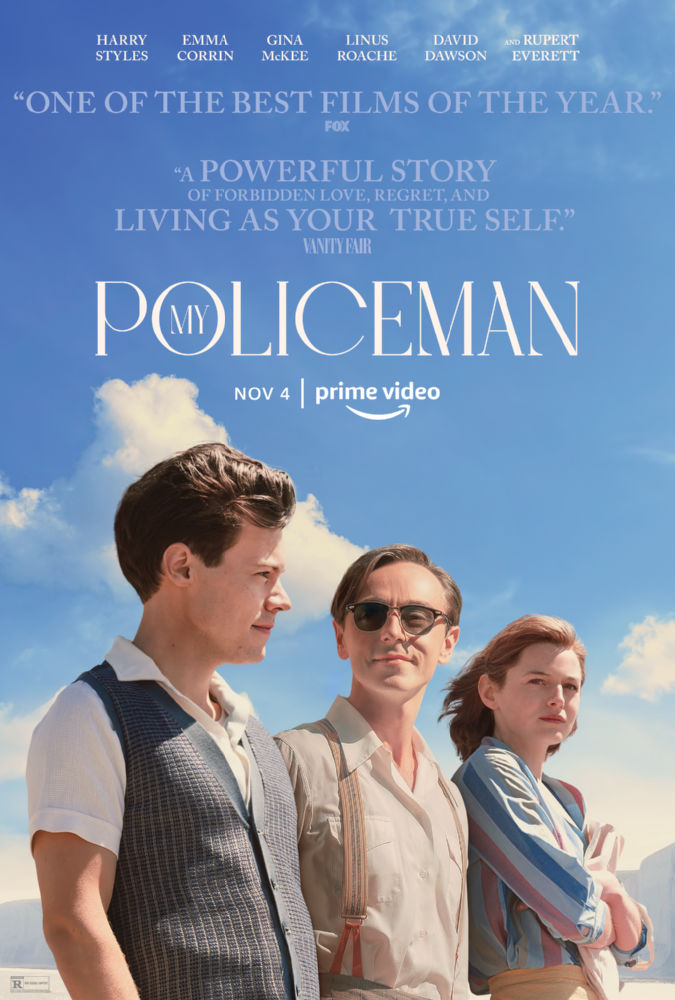


 MOVIE · 2022
My Policeman IS WOKE
–
Not ratedCommunity rating
Label it
IS WOKE
No summary on file yet. Know this one? Tell us.
WHAT CRITERIA MAKES IT WOKE?


Oops! Is this show WOKE?
Only an account holder or member can file. Cite a scene, a line, or a pattern. Other account holders +1 or −1 that argument, once each. The show is not WOKE until enough of them have given a +1. Enough −1s remove the write-up, and it is no longer shown.
Sign in to file a woke label. One of each criterion per member.
Comments and reviews
Report a mistake
Same rule as woke labels: one report, a written reason, and the community +1 or −1 it — once per member. A net +5 applies the change. Editors can hold it for review, or apply it immediately.
No mistake reports yet.
Sign in to report a mistake. One report per field, per member.
Member review
Lila Marsh Member
Sep 19, 2026
★★★★★★★★★★I finally sat down with My Policeman the other night after it had been sitting in my queue for ages. I went in knowing the basic setup—1950s Brighton, a young policeman, a marriage that looks ordinary from the outside, and the secret that runs underneath it—but I didn’t expect it to sit with me the way it did. It’s not a perfect film, and I won’t pretend it is, but there’s something honest in the way it handles the quiet damage people do to each other when they’re forced to live sideways.
Harry Styles surprised me. I came in ready to roll my eyes a little, if I’m being honest. He’s fine-looking and he can carry a tune, but acting is a different job. As Tom he mostly keeps things contained, which fits the character. You can see him trying to hold two lives in the same body and never quite managing it. The moments where the pressure shows—small hesitations, the way he looks at someone a beat too long—work better than the bigger emotional swings. Emma Corrin as Marion is the one who really lands for me. She plays the early hope so cleanly that when the suspicion starts creeping in, you feel the ground shift with her. There’s no big speech where she figures everything out; it’s more like watching someone slowly realize the furniture in their own house has been rearranged while they slept. David Dawson as Patrick brings a kind of careful warmth that makes the whole triangle make sense. He’s the one who seems most alive in the room, which only makes the later sections harder.
The dual timeline is the part that works and doesn’t, depending on the scene. Cutting between the bright, stiff 1950s and the faded present-day version of the same people is a solid idea on paper. Sometimes it lands. You see the older Marion and Tom sharing a house that still holds the ghost of everything they never said, and it feels heavy in a good way. Other times the back-and-forth feels like the movie is reminding you of its own structure instead of just letting the story breathe. I caught myself wishing it would stay in one period longer and trust me to keep up. The present-day material has a stillness that can tip into sluggishness, and a couple of the hospital scenes drag when they should just sit there and hurt.
What I appreciated most is that the film doesn’t turn the secrecy into pure melodrama. Homosexuality was illegal then; that’s not background color, it’s the air they were breathing. Every walk on the beach, every shared look in the museum, carries the risk of real consequences—arrest, lost job, ruined reputation. The movie lets that pressure stay present without turning every scene into a lecture. Marion’s gradual understanding isn’t framed as her becoming some kind of villain or saint. She’s a woman who wanted a regular life by the sea and got something far more complicated instead. Tom isn’t painted as a monster or a pure victim. He’s a man who wanted both the safety of the marriage and the real connection he found elsewhere, and he never figured out how to stop hurting people in the process. That messy middle ground is where the film feels truest to me.
There are stretches where the dialogue gets a little too neat, like the characters are explaining their feelings to the audience instead of just living them. And the score occasionally swells in ways that tell you what you’re supposed to feel rather than letting the faces do the work. Still, the central performances hold it together. Corrin especially has this quality of watching and absorbing that makes the later confrontations feel earned rather than staged. I kept thinking about how many ordinary households must have carried versions of this same silence, just without the handsome movie-star faces.
By the time it ended I wasn’t wiped out or completely satisfied. I was somewhere in between—moved by the quiet cost of it all, a little frustrated by the pacing, and left with the sense that the story knew what it wanted to say even when the telling got uneven. It’s the kind of film that doesn’t demand you love every frame, but it does ask you to sit with the people in it. I rated it 3.5 because the emotional core is solid and the acting carries the weaker stretches, but I can’t quite go higher when some of the structural choices keep pulling me out. If you’re in the mood for something that stays with the ache of choices made under pressure instead of offering easy catharsis, it’s worth the time. Just don’t expect it to rush or tidy everything up. Life rarely does, and this one knows it.