
Find a mistake?
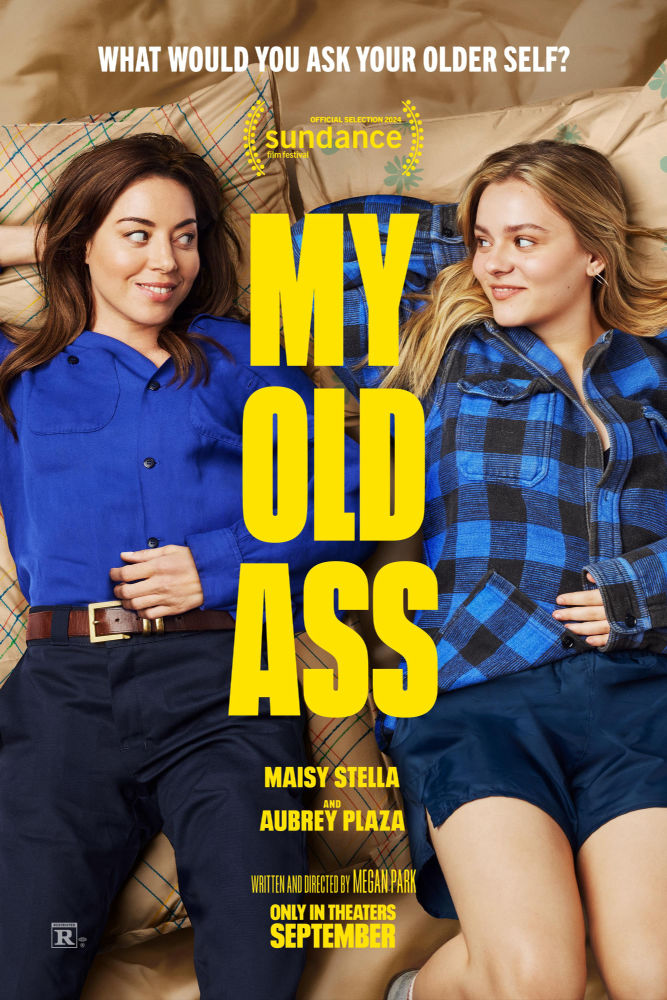


 MOVIE · 2024
My Old Ass IS WOKE
–
Not ratedCommunity rating
Label it
IS WOKE
No summary on file yet. Know this one? Tell us.
WHAT CRITERIA MAKES IT WOKE?

Oops! Is this show WOKE?
Only an account holder or member can file. Cite a scene, a line, or a pattern. Other account holders +1 or −1 that argument, once each. The show is not WOKE until enough of them have given a +1. Enough −1s remove the write-up, and it is no longer shown.
Sign in to file a woke label. One of each criterion per member.
Comments and reviews
Report a mistake
Same rule as woke labels: one report, a written reason, and the community +1 or −1 it — once per member. A net +5 applies the change. Editors can hold it for review, or apply it immediately.
No mistake reports yet.
Sign in to report a mistake. One report per field, per member.
Member review
Wes Calder Member
Oct 10, 2026
★★★★★★★★★★My Old Ass sits in that odd little pocket of movies that sound like pure gimmick on paper and then turn out to be quieter than you expect. An eighteen-year-old named Elliott is about to leave her family’s Canadian lakeside place for college when a mushroom trip with friends coughs up her thirty-nine-year-old self. Older Elliott shows up dry, a little impatient, and starts handing out blunt advice about the summer still ahead. That’s the hook, and it is a juicy one. Who wouldn’t want a few minutes with the person who already made the mistakes? The film mostly stays small after that: boat rides, parties, skinny-dipping, the arrival of a quiet summer worker named Chad. It never tries to become a big magical spectacle, which works in its favor.
Maisy Stella carries nearly every scene as young Elliott. She has that rare quality where you stop noticing the performance and just watch a kid who is half-excited and half-scared about leaving home. The emotional beats land without her pushing them; you can see her thinking even when she’s trying to keep things light with her friends. Aubrey Plaza as the older version doesn’t get a huge amount of screen time, but she leaves a clear impression every time she appears. The contrast between the two is the real engine. One is still open to everything; the other has already lived the consequences and is done sugar-coating.
I did notice, pretty early, how much of the older Elliott’s warnings and realizations orbit one specific relationship. Elliott’s lesbian relationship with Ro is what drives the central advice coming through those mushroom encounters. The future self keeps steering the conversation back to that connection, what it means, what to protect, what it will cost. It isn’t background flavor. It becomes the main thread the older version uses to try to shape the younger one’s summer and the choices right after. The film treats that bond as the load-bearing piece of the whole self-talk exercise. You can feel the script leaning on it for the emotional weight rather than spreading the future regrets across a wider set of ordinary growing-up mistakes. That choice gives the movie a clear point of view, even if it also narrows the field of what the time-jump advice is actually about.
The dialogue mostly crackles along at a good clip. It feels like people talking, not like writers showing off. Elliott’s hair is never movie-perfect, the friends look and sound like they actually know each other, and the lakeside setting never gets dressed up into postcard territory. That natural texture helps sell the stranger parts. Still, it isn’t a perfect movie. One or two lines land a little flat or too on-the-nose, and the ending feels slightly rushed and easy to see coming once you know the shape of the warnings. You can sense the filmmakers deciding they had said enough and wrapping up before the premise overstayed. I didn’t mind the predictability as much as the sudden gear shift; the rest of the film had been content to linger in the ordinary days, so the close felt a half-step abrupt.
What kept me watching was the simple pleasure of the setup. The older self is not a wise oracle. She’s irritated that she has to show up at all and keeps trying to cut through the younger one’s excitement with practical, sometimes cold notes about love and family and the pull of home. That impatience is funnier and more honest than a gentle mentor figure would have been. The summer worker Chad floats through as a complication rather than a full romantic plot, which fits the older Elliott’s agenda of trying to make her younger self notice certain things before they harden into habits. The movie never pretends the mushroom visits solve everything. They just force a conversation most people never get to have.
I landed at 3.5 because the performances and the lean tone carry it farther than the thinner patches. Stella is genuinely impressive in the quieter emotional turns, Plaza does a lot with limited appearances, and the rapid back-and-forth talk keeps the whole thing moving without feeling frantic. At the same time the central focus on that one relationship as the driver of all the future-self warnings starts to feel like the movie is making a bigger statement than its small-scale summer story can fully support. It stays cute and watchable, never quite turns into something deeper, and leaves you with the sense that the concept was richer than the execution fully mined. Worth seeing once if the premise pulls you in. Just don’t expect the time-jump conversations to range as widely as the setup first promises.