
Find a mistake?
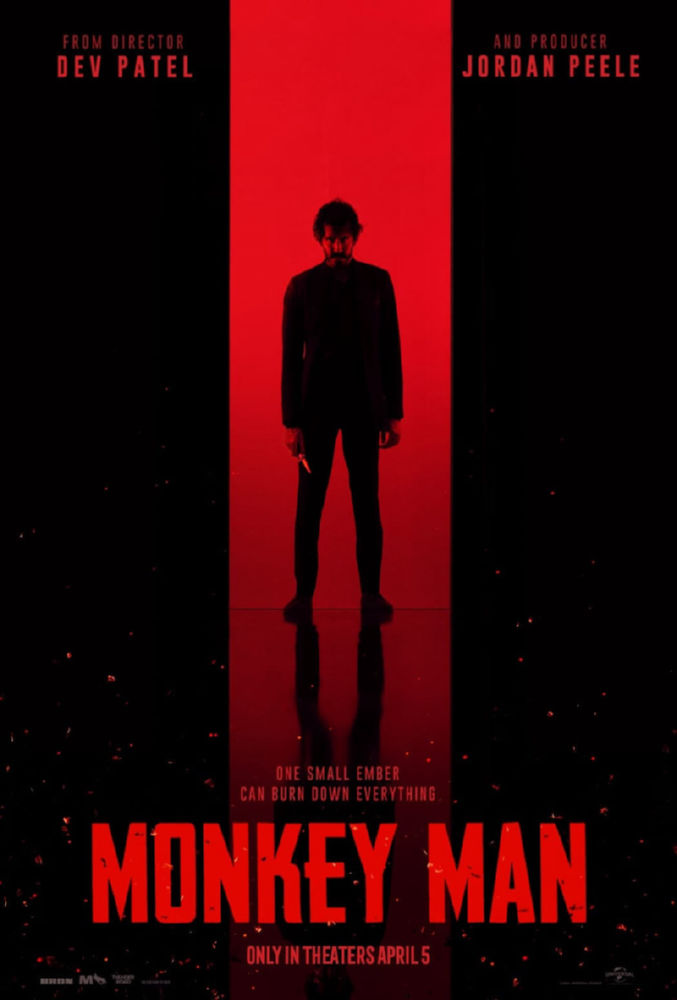


 MOVIE · 2024
Monkey Man IS WOKE
–
Not ratedCommunity rating
Label it
IS WOKE
No summary on file yet. Know this one? Tell us.
WHAT CRITERIA MAKES IT WOKE?

Oops! Is this show WOKE?
Only an account holder or member can file. Cite a scene, a line, or a pattern. Other account holders +1 or −1 that argument, once each. The show is not WOKE until enough of them have given a +1. Enough −1s remove the write-up, and it is no longer shown.
Sign in to file a woke label. One of each criterion per member.
Comments and reviews
Report a mistake
Same rule as woke labels: one report, a written reason, and the community +1 or −1 it — once per member. A net +5 applies the change. Editors can hold it for review, or apply it immediately.
No mistake reports yet.
Sign in to report a mistake. One report per field, per member.
Member review
Toni Briggs Member
Oct 10, 2026
★★★★★★★★★★Monkey Man is the kind of debut that leaves you split right down the middle. Dev Patel threw himself into this thing as star, co-writer, and director, and you feel the sweat on every frame. The underground fights are nasty and close-in, full of that grimy energy where you can almost smell the sweat and cheap disinfectant. Kid takes beating after beating in a gorilla mask for cash, and those early sequences have a raw physicality that most revenge pictures sand down. Patel keeps the camera restless without completely losing the geography of the hits, and there is a real sense of a body learning how to stop absorbing damage and start dealing it out. That progression from clumsy, half-panicked scrapper to something sharper shows up in the choreography itself, which I appreciated. It is not clean John Wick ballet; it is messy and mean, and for long stretches that works.
The childhood trauma stuff is familiar revenge fuel—corrupt officials, a murdered mother, a home burned out—but Patel tries to braid in Hindu folklore and a larger portrait of power rotting from the top. You get the gated compounds, the police who look the other way, the politicians drinking in the same clubs where the underclass scrapes by. When it stays focused on the street-level grind and Kid’s slow move upward, the movie has a pulse. Some of the supporting players land too. The spiritual mentor figure and the rough ally give him somewhere to push against instead of just brooding alone.
Then the film makes a choice that undercut a lot of the goodwill for me. After more punishment and a botched stretch of the plan, Kid ends up taking shelter inside the brothel and underground community that orbits the same world of money and vice he is trying to crack. The person who gives him aid, a place to hide, and the practical turn that lets him keep going is a transgender character, and the movie frames that relationship as the clear pivot point. Suddenly the campaign against the powerful has this new emotional and logistical center, and the story treats the connection like the key unlock. It is not a throwaway beat; it is positioned as the moment everything shifts from pure endurance into actual strategy. I sat there noticing how carefully that was staged—the warmth, the trust, the way it is meant to humanize the underbelly while advancing the plot. For a film already stacking corruption metaphors and folklore, it felt like an extra layer of messaging dropped in because the checklist demanded it. You can tell the intention is to make the community of outsiders the real engine of resistance, but it plays like the story paused its own revenge logic to make sure we clocked the inclusivity. That is the kind of turn that pulls me out, even when the surrounding grit is working.
Pacing does not help. The first half spends a lot of time on Kid just getting wrecked in rigged, zero-stakes matches and doing menial work around the club. I kept wanting more of how he actually builds the skills and the network, or the journey that takes him from the slums toward those gated circles, instead of another scene of him bleeding on a dirty floor. The elaborate later moves, including the purse-snatching setup that gets him inside, feel like they arrive without enough connective tissue. Once the violence ramps up again the movie finds its footing, and the final stretches have real adrenaline, but the middle sags under its own need to linger on every slight and every symbolic beat. At roughly two hours it runs a little long for what is still, at heart, a revenge engine.
Patel the actor is committed. You believe the hunger and the physical toll. Patel the director has clear talent with movement and atmosphere; he can put beauty next to brutality without soft-pedaling either. The political anger at corrupt officials feels specific to a side of India that mainstream films often skip, and that texture kept me watching even when the structure wobbled. Still, the thematic ambition outruns the discipline. Folklore, class rage, personal vengeance, and that shelter-and-aid turning point with the transgender character in the brothel world all compete for space, and not every piece earns its keep. The action is insane and grimy enough that I still enjoyed large chunks of the debut. I just wish the story had trusted its own momentum instead of stopping to signal which relationships matter most for reasons that sit outside the revenge itself. Three and a half stars feels right: impressive craft and kinetic stretches, undercut by bloat and by that insistent framing of the brothel refuge as the moral and practical hinge. Worth seeing if you like your fight films dirty and culturally specific, but it is not the clean knockout it wants to be.