
Find a mistake?
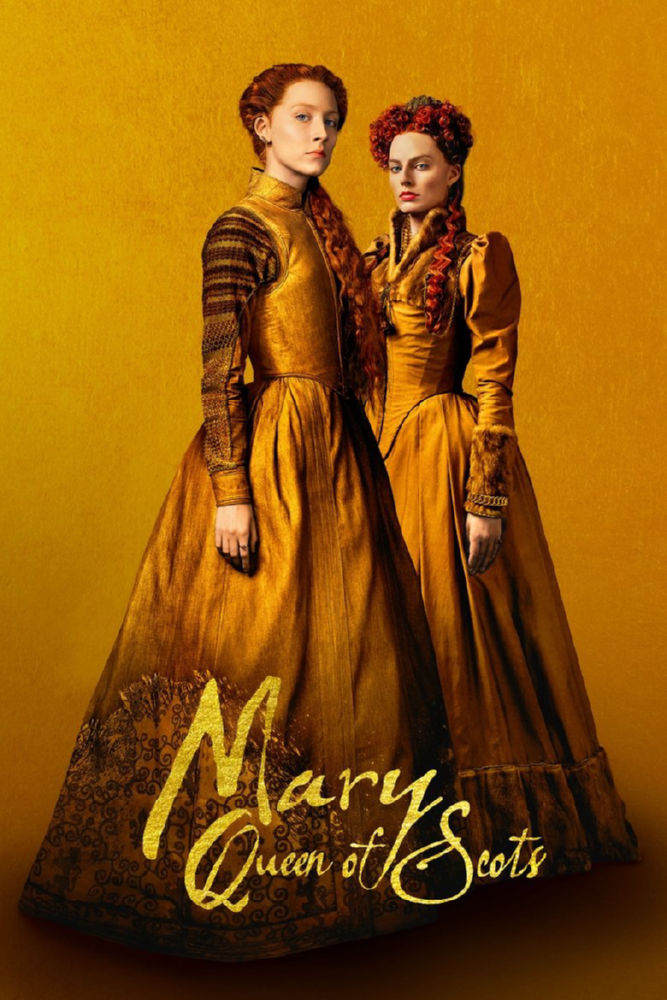


 MOVIE · 2018
Mary Queen Of Scots IS WOKE
–
Not ratedCommunity rating
Label it
IS WOKE
No summary on file yet. Know this one? Tell us.
WHAT CRITERIA MAKES IT WOKE?





Oops! Is this show WOKE?
Only an account holder or member can file. Cite a scene, a line, or a pattern. Other account holders +1 or −1 that argument, once each. The show is not WOKE until enough of them have given a +1. Enough −1s remove the write-up, and it is no longer shown.
Sign in to file a woke label. One of each criterion per member.
Comments and reviews
Report a mistake
Same rule as woke labels: one report, a written reason, and the community +1 or −1 it — once per member. A net +5 applies the change. Editors can hold it for review, or apply it immediately.
No mistake reports yet.
Sign in to report a mistake. One report per field, per member.
Member review
Stu Kline Member
Sep 20, 2026
★★★★★★★★★★Mary Queen of Scots puts two queens in the same frame and then spends most of its time watching them get boxed in by the men at their courts. The central performances carry the weight. Saoirse Ronan gives Mary a stubborn edge that feels right for someone who thinks she can outmaneuver everyone by sheer force of will. Margot Robbie plays Elizabeth with a colder, more calculating presence, the kind of ruler who has already learned to keep her distance. Their scenes together are the clearest parts of the film.
The script keeps circling back to the same point that any woman in power has to fight the same set of obstacles from nobles, preachers, and foreign courts. That idea is not new, and the movie does not add much depth to it. John Knox comes across as a one-note ranter, which flattens the religious arguments that actually shaped the period. The Protestant side gets reduced to simple obstruction rather than a real force with its own convictions.
Direction keeps things visually clean but rarely builds much tension. Scenes of council meetings and private arguments repeat the same beats without raising the stakes. The marriages and succession plots are handled in quick succession, so none of them land with real weight. By the time the story reaches the inevitable end, it feels like the film has been repeating its main conflict instead of developing it.
Historical adjustments are obvious enough that they pull attention away from the drama. Some supporting characters are merged or moved around for convenience, and the timeline gets compressed in ways that make the political maneuvering feel tidier than it probably was. That is common in this kind of story, but it adds to the sense that the movie is more interested in its theme than in the messy details.
The two leads keep the project from sinking. Their quiet exchanges carry more charge than the larger set pieces. Everything else around them serves mainly to underline that power for these women always came with extra layers of suspicion and interference. The result is a watchable period piece that does not dig deeper than its surface premise. It leaves the real complexity of the era on the table.
What lingers after the credits is how little the film trusts the audience with ambiguity. Mary’s decisions are framed almost exclusively as reactions to male pressure, which makes her look reactive even when the historical record suggests periods of genuine initiative. Elizabeth’s caution is treated as pure survival instinct, so the film never really explores whether that caution also limited her options in ways she never admitted. Both portrayals stay locked inside the thesis instead of pushing against it. You can feel the screenplay steering every conversation back toward the same observation about gendered constraint, and after a while the steering becomes visible.
The supporting cast does what it can inside those limits. Guy Pearce brings a dry weariness to Cecil that occasionally cuts through the pageantry, and David Tennant’s Knox, while one-dimensional, at least has a physical intensity that makes the sermons feel dangerous rather than merely irritating. Yet neither character is allowed to complicate the central idea. They exist to apply pressure, not to embody competing visions of order or faith. The same is true of the Scottish lords, who cycle through alliances with a speed that makes their motives hard to track and harder to care about. Political betrayal becomes a rhythm instead of a revelation.
Visually the film is competent without being distinctive. The costumes and interiors do the expected work of signaling status and confinement, but the camera rarely finds a composition that feels newly observed. Wide shots of councils and tight close-ups of the two queens repeat until they start to cancel each other out. There is a brief stretch late in the film where the lighting turns colder and the framing grows more angular, hinting at a harsher register the rest of the movie never fully commits to. That moment passes quickly, and the film settles back into its earlier, more even-tempered look.
Pacing is another quiet problem. The early sections take time establishing Mary’s return and the uneasy balance with Elizabeth, then the middle hour accelerates through marriages, murders, and shifting loyalties so rapidly that cause and effect blur. Important turns arrive with title-card abruptness rather than dramatic preparation. By the final act the emotional temperature has flattened; the tragedy feels scheduled rather than earned. You understand what is supposed to matter, but the film has not spent enough time making the losses specific.
None of this makes the movie a failure. It remains easy to watch, and the central casting is strong enough that certain scenes still land with force. Ronan’s refusal to soften Mary’s arrogance gives the character a spine the script sometimes forgets to provide. Robbie’s stillness conveys years of calculated self-erasure in a way that dialogue never quite matches. Their few shared moments suggest a richer movie that might have existed if the film had been willing to linger in uncertainty instead of insisting on its thesis. As it stands, Mary Queen of Scots is a clear, handsomely mounted illustration of a familiar argument. It rarely becomes more than that, and the era it depicts was almost certainly more contradictory, more interesting, and less neatly thematic than what ends up on screen.