



 MOVIE · 2025
Lords Prayer
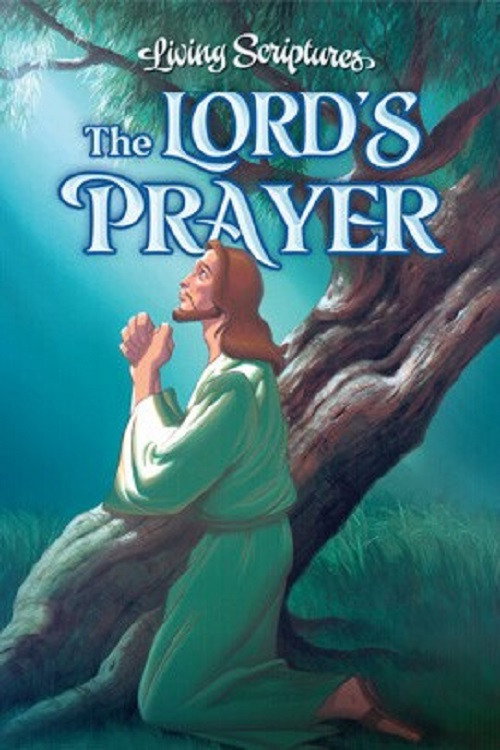
This film journeys through the ancient world to explore the Lord’s Prayer in the places where Jesus first spoke it.
The Lord’s Prayer invites audiences on a visually breathtaking journey across the ancient landscapes of the Holy Land where Jesus first delivered his most iconic teaching. Hosted by biblical teacher Brad Gray, the film blends high-end, premium cinematography with immersive storytelling to pull the prayer out of modern Western familiarity and re-examine it within its original historical, geographical, and cultural frameworks.
The documentary deconstructs each line of the prayer to reveal a quietly subversive, revolutionary blueprint for living rather than a static religious ritual. Backed by executive producer Mark Burnett and a team of world-class biblical scholars—including N.T. Wright, Jonathan Pennington, and Carmen Imes—the film examines how petitions like "give us this day our daily bread" directly challenged the political and imperial realities of Roman occupation.
Click any of the following icons below to rent or stream it!
Oops! Is this show WOKE?
Only an account holder or member can file. Cite a scene, a line, or a pattern. Other account holders +1 or −1 that argument, once each. The show is not WOKE until enough of them have given a +1. Enough −1s remove the write-up, and it is no longer shown.
Sign in to file a woke label. One of each criterion per member.
Comments and reviews
Report a mistake
Same rule as woke labels: one report, a written reason, and the community +1 or −1 it — once per member. A net +5 applies the change. Editors can hold it for review, or apply it immediately.
No mistake reports yet.
Sign in to report a mistake. One report per field, per member.
Member review
Toni Briggs Member
Sep 19, 2026
★★★★★★★★★★I rated Lord’s Prayer 4.5 because it does the rare thing a faith documentary usually fumbles: it stays inside the prayer itself instead of using Jesus as a prop for whatever cause is trending this quarter. Joel Edwards walks the lines the way a serious person walks them—Our Father, hallowed be thy name, thy kingdom come—and he refuses to hurry past the hard parts or sand them down into self-help slogans. That alone is worth the time.
The film lays out the petitions cleanly. Honor God’s holiness and will first, then the daily bread, the forgiveness, the deliverance. It does not pretend those needs are optional add-ons. Edwards puts Matthew and Luke side by side without turning the differences into a gotcha game. You see the longer form most of us still recite and the shorter one in Luke, and the movie simply notes that scholars have argued for a long time about how the two relate. No dramatic music cue, no conspiracy tone. Just the text and the history. Then he brings in the Didache, that first-century teaching document whose wording sits almost on top of Matthew and still matches what churches pray today, right down to the Minor Doxology. That moment landed for me. It is one thing to hear that the prayer is ancient; it is another to watch someone show the chain that keeps the same words in living mouths.
What I appreciated most is the posture the theologians take. They treat the Lord’s Prayer as a pattern that orients a person toward praise, trust, and actual ethical living, not as a lucky charm or a rote formula you mumble so the day goes better. That distinction matters. Plenty of modern Christian media turns prayer into either therapy language or a political checklist. This one does not. Edwards keeps the focus on the words Jesus gave and on how those words have shaped worship across centuries. You feel the weight of continuity without anyone waving a flag about it.
I am not a seminary student and I do not pretend to be. I just know when a film is doing honest work with primary material versus when it is performing reverence. Lord’s Prayer feels like the former. The production is straightforward—talking heads, manuscript shots, quiet locations—and that restraint helps. Nothing here is dressed up to look like prestige television. It trusts that the subject is interesting enough on its own. Edwards himself comes across as steady rather than slick. He is clearly the guide, but he does not hog the frame or turn every beat into a personal testimony monologue. The prayer stays central.
There is a quiet confidence in how the movie handles denominational use. Most traditions lean on the Matthean version, and the film simply shows that without scolding anyone for the small variations that have grown up over time. It is the opposite of the usual culture-war approach that wants every difference to prove somebody else is the heretic. Here the shared core is allowed to matter more. That is refreshing when so much religious content these days seems designed to pick a fight or to signal which tribe you belong to.
I walked away thinking about how rarely we get material that takes the ordinary words of Christian worship this seriously. The prayer is short. Millions say it every week. A lot of people know it by heart and still never stop to notice what it is actually asking. This documentary makes you stop. It does not invent new meanings or update the language for contemporary tastes. It just shows where the words came from, how they were preserved, and why they continue to shape the way people address God. That is enough.
A half-star off only because a couple of the explanatory stretches run a little long and could have been tightened. The information is solid; the pacing occasionally forgets that viewers can keep up without every point being restated. Still, that is a minor complaint against a project that gets the big things right. In a media climate that often treats Christian faith as either a punchline or a costume for bigotry, a calm, text-centered look at the Lord’s Prayer feels almost radical by accident. Edwards did not set out to score points. He set out to follow the prayer. That choice shows.
If you have ever said those lines in a pew or at a hospital bed or alone in a kitchen and wondered why they still hold, this is worth your evening. It does not try to convert you with swelling strings or manufactured emotion. It just puts the ancient words in front of you again and lets them do their work. I came away more attentive to what I am actually asking when I pray them. That is rarer than it should be, and it is why the rating sits at 4.5 rather than something safer and lower. The film earned the number by staying honest with its subject instead of chasing relevance. More of that, please.