



 TV · 2025
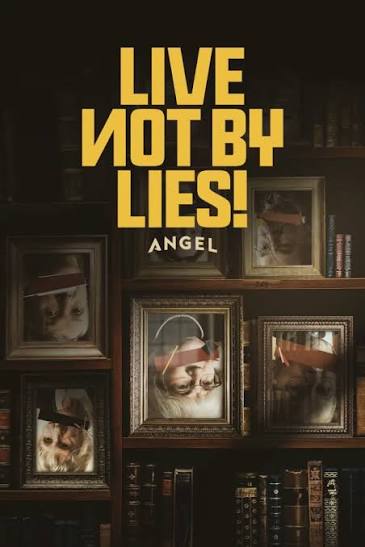
Live Not By Lies
Survivors of Soviet totalitarianism warn that “soft totalitarianism” is emerging in the U. S. Identity politics, censorship, surveillance, and secularism are encroaching on freedoms.
Many American Christians fail to see the threat.
Based on Rod Dreher’s book, Live Not by Lies explores these dangers and offers a wake-up call for thoughtful, faithful resistance against the erosion of liberties.
Click any of the following icons below to rent or stream it!
Oops! Is this show WOKE?
Only an account holder or member can file. Cite a scene, a line, or a pattern. Other account holders +1 or −1 that argument, once each. The show is not WOKE until enough of them have given a +1. Enough −1s remove the write-up, and it is no longer shown.
Sign in to file a woke label. One of each criterion per member.
Comments and reviews
Report a mistake
Same rule as woke labels: one report, a written reason, and the community +1 or −1 it — once per member. A net +5 applies the change. Editors can hold it for review, or apply it immediately.
No mistake reports yet.
Sign in to report a mistake. One report per field, per member.
Member review
Stu Kline Member
Oct 19, 2026
★★★★★★★★★★Live Not By Lies sits in an odd spot. It is useful without being especially cinematic, and I rated it 3.5 because that tracks how it lands for me. Rod Dreher talks with people who actually lived under communist systems in Eastern Europe and the Soviet sphere. They describe the slow capture of schools, workplaces, and newspapers long before the secret police kicked in doors. That part holds attention. You hear the same sequence again and again: ideology first, then speech rules, then the demand that you perform the new creed in public or lose your job and your friends.
I do not need a full history lesson every episode, and the series sometimes repeats the same arc with different faces. Still, the personal details stick. One man talks about family members who informed because they were scared or ambitious. Another remembers how ordinary people looked away until the costs hit their own kitchen table. Those memories feel earned. They are not theoretical.
Dreher’s link to present-day America is the whole point of the show. He points at cancel culture, HR loyalty tests, and the quiet sidelining of traditional religious belief. Soft totalitarianism is the phrase that keeps coming up. No gulags yet, just social and corporate enforcement that makes dissent expensive. I have watched enough workplace trainings and campus dust-ups to recognize the pattern he is describing. Identity politics and secular pressure do the sorting now. You do not have to agree with every example he picks to see that institutions can demand public conformity without a single shot fired.
The series is strongest when it stays with the survivors and lets them speak. It weakens a little when it turns into a catalog of American headlines. Some of those contemporary clips feel selected for maximum alarm rather than careful argument. That is a common trap with this kind of material. The older witnesses already carry the weight. You do not need to over-explain the parallel every ten minutes.
What kept me watching is the plain warning about noticing too late. Ordinary believers in those countries assumed the shift would stop short of their lives. It did not. The show keeps returning to that failure of attention. Faithful resistance, as they frame it, starts with refusing to repeat lies you know are lies. That is a simple rule and a hard one. It does not require you to become a professional activist. It does require a spine in small daily settings.
Production is basic. Interviews, some archival footage, Dreher moving between locations. No glossy reenactments, which is a relief. The pacing can drag in the middle stretch. A tighter cut would have helped. At the same time, the bluntness matches the subject. These people are not performing trauma for the camera. They are recounting how an official ideology first sounded reasonable and then became non-negotiable.
I am not interested in treating every corporate memo like 1950s Budapest. That kind of inflation cheapens the real history. The series mostly avoids that trap, though it brushes close a couple of times. Where it works is in showing the mechanism: capture the institutions, police the language, then punish the holdouts. You can argue about how far down that road America has traveled. You cannot honestly pretend the road does not exist.
The religious angle is straightforward. Many of the survivors kept their faith under pressure that was designed to break it. Dreher treats that endurance as a model rather than a museum piece. Secular pressure today often treats traditional belief as the problem to be managed. The show does not hide its view on that. I found it clearer than a lot of polite panel discussions that never name the cost of dissent.
Some stretches feel like they could live as a long article instead of a series. The television format lets the faces and voices carry more than print would, so I am glad it exists in this form. I just wish a few episodes had been combined. Repetition dulls the edge even when the underlying point is sound.
I keep coming back to the idea that people failed to notice the shift until dissent became costly. That line sits with me after the credits. It is not dramatic. It is practical. If you wait for the midnight knock, you have already lost the earlier ground. The survivors say this without theatrics. Their tone is what sells it.
Live Not By Lies will not convert anyone who already thinks soft totalitarianism is a made-up scare. It is not trying to be that kind of persuasion machine. It is a record of warnings from people who watched the real thing unfold, plus an attempt to map those warnings onto patterns we can see now. For that limited job it does decent work. I gave it 3.5 because the core testimony is strong, the contemporary bridge is only partly convincing, and the runtime needed more discipline. Worth the time if the subject already concerns you. Not a revelation if you have read the book or followed similar accounts. Solid, uneven, and hard to dismiss once the older voices start talking.