
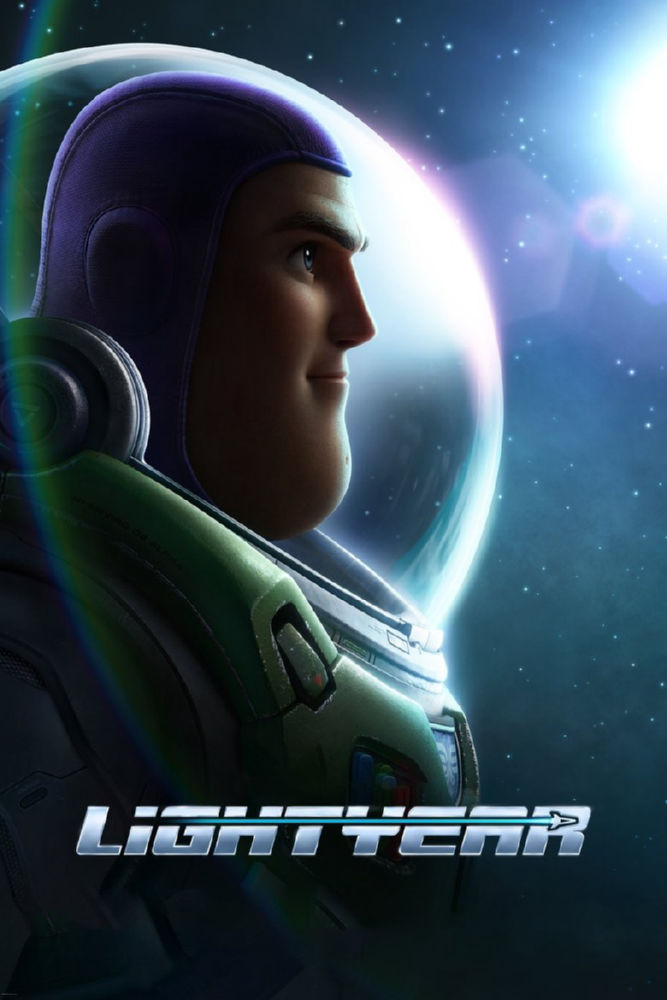




 MOVIE · 2022
Lightyear IS WOKE
Buzz Lightyear is marooned on a hostile alien world after a mission failure and must invent a way home while a growing threat endangers everyone left behind.
Lightyear follows Buzz Lightyear, the elite Space Ranger whose exploits later inspire the famous toy. After a critical navigation error strands him and his commander on the dangerous planet T’Kani Prime, Buzz refuses to accept permanent exile. He repeatedly launches experimental flights in an attempt to crack hyperspace travel and reverse the mistake that trapped the crew. Each attempt costs years of planetary time, so the people he left behind age, settle, and build a fragile colony while he remains driven by the original mission. A loyal robotic cat companion keeps him company through the long isolation. The isolation and the ticking clock force Buzz to confront whether pure duty is enough when the world around him has already moved on.
As the colony grows, Buzz teams with a new generation of rangers who have never seen Earth and must learn to trust their untested skills. Together they uncover an escalating danger that could wipe out the settlement he has been trying so hard to leave. Buzz’s commander and remaining original crew become both allies and living reminders of the years he sacrificed. He finally has to choose between one last solo shot at glory and standing with the people who now call the planet home. The climactic stand tests every lesson the long marooning has taught him about leadership, loyalty, and the cost of perfection. In the end the ranger who once defined himself only by the mission discovers what it means to protect a future he will not fully share.
Creator: Tony Kaplan
WHAT CRITERIA MAKES IT WOKE?

Oops! Is this show WOKE?
Only an account holder or member can file. Cite a scene, a line, or a pattern. Other account holders +1 or −1 that argument, once each. The show is not WOKE until enough of them have given a +1. Enough −1s remove the write-up, and it is no longer shown.
Sign in to file a woke label. One of each criterion per member.
Comments and reviews
Report a mistake
Same rule as woke labels: one report, a written reason, and the community +1 or −1 it — once per member. A net +5 applies the change. Editors can hold it for review, or apply it immediately.
No mistake reports yet.
Sign in to report a mistake. One report per field, per member.
Member review
June Pell Member
Sep 20, 2026
★★★★★★★★★★Lightyear sat on my list longer than it should have. I finally watched it on a quiet weeknight when I wanted something familiar without being pure nostalgia bait. I grew up with the Toy Story films the way a lot of people did, so the idea of a “real” Buzz Lightyear movie carried a certain weight. Not pressure exactly, just the sense that it needed to feel like it belonged in the same universe of invention and stubborn heart. What I got was a movie that almost gets there and then keeps circling the same emotional runway without quite landing cleanly.
The setup is clean enough. Buzz makes a critical mistake, ends up stranded on a hostile planet with the rest of the crew, and refuses to let the mission die. He keeps trying to crack hyperspace travel so he can undo the error. Every attempt burns years of real time for everyone else. That part genuinely interested me. Time becoming the real antagonist is a smart choice. You watch people he cared about age into different lives while he stays locked in the same loop of duty. It creates a quiet ache that the louder set pieces never quite match. I kept thinking about how rarely kids’ adventure movies let consequences stick like that. The colony grows. Priorities shift. Buzz’s original goal starts to look smaller against the life that formed without him. That tension is the best thing the film has going.
Sox, the little robotic cat, is the companion who makes the isolation bearable. I didn’t expect to like a support robot this much, but the design is simple and the loyalty feels earned rather than cutesy. There are stretches where it’s just Buzz and the cat working through failures, and those quieter beats are when the movie feels most like itself. I found myself more invested in the small adjustments of daily survival than in the bigger threat that eventually arrives. The threat does raise the stakes, and the action is competent, but it also pulls the story toward something more conventional right when the personal cost of Buzz’s stubbornness was getting interesting.
What kept me at a three is how uneven the whole thing feels once it has to balance those two modes. The film wants to be about growth and letting go, yet it also wants the swagger of a classic space-ranger origin story. Those impulses tug against each other. Buzz’s refusal to accept exile is admirable at first and then starts to read as a kind of emotional tunnel vision. The movie knows this, or at least circles the idea, but it doesn’t always trust the audience to sit with the discomfort. It softens the edges with humor and set pieces just when the harder questions about duty versus the people left behind could have deepened. I don’t need every animated film to be heavy, but when you introduce time as a thief and then keep cutting away from its cost, the central idea loses some of its charge.
I also kept noticing how the supporting cast arrives and fills space without always earning the weight the story assigns them. New characters show up with clear roles—protege energy, comic relief, steady leadership—and they function, yet few of them surprised me. The relationships that matter most are the ones already frayed by years of absence, and those get less room than they deserve once the external conflict ramps up. There is a version of this movie that stays closer to the colony and the slow realization that home has changed shape. That version might have felt more distinctive. What we get instead is a competent hybrid that never fully commits to either the melancholy or the pure adventure.
Visually it looks like a Pixar production, which is both praise and a kind of trap. The planet has texture, the ships have weight, the lighting does the work you expect. Nothing looks cheap. At the same time, the familiarity can make certain sequences blur together with other recent space or science-fiction animation. I never felt lost, but I also rarely felt the specific charge of discovering a new corner of this world. The humor lands more often than it misses, especially in the smaller character beats, yet a few gags feel like they were placed to keep younger viewers from drifting during the quieter stretches. Fair enough for the intended audience. It just means the tone wobbles when the film is trying to say something about obsession and the limits of pure mission focus.
By the end I respected the attempt more than I loved the result. The core idea—a hero who keeps paying years for a single mistake while the people he left behind build something fragile and real—is strong enough to carry a better, tighter film. Lightyear gets pieces of that right. It understands that stubborn competence can become its own kind of isolation. It just doesn’t always trust that insight enough to let it dominate. I walked away thinking about the time skips more than the final confrontation, which tells you where the real energy lived for me. Three stars feels honest. Worth seeing if the premise hooks you, especially if you can sit with the quieter stretches. Not the definitive Buzz story I half hoped for, and not a failure either. Just a solid, slightly frustrated middle that keeps promising a sharper version of itself and then settles for something safer.