



 MOVIE · 2015
Just Let Go
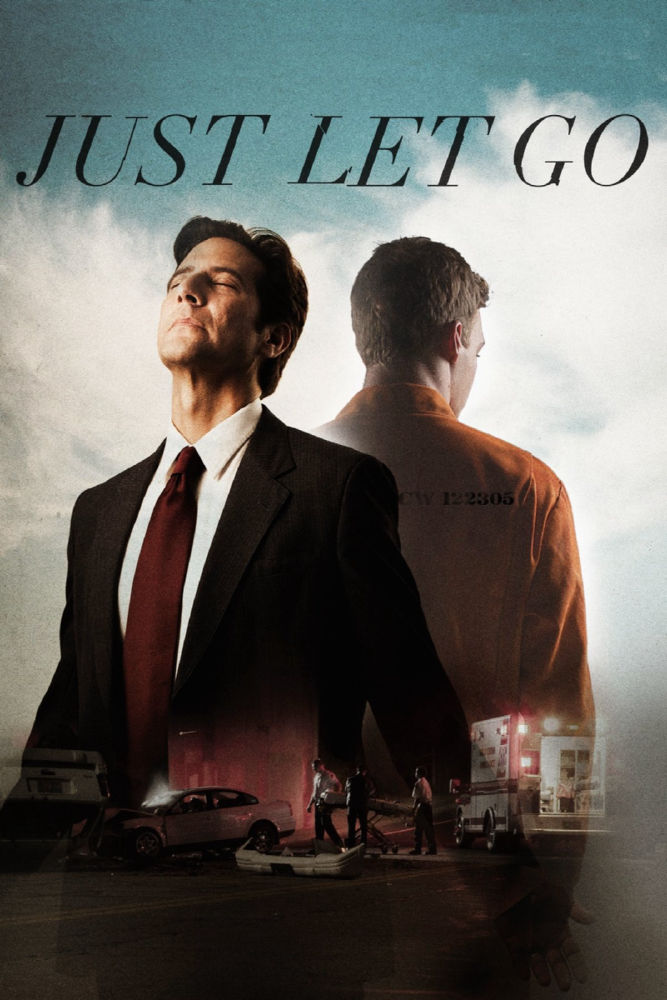
In 2007, a drunk driving crash shattered Chris Williams’ world, killing his wife, unborn child, and two of their children.
Just Let Go follows the devastating and inspirational true story of Chris Williams, a devoted family man and pastor whose life is permanently shattered in a split second. While driving home with his family, their vehicle is violently struck by a vehicle driven by an intoxicated 17-year-old, Curtis Wright. The catastrophic collision results in the immediate deaths of Chris’s pregnant wife, their unborn child, and two of their young children. Surviving the crash alongside his two remaining sons, Chris is left hospitalized, physically broken, and deeply traumatized by an unimaginable wave of grief and despair.
The core of the movie chronicles Chris's agonizing psychological and spiritual journey through the aftermath of the tragedy as he faces the daunting prospect of moving forward. While grappling with intense sorrow and anger, he faces immense external pressure from a tough district attorney aiming to prosecute the teenage driver as an adult, as well as pushback from his own mother, who struggles to find sympathy for the boy. Driven by his deeply rooted faith, Chris makes the radical, controversial decision to seek a path of grace rather than vengeance. The narrative reaches its powerful climax as Chris actively fights to forgive the young driver, demonstrating how letting go of hatred can ultimately triumph over bitterness and pave a way toward true emotional healing.
Click any of the following icons below to rent or stream it!
Oops! Is this show WOKE?
Only an account holder or member can file. Cite a scene, a line, or a pattern. Other account holders +1 or −1 that argument, once each. The show is not WOKE until enough of them have given a +1. Enough −1s remove the write-up, and it is no longer shown.
Sign in to file a woke label. One of each criterion per member.
Comments and reviews
Report a mistake
Same rule as woke labels: one report, a written reason, and the community +1 or −1 it — once per member. A net +5 applies the change. Editors can hold it for review, or apply it immediately.
No mistake reports yet.
Sign in to report a mistake. One report per field, per member.
Member review
Becky Soto Member
Oct 2, 2026
★★★★★★★★★★I put on Just Let Go without knowing much beyond the basic outline, and it stayed with me longer than a lot of bigger movies do. It’s the true account of Chris Williams after that 2007 crash that took his wife, their unborn child, and two of their kids because of a teenage drunk driver. What hit me right away was the choice he makes while he’s still sitting in the wreckage. He decides he is going to forgive the kid. Not later, after some long healing arc. Right then. That single decision sets the whole tone, and I kept coming back to it.
There’s a quiet stretch early on where Chris is alone with the reality of what just happened. The camera doesn’t rush him. You watch the grief settle in his face and then watch him push past the first wave of rage. It isn’t a big speech. It’s small and almost private, and that is the beat that stuck with me hardest. I have held onto smaller hurts for years, so seeing someone choose the harder road in the middle of something unimaginable felt honest in a way a lot of inspirational stories never manage. The film doesn’t pretend the rest of the journey is easy. You see the anger come back in waves. You see him wrestle with the idea that grace might look like weakness to people who want him to stay furious. Those parts feel lived-in rather than preached.
I liked that the teenage driver isn’t turned into a cartoon monster or a sudden saint. He’s a kid who made a catastrophic mistake, and the movie lets that sit without forcing tidy redemption on a schedule. Chris’s path toward actually speaking forgiveness out loud takes time, and the film shows the cost of carrying that decision every day. There are family moments that land softly—simple conversations where love and loss share the same room—and those kept me watching even when the pacing slowed. A couple of the heavier dramatic scenes felt a little staged, like the filmmakers wanted the emotion to spike on cue. That is mostly why I landed at 3.5 instead of higher. The heart of the story is strong enough that it doesn’t need the extra push, yet sometimes it gets one anyway.
What I appreciated most is how the movie treats forgiveness as something active and ongoing, not a one-time magic fix. Chris doesn’t wake up free of pain. He keeps choosing, and you feel the weight of that choice. I found myself thinking about the difference between saying the words and living them when no one is watching. There is a later scene where he has to face the practical side of letting go—dealing with people who expect him to want revenge—and it feels grounded. No swelling music telling you how to feel. Just a man trying to stay true to the decision he made when everything was still broken around him.
I am not usually drawn to true-story dramas that lean this hard on faith and grace, but this one earned its space. It never turns Chris into a perfect example. He gets tired. He gets angry again. He still shows up. That balance kept it from sliding into pure sentiment. At the same time, the message is clear without needing a lecture: love and forgiveness can outlast the need for payback, even when the loss is total. I walked away thinking about the quiet strength it takes to refuse bitterness when bitterness would be understandable. That is rare enough on screen that I am glad I watched it.
Some stretches drag a little, and a few supporting characters stay thin, which is part of the 3.5 for me. Still, the central thread holds. The decision in the wreckage, the long walk through sorrow, and the way grace keeps showing up even when it costs something—that stayed with me after the credits. It is not a perfect movie, but it is a sincere one, and sincerity counts when the subject is this heavy. I would recommend it to anyone willing to sit with hard questions about what we do with the worst things that happen to us. It left me a little quieter and a little more willing to examine the smaller grudges I still carry. That feels like enough.