




 MOVIE · 2024
I Saw The TV Glow IS WOKE
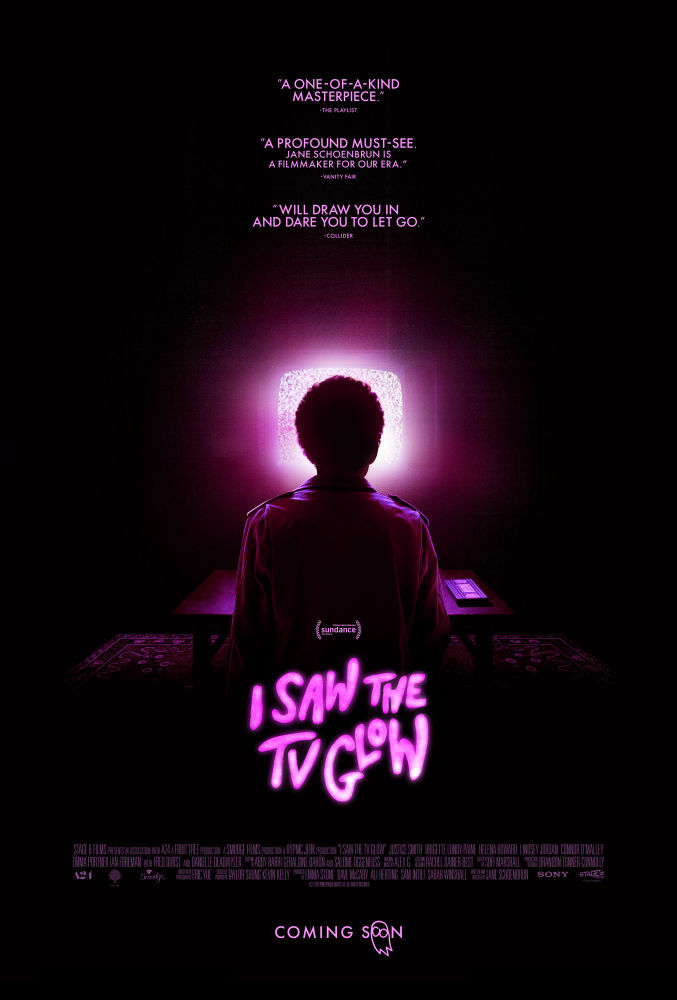
In late-90s suburbia, a lonely teenager meets a girl at school who introduces him to a mysterious late-night T.
V. show — a vision of a supernatural world pulsing beneath their own. As time goes on, however, questions begin to arise about why the show sometimes seems more real than their own lives. In the pale glow of the television, their view of reality begins to crack.
Creator: Jane Schoenbrun
WHAT CRITERIA MAKES IT WOKE?

Oops! Is this show WOKE?
Only an account holder or member can file. Cite a scene, a line, or a pattern. Other account holders +1 or −1 that argument, once each. The show is not WOKE until enough of them have given a +1. Enough −1s remove the write-up, and it is no longer shown.
Sign in to file a woke label. One of each criterion per member.
Comments and reviews
Report a mistake
Same rule as woke labels: one report, a written reason, and the community +1 or −1 it — once per member. A net +5 applies the change. Editors can hold it for review, or apply it immediately.
No mistake reports yet.
Sign in to report a mistake. One report per field, per member.
Member review
Toni Briggs Member
Sep 24, 2026
★★★★★★★★★★I Saw The TV Glow starts with a solid hook in that late-nineties suburban haze. The main kid feels isolated in the usual way, then crosses paths with someone who pulls him into this hidden late-night series that starts bleeding into the everyday. The early stretches do a decent job of showing how a piece of media can start to matter more than the rooms you actually live in. The lighting, the static on the screen, the way the house feels emptier once the show ends all land without much effort. That part works.
Where it slips is in letting the idea stretch out. The same beats around unreality and longing keep circling back without adding new ground. Scenes linger on the glow of the television or the quiet streets, and while the atmosphere holds for a while, it starts to feel like the movie is waiting for the viewer to supply the missing weight. The two leads carry a lot of the quiet moments, and their restraint helps, but the supporting adults never feel fully present. They exist mostly as background noise, which fits the theme of disconnection yet leaves the central friendship without enough friction to push against.
The film clearly wants the TV show inside the story to function like a doorway, something that rearranges how the characters see their own lives. A few sequences get close to that, especially when the visuals shift from everyday suburbia to something stranger without warning. Those moments carry a quiet unease that sticks. Still, the script never quite decides how literal the bleed-over should be. It hovers between metaphor and straight supernatural, and the hesitation keeps the tension from building. By the time the story reaches its later sections, the repetition of the same confusion starts to blunt the effect.
One thing that does stand out is how the movie treats time. Years pass in small jumps, and the characters age into versions of themselves that still feel stuck in the same loop. That choice gives the second half a heavier feel than the first, even if the payoff stays muted. The direction leans on small details, like a poster on a wall or the sound of a channel changing, to suggest the show has become the real reference point. Those touches are effective in isolation, but they accumulate without enough variation to keep the pace moving.
The ending tries to land on a note of acceptance mixed with loss, yet it arrives after so much circling that the emotional hit feels thinner than it should. There is an interesting question underneath about what happens when fiction starts to explain you better than your actual surroundings, but the movie stops short of pressing hard on it. Instead it settles for mood and a handful of striking images. That leaves the whole thing feeling like a promising sketch rather than a finished picture.
I came away thinking the premise had more room than the film used. The technical side is clean, the cast stays believable, and the setting nails the era without overdoing the references. Yet the story never builds the kind of momentum that would make the final fade-out feel earned. It is easy to admire the restraint and the look, but harder to feel the full weight of what the characters go through. Three stars feels right for something that gets partway there and then coasts on atmosphere.