
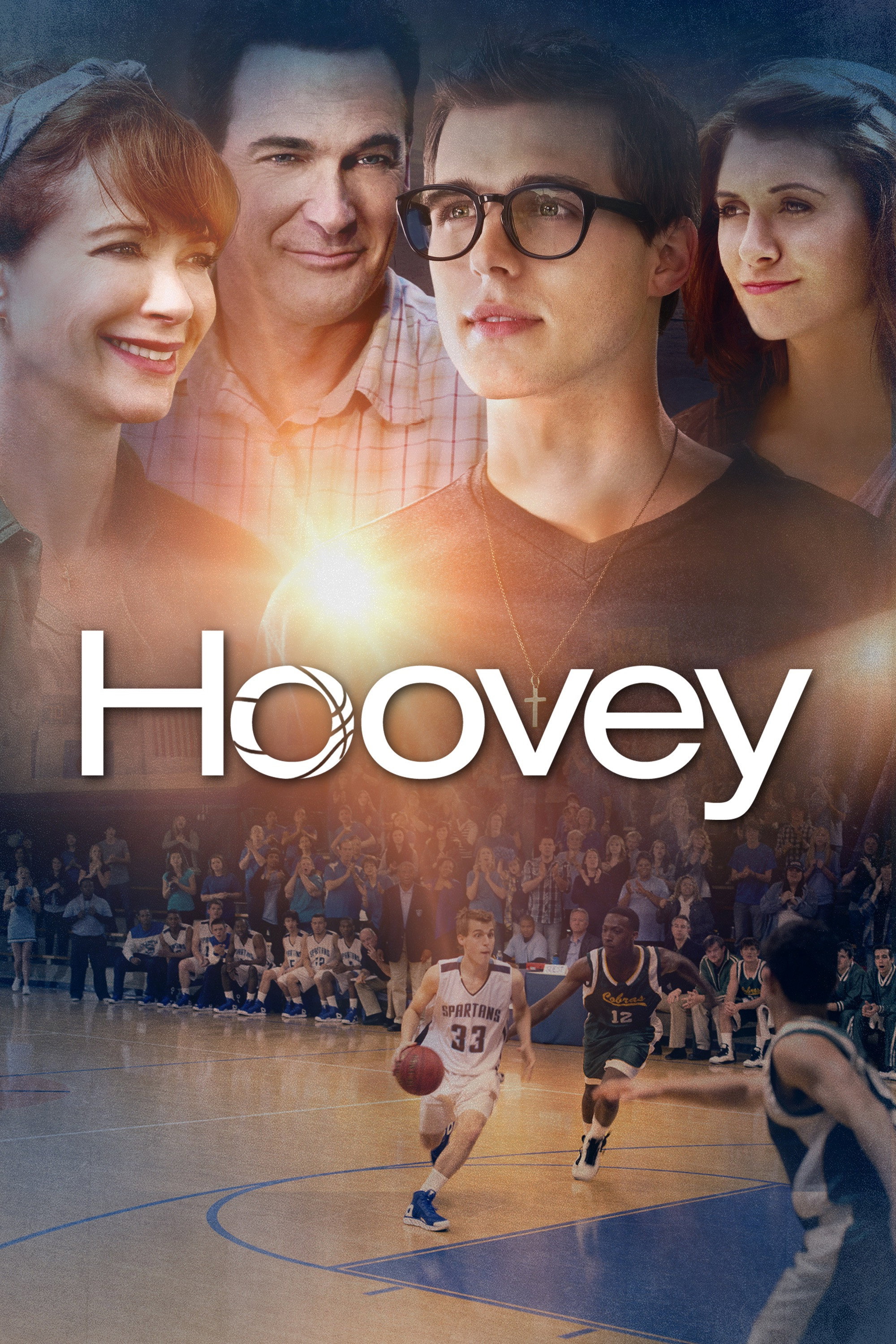



 MOVIE · 2015
Hoovey
A Texas farm family leans on faith and relentless effort after their son suffers a near-fatal brain injury, fighting step by step so he can walk, study, and return to the basketball court.
Hoovey follows teenager Eric “Hoovey” Elliott, a promising high-school basketball player whose sudden collapse from a brain hemorrhage leaves him fighting for his life. His parents refuse to accept permanent disability and throw themselves into round-the-clock care while still trying to keep the family farm running. Doctors outline grim odds, yet the Elliotts answer every setback with prayer, physical therapy sessions, and stubborn daily drills. Hoovey must relearn the simplest movements—standing, balancing, speaking clearly—before he can even touch a basketball again. Classmates and coaches watch from the sidelines as the boy inches forward through pain and frustration. The early months become a test of whether love and belief can rebuild what trauma nearly erased.
As months pass, Hoovey’s mother and father divide endless hospital trips, farm chores, and homework help so their son can reclaim reading skills and coordination. He returns to the gym in small stages, first dribbling in place, then taking shaky shots while teammates cheer every made basket. The family keeps their church community close, drawing strength from shared worship rather than outside lectures. Hoovey’s dream of suiting up for a real game again becomes the shared finish line that keeps everyone moving. When he finally steps back onto the hard court under the lights, the victory belongs to the entire household that refused to quit. The story closes on that hard-won return, earned through faith, sweat, and ordinary parental resolve.
Creator: Sean McNamara
Click any of the following icons below to rent or stream it!
Oops! Is this show WOKE?
Only an account holder or member can file. Cite a scene, a line, or a pattern. Other account holders +1 or −1 that argument, once each. The show is not WOKE until enough of them have given a +1. Enough −1s remove the write-up, and it is no longer shown.
Sign in to file a woke label. One of each criterion per member.
Comments and reviews
Report a mistake
Same rule as woke labels: one report, a written reason, and the community +1 or −1 it — once per member. A net +5 applies the change. Editors can hold it for review, or apply it immediately.
No mistake reports yet.
Sign in to report a mistake. One report per field, per member.
Member review
Wes Calder Member
Oct 2, 2026
★★★★★★★★★★Hoovey sits in that familiar corner of true-story sports pictures where the main event is not the final score but the stretch of months when everything might end. Eric Elliott is a high school basketball player with enough talent to draw notice, and then a brain tumor drops him flat. The film follows the slow climb back, carried mostly by family and by the kind of steady Christian faith that used to be ordinary in these stories rather than something that needs defending or mocking. I gave it three stars because it stays inside its lane and does the job without pretending to be more than it is.
The setup is simple and the movie knows it. You get the collapse, the hospital time, the uncertain prognosis, and the decision to keep showing up for the long recovery. Nothing here is dressed up as prestige drama. The basketball scenes are shot cleanly enough that you understand why the court mattered to him in the first place. They are not flashy set pieces. They feel like high school gyms and small-town pressure, which is the right scale. When he finally returns to play, the moment lands because the film has already spent time on the ordinary grind of getting his body to cooperate again. That patience is one of the better choices it makes.
I tend to watch these recovery stories with a certain distance. Too many of them turn the illness into a montage factory or the family into plaster saints. Hoovey mostly avoids both. The parents come across as tired and determined rather than glowing with perfect wisdom. The faith element is present without being turned into a lecture every ten minutes. Characters pray because that is what they actually do, not because the script needs a moral billboard. In a period when a lot of films treat any serious Christian belief as either a joke or a warning sign, this one simply lets it sit there as the thing holding people together. That restraint is worth noting even if the rest of the picture is workmanlike.
The lead performance does what it needs to. You buy the physical weakness and the frustration that comes with it. Supporting players stay in the background where they belong. Dialogue sometimes softens into the expected lines about never giving up and trusting the plan, which is the usual hazard in this genre. A few scenes tell you the feeling instead of letting the situation carry it. I noticed it, shrugged, and kept watching. It never becomes so heavy-handed that the whole thing tips over. The runtime is reasonable. It does not linger past the point where the story has already made its case.
What kept it at three rather than higher is the sense that the film is content to check the boxes of its type. You can predict the arc once you know the premise, and the movie rarely surprises you inside that arc. The emotional peaks arrive on schedule. The quieter stretches between them are competent but not especially sharp. I never felt talked down to, and I never felt particularly challenged either. It is the kind of picture you put on when you want something straightforward about people who refuse to quit, and then you move on with your evening. That is not a failure. It is just a ceiling.
I have a soft spot for stories that treat ordinary manhood and ordinary family loyalty as normal rather than as problems to be solved. Hoovey does that without making a speech about it. The father figure is steady. The teammates are kids who miss their friend. No one is required to shrink so someone else can look strong. No identity checklist appears to do the work that character should do. The film simply assumes that a young man wanting to get back on the court after something life-threatening is worth taking seriously on its own terms. That assumption feels almost quaint now, which says more about the surrounding culture than about this particular movie.
The true-story label helps. Knowing it happened to a real kid gives the hospital stretches a little extra weight. You stop treating the setbacks as pure plot machinery. Still, the adaptation itself stays polite. It does not dig into the uglier medical details or the messier family arguments that almost certainly existed. It softens the edges the way these films often do. I did not mind that choice as much as I might have in a different story. The point here is endurance and return, not forensic realism.
Watching it felt like sitting through a solid local game rather than a championship broadcast. The fundamentals are there. The shot selection is safe. Nobody forces a highlight that does not belong. By the end I was glad I had seen it and equally sure I would not need to see it twice. Three stars matches that feeling exactly. It is decent work about resilience and the quiet usefulness of faith and family when the body fails. It does not overclaim. In a catalog full of louder and emptier pictures, that counts for something. If you already like this corner of sports drama, you will find it serviceable. If you do not, nothing here will convert you. That honesty is part of why I landed where I did.