



 TV · 2024
Homestead Family Survival
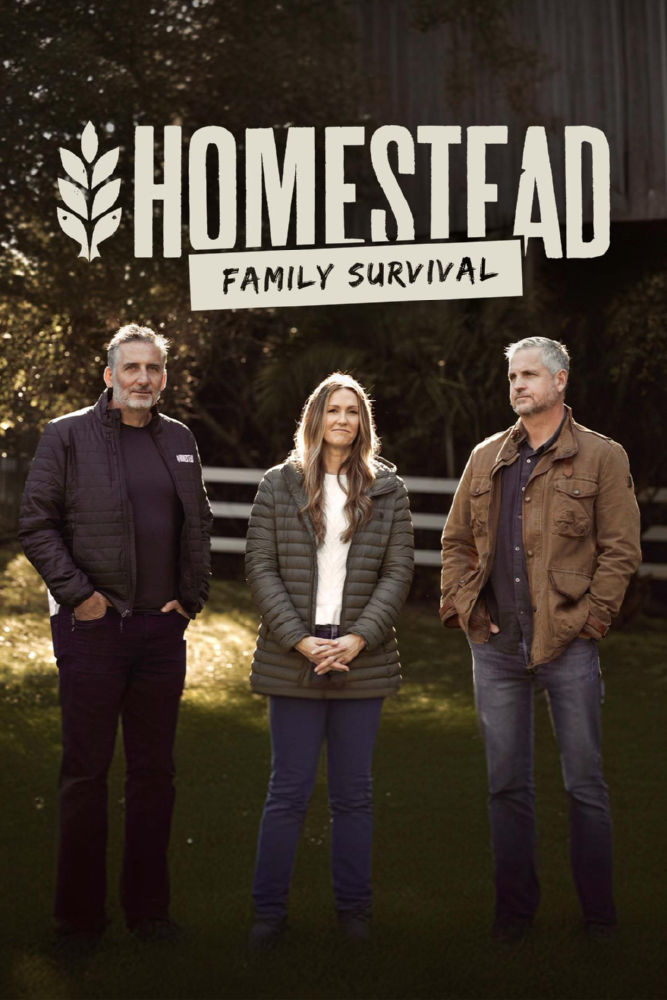
This unscripted documentary series explores the ancient art of self-sufficiency, tracking various families as they embrace traditional farming, sustainable agriculture, and long-term disaster preparedness to insulate their households from modern societal uncertainty.
The documentary series chronicles a diverse group of families who consciously choose to live in joyful defiance of modern societal pressures by returning to traditional, land-based lifestyles. The overarching narrative functions as a practical roadmap for building independent family sanctuaries. Rather than operating from a place of fear, the participating families approach emergency readiness as a form of meaningful stewardship, learning how to protect, feed, and sustain their households entirely on their own.
Throughout the season, the narrative balances faith-focused principles with rigorous, hands-on survival tactics required to thrive completely off the grid. Each segment delves deeply into essential self-sufficiency disciplines, guiding viewers through the complexities of permaculture gardening, extensive food canning, long-term pantry storage, and vermicomposting. As the episodes progress, the focus broadens from baseline agricultural survival—such as setting up advanced terracotta crop irrigation and home-milling grains—to critical defense protocols, detailing active firearm safety and emergency wilderness evacuation strategies.
Click any of the following icons below to rent or stream it!
Oops! Is this show WOKE?
Only an account holder or member can file. Cite a scene, a line, or a pattern. Other account holders +1 or −1 that argument, once each. The show is not WOKE until enough of them have given a +1. Enough −1s remove the write-up, and it is no longer shown.
Sign in to file a woke label. One of each criterion per member.
Comments and reviews
Report a mistake
Same rule as woke labels: one report, a written reason, and the community +1 or −1 it — once per member. A net +5 applies the change. Editors can hold it for review, or apply it immediately.
No mistake reports yet.
Sign in to report a mistake. One report per field, per member.
Member review
Wes Calder Member
Oct 7, 2026
★★★★★★★★★★Homestead Family Survival follows a handful of families who have moved onto land and are trying to grow most of what they eat while learning to handle basic repairs and store supplies. The episodes move through planting seasons, animal care, and small projects like setting up rainwater collection or building root cellars. The tone stays practical rather than alarmist, which sets it apart from shows that treat every setback as a crisis.
The work shown is steady and repetitive in the way real homesteading tends to be. One family spends several segments on canning and drying produce, walking through the steps without turning it into a contest. Another focuses on fencing and rotational grazing for their small herd. Those sections give clear enough detail that a viewer could copy a method if they wanted to try it. The faith references surface mainly as background motivation for why the families started the lifestyle, not as sermons inserted into every task.
Where it settles into the middle ground is the pacing across the season. Several families end up dealing with overlapping problems like weather damage or equipment failure, and the fixes look similar enough that the later episodes start to feel familiar. The editing keeps things calm, but it also trims away some of the trial-and-error that would make the learning curve more visible. You get the finished result more often than the false starts.
The kids appear in the work without being turned into spokespeople for the whole project. They help with chores at an age-appropriate level, and the parents talk about passing along skills rather than staging big lessons. That part comes across as ordinary rather than staged. On the other side, the show rarely steps back to look at the larger trade-offs, such as how these setups hold up over multiple years or what happens when medical or financial issues outside the homestead intrude.
It is the kind of series that rewards watching an episode or two at a time when you have a specific question about a skill. The families come across as competent without being presented as experts who have everything solved. That restraint keeps the tone from tipping into either heavy warning or constant triumph. If the goal is a low-key look at people choosing to handle more of their own needs, it meets that without overreaching. If you want deeper conflict or more varied outcomes, the repetition shows its limit fairly quickly. The mid-season stretch in particular leans on the same handful of challenges—broken fencing after a storm, a late frost hitting the early plantings, a pump that needs jury-rigging—so the solutions start to blur together even when the families themselves stay distinct. You notice the same tools coming out, the same patient explanations of why a certain knot or soil amendment matters, and while none of it feels false, the sameness undercuts any sense of forward momentum once you’ve seen three or four of those sequences.
Still, the practical value holds up if you treat the show more like a reference than a narrative. The rainwater system episode, for instance, lays out the catchment math and the first-flush diverter in plain terms without padding it with dramatic music or forced personal revelation. The root cellar build similarly stays focused on insulation choices and airflow rather than turning the dig into a metaphor. Those stretches are the strongest parts because they trust the viewer to care about the process itself. When the camera does linger on family meals or evening conversations, it usually stays brief enough that it doesn’t slow the useful material, though a couple of episodes could have trimmed the reflective voice-over and given more screen time to the actual repairs.
What keeps it from rising higher is the absence of longer-term accountability. We see the gardens produce and the animals look healthy within the filming window, but there’s little follow-up on whether the soil improvements stuck or how the stored food held through a full winter. The families talk about independence as a goal, yet the show never really tests that claim against something bigger than a broken tractor or a dry spell. That leaves the overall picture feeling contained—useful for technique, limited as a portrait of sustained living. Viewers who already know the basics will find familiar ground rather than new ground, and those completely new to it will get solid entry points without being overwhelmed. It’s steady television that does what it sets out to do, then stops short of doing more.