



 MOVIE · 2025
Hazels Heart
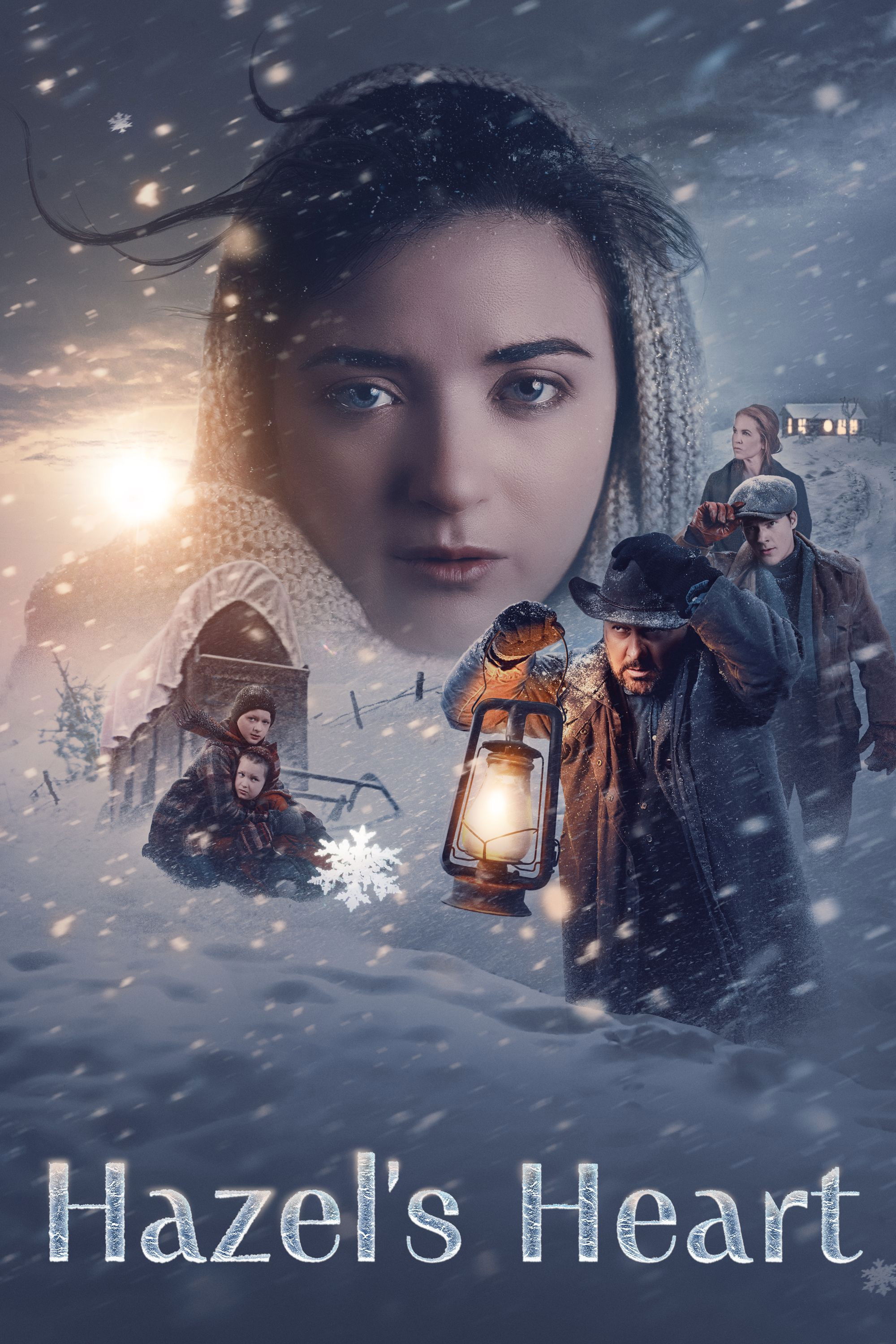
Teenage Hazel Miner battles a deadly 1920 North Dakota blizzard to keep her younger brother and sister alive after their sled crashes. Their parents and neighbors search desperately through the storm to reach the children in time.
Hazel's Heart follows Hazel Miner, a teenage girl living just outside Center, North Dakota, in March 1920. School dismisses early when a light snowfall hardens into a fierce blizzard, and Hazel starts for home with her younger siblings Emmet and Myrdith. The three push through rising wind and drifting snow until their sled overturns into a coulee. With no way to continue, they take what shelter they can find and prepare for a night of freezing temperatures. Hazel works to keep Emmet and Myrdith warm and conscious while the storm closes in around them.
Through the long hours Hazel draws on every reserve of strength and care to shield her brother and sister from the cold. At the same time their parents and friends form search parties and comb the open country in blinding snow and wind. The community refuses to abandon the hunt even as conditions grow worse and hope thins. The film stays with the children's ordeal and the frantic efforts of those who love them until the night's outcome is decided.
Creator: Daniel Bielinski
Click any of the following icons below to rent or stream it!
Oops! Is this show WOKE?
Only an account holder or member can file. Cite a scene, a line, or a pattern. Other account holders +1 or −1 that argument, once each. The show is not WOKE until enough of them have given a +1. Enough −1s remove the write-up, and it is no longer shown.
Sign in to file a woke label. One of each criterion per member.
Comments and reviews
Report a mistake
Same rule as woke labels: one report, a written reason, and the community +1 or −1 it — once per member. A net +5 applies the change. Editors can hold it for review, or apply it immediately.
No mistake reports yet.
Sign in to report a mistake. One report per field, per member.
Member review
Stu Kline Member
Sep 19, 2026
★★★★★★★★★★Hazel's Heart is a decent piece of work that never quite turns the corner into something that sticks with you for weeks. I walked out respecting it more than loving it, which is pretty much where a three-star rating lives for me.
The bones of the story are plain and hard. 1920 near Center, North Dakota. School lets out early as the snow starts getting mean. Teenage Hazel gathers her younger brother and sister and they head home by sled. The trail vanishes, the sled tips into a coulee, and suddenly three kids are stuck with night coming on and the temperature dropping. Their parents and neighbors tear across the open prairie looking for any sign. That’s the whole engine. No twists, no subplots about town politics or buried family secrets. Just cold, time, and the thin chance of being found.
I knew the outline of the real Hazel Miner story going in, so the movie had to do more than surprise me. It mostly tries to put you in the physical grind of that night. The kids huddle, fight sleep, trade what little warmth they have. Hazel keeps making the quiet decisions older siblings make when the adults aren’t there. Those stretches work better than the search-party scenes, which sometimes feel like the same shot of lanterns and shouting recycled a few times too many.
The blizzard is handled with real care. Wind that actually seems to cut, drifting snow that erases everything, the way sound gets swallowed. You believe how fast a person can become nothing out there. I grew up around winters that could turn on you, so that part felt honest. The film doesn’t dress the prairie up or treat 1920 farm people like quaint extras. They know the weather can kill them and they act like it.
Where it loses me is the stretch. Once the kids are down in that coulee the movie settles into a loop: shiver, call out, cut to parents, back again. Endurance is the point, I get it, but pure endurance without enough variation starts to flatten. A few more sharp moments between the siblings—small talk that turns sharp, a memory that lands wrong, even a stupid argument—would have kept the air moving. Instead it stays noble and grim a little too consistently. Real fear is messier than that.
Acting is steady without big fireworks. The girl playing Hazel carries the load and doesn’t push the heroism. She just looks tired and determined in a way that feels earned. The younger kids come off like actual children who are scared and cold, not performers hitting marks. The parents side has the right mix of panic and stubbornness. Nobody is chewing scenery. That’s a plus in a story this spare.
I liked that the film refuses to drag modern lectures into 1920 North Dakota. No speeches about what the past got wrong, no forced parallels, no attempt to make Hazel into a symbol for something else. She’s a teenage girl trying to keep her brother and sister alive through one brutal night. That simplicity is rarer than it should be. The movie trusts the facts and the weather to do the heavy lifting.
Still, trust only gets you so far if the rhythm sags. Survival stories live on tension management. This one lets the tension breathe too long in the middle and then never fully reloads. I found myself aware of the runtime instead of lost in the night, and that’s a problem. Tighten the middle twenty minutes and I might have sat closer to four. As it is, the emotional peak arrives, does its job, and then the film sort of coasts to the finish.
The production design helps more than it hurts. Clothes, sled, farmhouse interiors—all of it looks used rather than styled. Nothing screams that a crew from right now is pretending hard. Small things like that keep you inside the frame instead of noticing the frame.
When it ends it honors the real events without turning the whole thing into misery theater or cheap uplift. That balance is harder than people think. I appreciated the choice even while wishing the road to get there had been leaner.
Would I put this on again next month? Probably not. Would I tell someone who likes quiet true-story dramas or prairie survival tales to give it an evening? Yes, with the clear note that it’s solid and restrained rather than gripping. It respects the kids, the place, and the cold. In a stretch of louder movies that keep tripping over their own messages, that restraint counts. It just doesn’t count enough to push it higher than the middle for me.
Three stars feels honest. Good intentions, real atmosphere, a central performance that holds, and a story worth telling. Also some pacing drag and a few too many repeated beats. That’s the whole ledger.