
Find a mistake?
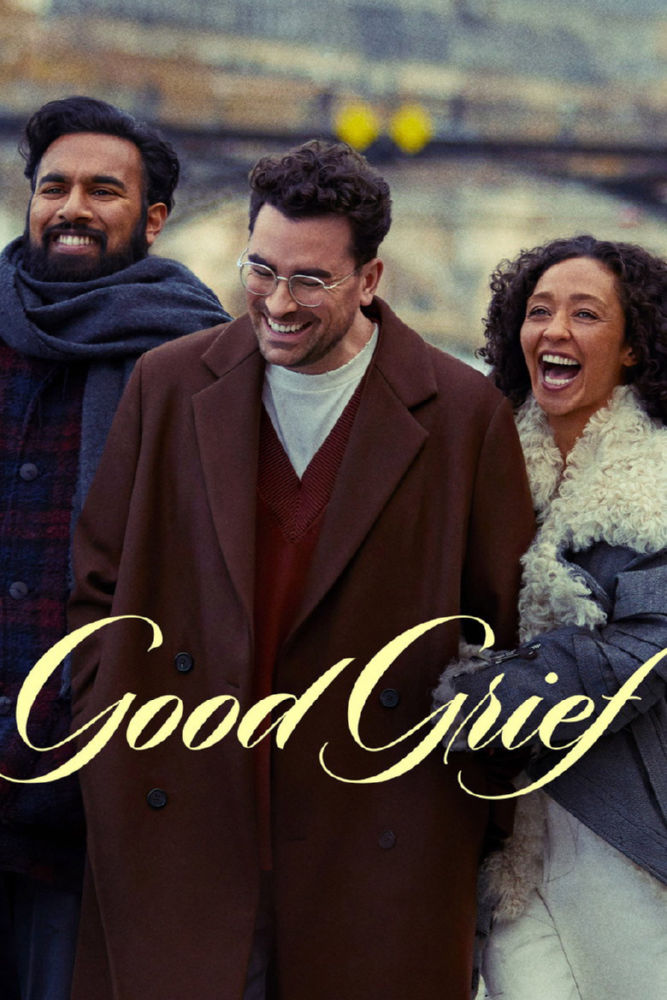


 MOVIE · 2023
Good Grief IS WOKE
–
Not ratedCommunity rating
Label it
IS WOKE
No summary on file yet. Know this one? Tell us.
WHAT CRITERIA MAKES IT WOKE?

Oops! Is this show WOKE?
Only an account holder or member can file. Cite a scene, a line, or a pattern. Other account holders +1 or −1 that argument, once each. The show is not WOKE until enough of them have given a +1. Enough −1s remove the write-up, and it is no longer shown.
Sign in to file a woke label. One of each criterion per member.
Comments and reviews
Report a mistake
Same rule as woke labels: one report, a written reason, and the community +1 or −1 it — once per member. A net +5 applies the change. Editors can hold it for review, or apply it immediately.
No mistake reports yet.
Sign in to report a mistake. One report per field, per member.
Member review
Dan Reilly Member
Sep 24, 2026
★★★★★★★★★★Good Grief opens with a death that should hit hard, and for a stretch it does, but the movie never quite trusts that moment to carry itself. Marc loses his husband out of nowhere, and instead of sitting with the mess of that, the story rushes him and his two closest friends onto a plane to Paris like grief is a problem you solve by changing the scenery. I kept waiting for the trip to feel necessary rather than convenient. It mostly feels like the easiest way to get three people talking in prettier rooms.
The hard truths the film wants them to face arrive on schedule, which is part of the problem. You can almost set your watch by the big revelations. One friend has been carrying resentment, another has been performing loyalty while quietly drifting, and Marc himself has been editing his own memories into something neater than life ever was. Those beats are true enough in theory, but the writing lays them out so cleanly that they lose the sting. Real grief is uglier and less articulate than this. People don’t usually arrive at clarity after three well-lit dinners and a walk along the Seine. They get stuck, they say the wrong thing, they shut down. The movie prefers tidy speeches.
What didn’t work for me most was how polished the pain stayed. Even the arguments feel workshopped. Nobody really loses control in a way that costs them something permanent. There’s a scene where old secrets come out and you expect the friendships to fracture for good, or at least go quiet for a long stretch, and instead everyone processes just enough to keep the group photo intact. I wanted more damage. Not cruelty for its own sake, just the ordinary selfishness that shows up when someone you love is gone and the people left behind start ranking their own suffering. The film softens that impulse until it barely registers.
The Paris setting doesn’t help. It’s beautiful, obviously, but it functions like a mood board more than a place with its own friction. Crowds part, cafés stay quiet when the characters need them quiet, and the city never pushes back. I’ve been to Paris enough times to know it can be cold and inconvenient and full of people who do not care about your epiphany. Here it mostly cares. That choice keeps the tone elegant at the expense of anything raw.
Still, I can’t pretend the whole thing is empty. There are stretches where the three of them just sit with each other and the silence actually works. The central performance holds a lot of the quieter scenes together; you believe this guy is trying to rebuild a version of himself that no longer exists, even when the script is spoon-feeding him the answers. The friendship between the three has history you can feel in the way they finish each other’s complaints and then immediately regret it. Those smaller rhythms are better than the big emotional set pieces. When the movie stops explaining and just lets them be tired and petty and oddly funny, it gets closer to something honest.
I also liked that it doesn’t pretend moving on is a straight line or a virtue. Marc keeps circling the same memories, and the film allows that repetition instead of rushing him toward a lesson. That patience is rare enough that I gave it credit. The supporting turns have moments of real specificity too—the way one friend weaponizes care, the way another uses humor as a shield that eventually cracks. None of it reinvented the wheel, but none of it felt completely false either.
Where it lands for me is right in the middle. It’s competent, sometimes affecting, and frequently too careful. It wants to say something about how loss rearranges the people still standing, and it does say it, just without enough mess to make the statement stick. I never hated the time I spent with it. I also never felt surprised by it. A sharper script or a willingness to let the characters stay broken longer would have pushed this higher. As it stands, it’s a decent evening that evaporates faster than it should. Three stars feels fair—enough craft and feeling to keep you watching, not enough risk to make you remember it weeks later. I’ll take the solid parts and leave the rest. If you’re looking for grief that actually unsettles, this isn’t it. If you want something gently melancholy with a few true notes about friendship under pressure, it gets there in spots. That’s the ceiling it reaches, and I’m fine leaving it there.