



 MOVIE · 2026
Flywheel: Ignition of the Soul
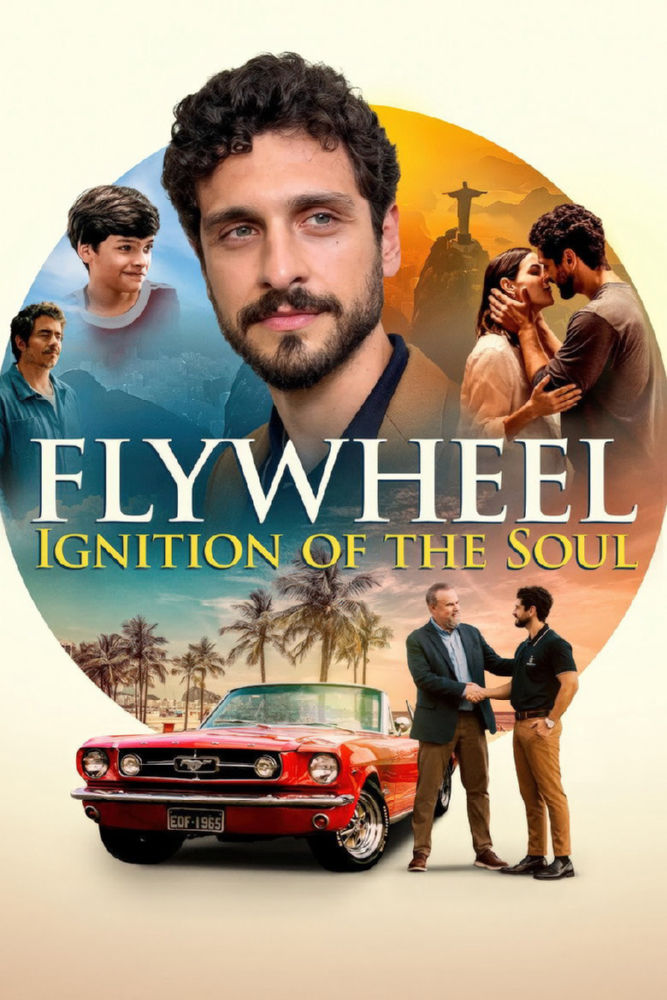
In Rio de Janeiro, used-car salesman Noah Silva sees his do-whatever-it-takes approach unravel his business and home life. After wake-up calls he confronts the cost of his choices and works to restore his integrity while winning back his wife and son.
Flywheel: Ignition of the Soul follows Noah Silva, a smooth-talking used-car salesman in Rio de Janeiro whose do-whatever-it-takes approach to business and life begins to unravel at home and at work. His unethical sales practices strain his marriage and distance him from his son. A series of wake-up calls forces Noah to face the consequences of his choices. He starts a difficult personal journey focused on restoring integrity. The story centers on his efforts to rebuild trust with his family amid professional troubles. Concrete events include confrontations over honesty and family priorities drawn directly from the core plot.
Noah continues the path of change by making amends for past overcharges and shifting his dealership practices. He works to win back the hearts of his wife and son through consistent actions rather than empty promises. Relationships evolve as he prioritizes presence and truth over closing deals at any cost. Later turns involve the practical costs of integrity on the business and the support that emerges from renewed family bonds. The narrative stays with Noah's ongoing restoration efforts and the personal stakes involved. It closes on the outcomes of those choices without external wrap-up.
Creator: Mario Bregieira, Adriano Canindé · IMDb
Click any of the following icons below to rent or stream it!
Oops! Is this show WOKE?
Only an account holder or member can file. Cite a scene, a line, or a pattern. Other account holders +1 or −1 that argument, once each. The show is not WOKE until enough of them have given a +1. Enough −1s remove the write-up, and it is no longer shown.
Sign in to file a woke label. One of each criterion per member.
Comments and reviews
Report a mistake
Same rule as woke labels: one report, a written reason, and the community +1 or −1 it — once per member. A net +5 applies the change. Editors can hold it for review, or apply it immediately.
No mistake reports yet.
Sign in to report a mistake. One report per field, per member.
Member review
Omar Quill Member
Oct 20, 2026
★★★★★★★★★★Flywheel: Ignition of the Soul sat in my watch queue for a bit because the title sounded like one of those heavy faith movies my uncle pushes, but I finally put it on during a long weekend when my usual co-op group was offline and the new raid tier wasn’t dropping yet. I’m glad I did. It’s not trying to be flashy. It’s a quiet story about a guy who has been running the same exploitative build for years and finally hits the wall where the meta stops working.
Noah Silva sells used cars in Rio the way some players farm resources in open-world games: every shortcut, every half-truth, every pressure tactic that pads the numbers this month. You can tell it used to feel like winning. The lot stayed busy, the commissions looked good, and he told himself the family would understand the grind. Then the cracks show. His wife stops believing the late nights are just about inventory. His son looks at him like a stranger who only shows up when he needs something. Customers start smelling the deals that don’t hold up. The bank starts calling. It’s the kind of slow collapse that feels familiar if you’ve ever watched a guild fall apart because the leadership kept loot priority for themselves too long.
What landed for me is how little the movie lectures. It just lets the consequences sit there. Noah doesn’t get a montage where everything magically resets. He has to keep showing up at the dealership with the old habits still itching in his hands while he tries to do the opposite of what made him money. That part felt honest. In games when you respec a character after years of one playstyle, the early hours feel clumsy. You miss the old muscle memory. The movie stays in that awkward zone longer than most stories do. He tries to be straight with a customer and almost loses the sale. He tries to talk to his kid and the kid has already built walls. Those scenes don’t resolve cleanly in one conversation, which kept me watching instead of checking my phone.
The Rio setting helps more than I expected. It isn’t tourist postcard stuff. You get the heat, the traffic, the sense that money moves fast and trust moves slow. The dealership itself becomes a character—the lot looking emptier, the other salesmen watching Noah like they’re waiting to see if the old king still has the edge. I kept thinking about how some multiplayer lobbies turn toxic when one guy’s win-rate comes from glitches everyone else has stopped using. Once the community catches on, the reputation tank is permanent unless you put in real work. Noah has to do that work in public, which is harder than any private apology.
I liked that the family side never turns into cartoon villainy. His wife isn’t written as a pure victim waiting for him to become perfect. She’s tired and guarded and still has her own life running. The son has that teenager distance that feels earned rather than scripted for tears. Their scenes together are short and a little stiff, the way real conversations get when too much has gone unsaid. It reminded me of trying to raid with friends after months of silence—you still know the rotations, but the trust has to be rebuilt one successful clear at a time.
Pacing is steady rather than urgent. The first stretch really sits with the damage before any turnaround starts, which some people might find slow. I didn’t. It made the later choices matter more. When Noah finally starts choosing honesty even when it costs him a deal or two, you feel the weight because you’ve already seen what the other path produced. There’s no sudden miracle closing or big speech that fixes the books overnight. The business still teeters. The marriage still needs time. That restraint kept it from feeling like a sermon with a car lot attached.
Acting is solid without anyone swinging for awards. Noah comes off as a guy who has been charming for so long he forgot how to just be present. You catch the small moments where the old salesman smile tries to kick in and he has to shut it down. Supporting cast does the job of making the world feel lived-in instead of staged. Nobody felt like they were there to deliver a message. They just reacted the way people do when trust has already been spent.
I went in half-expecting either heavy-handed morality or the opposite—some modern twist that would undercut the whole point. Neither happened. It’s a straightforward story about a man realizing the build that got him wins also wrecked everything that made the wins worth having. That lands for me as someone who has burned out on games by chasing leaderboard spots and then wondering why the friends list went quiet. The movie doesn’t pretend the fix is easy or fast. It just shows the daily choice to stop cutting corners and see if anything can be rebuilt.
Would I rewatch it soon? Probably not next week. But I already caught myself recommending it to a couple friends who are into character-driven stuff more than spectacle. It’s the kind of film that sticks around in the background while you’re grinding something else, making you notice your own shortcuts a little more clearly. For a story that could have turned preachy or sentimental, it stayed grounded. That alone put it ahead of a lot of louder releases I’ve sat through this year. Three and a half stars feels right—good enough that I’m glad I watched, honest enough that I didn’t feel sold a fantasy ending.