
Find a mistake?
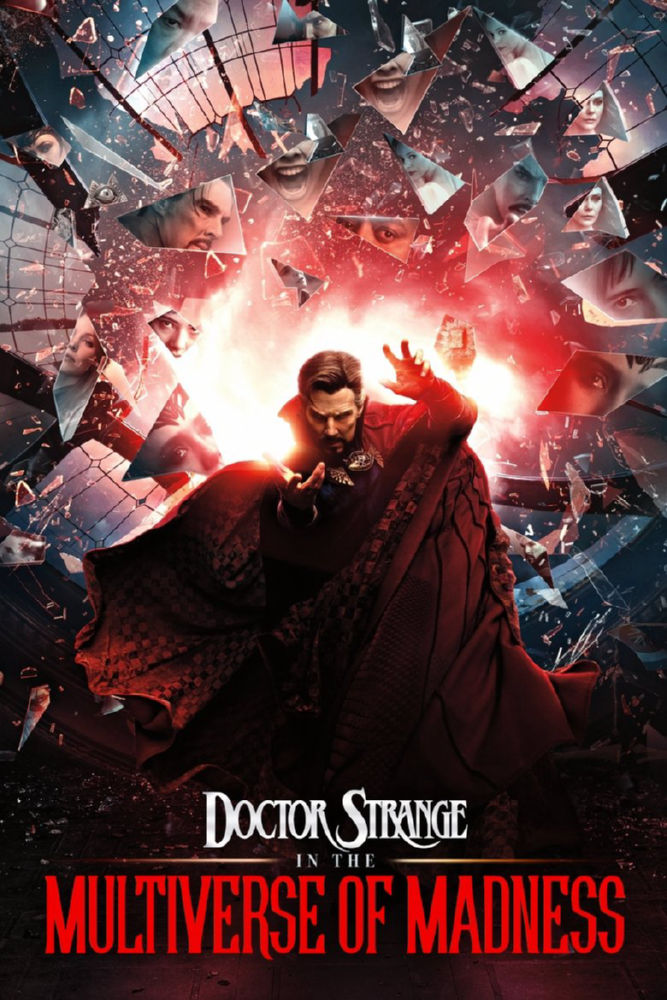


 MOVIE · 2022
Doctor Strange in the Multiverse of Madness IS WOKE
–
Not ratedCommunity rating
Label it
IS WOKE
No summary on file yet. Know this one? Tell us.
WHAT CRITERIA MAKES IT WOKE?





Oops! Is this show WOKE?
Only an account holder or member can file. Cite a scene, a line, or a pattern. Other account holders +1 or −1 that argument, once each. The show is not WOKE until enough of them have given a +1. Enough −1s remove the write-up, and it is no longer shown.
Sign in to file a woke label. One of each criterion per member.
Comments and reviews
Report a mistake
Same rule as woke labels: one report, a written reason, and the community +1 or −1 it — once per member. A net +5 applies the change. Editors can hold it for review, or apply it immediately.
No mistake reports yet.
Sign in to report a mistake. One report per field, per member.
Member review
Lila Marsh Member
Sep 19, 2026
★★★★★★★★★★I watched Doctor Strange in the Multiverse of Madness on a quiet night when I just wanted something with color and movement. The effects sequences pull you in right away, with realities folding over each other in ways that feel fresh for a couple of stretches. Sam Raimi’s touch shows up in the camera angles and the sudden horror beats, which break up the usual Marvel rhythm without turning the whole thing into a different genre. Those moments land because they come from character friction instead of pure spectacle. Benedict Cumberbatch keeps the center steady, carrying the weight of decisions that get messier as the film goes on. His Strange feels older and more tired than before, which fits the story’s stakes even when the plot starts jumping between ideas too quickly. The supporting cast fills out the scenes without much extra explanation, and the cameos mostly serve the immediate action rather than feeling like separate marketing beats. Still, the middle section drags once the constant shifting between worlds becomes the main event. Each new reality gets a quick visual hook and then moves on, so none of them settle into anything that matters beyond the next fight. The emotional thread between Strange and the people he’s trying to protect gets thinner the longer the chases run. By the time the final confrontation arrives, the scale has grown so large that the personal cost loses some of its sharpness. The movie keeps promising bigger consequences but then pulls back to standard hero logic, which undercuts the tension it tried to build. On a technical level the sound design and score help sell the chaos, giving weight to the spells and collapses that the script sometimes treats as background. Yet the pacing never quite finds a groove between the quieter beats and the big set pieces, leaving stretches that feel like setup for the next jump rather than scenes that stand on their own. I came out thinking the film was fine for an evening, but it didn’t leave much to turn over afterward. The multiverse idea works better as a visual playground than as a place to explore choices that actually change the characters. Raimi’s style gives it personality that most MCU entries lack, yet the story still lands in the middle of the pack because it spreads itself across too many directions at once. If the focus had stayed tighter on Strange’s own regrets instead of expanding outward so fast, the whole thing might have held together better. As it stands, it’s a decent watch with strong individual moments that don’t quite add up to something that feels complete. What stays with me most is how the film keeps almost committing to something darker and then stepping back just enough to stay inside the franchise comfort zone. The horror flourishes are effective when they arrive—those quick cuts, the body horror flashes, the sense that magic can go wrong in ugly ways—but they never redefine the tone for longer than a scene or two. You feel Raimi pushing against the edges, then the plot yanks everything back toward another portal and another explanation. Elizabeth Olsen’s performance carries a lot of the film’s actual heat; the anger and grief feel specific even when the script reduces them to plot fuel. Watching her push against Cumberbatch’s cooler control creates the only sustained friction that really matters, and the movie is sharper whenever it lets that collision breathe instead of cutting away to the next reality. The problem is how little time any single idea gets to land. A world appears, announces its rules with a few striking images, and then becomes a corridor to run through. I kept wanting one of those places to stick around long enough to feel like a real alternative rather than a backdrop. The same thing happens with Strange’s internal conflict. We see the weight of his choices in Cumberbatch’s face and posture, but the film rarely slows down enough for those choices to reshape the action around him. Instead the multiverse itself becomes the main character, and human scale gets lost in the shuffle. There’s a version of this story that trusts the audience to sit with regret and obsession without needing another cameo or another collapsing city. This one flirts with that version and then chooses volume. Even so, I didn’t feel cheated by the time spent. The craft is high, the lead is locked in, and every so often a shot or a sound cue reminds you what a weirder, meaner movie this almost was. That almost is both the film’s charm and its limit. It leaves you with the sense of a strong director and a capable cast doing good work inside a structure that won’t let any single thread go deep. I’ll remember the best sequences clearly and forget most of the connective tissue, which is probably the honest verdict on a night like the one I had—entertaining while it lasted, thin once the lights came up, and just substantial enough that I don’t regret pressing play.