
Find a mistake?


 MOVIE · 2024
Dear Santa IS WOKE
–
Not ratedCommunity rating
Label it
IS WOKE
No summary on file yet. Know this one? Tell us.
WHAT CRITERIA MAKES IT WOKE?

Oops! Is this show WOKE?
Only an account holder or member can file. Cite a scene, a line, or a pattern. Other account holders +1 or −1 that argument, once each. The show is not WOKE until enough of them have given a +1. Enough −1s remove the write-up, and it is no longer shown.
Sign in to file a woke label. One of each criterion per member.
Comments and reviews
Report a mistake
Same rule as woke labels: one report, a written reason, and the community +1 or −1 it — once per member. A net +5 applies the change. Editors can hold it for review, or apply it immediately.
No mistake reports yet.
Sign in to report a mistake. One report per field, per member.
Member review
Wes Calder Member
Sep 19, 2026
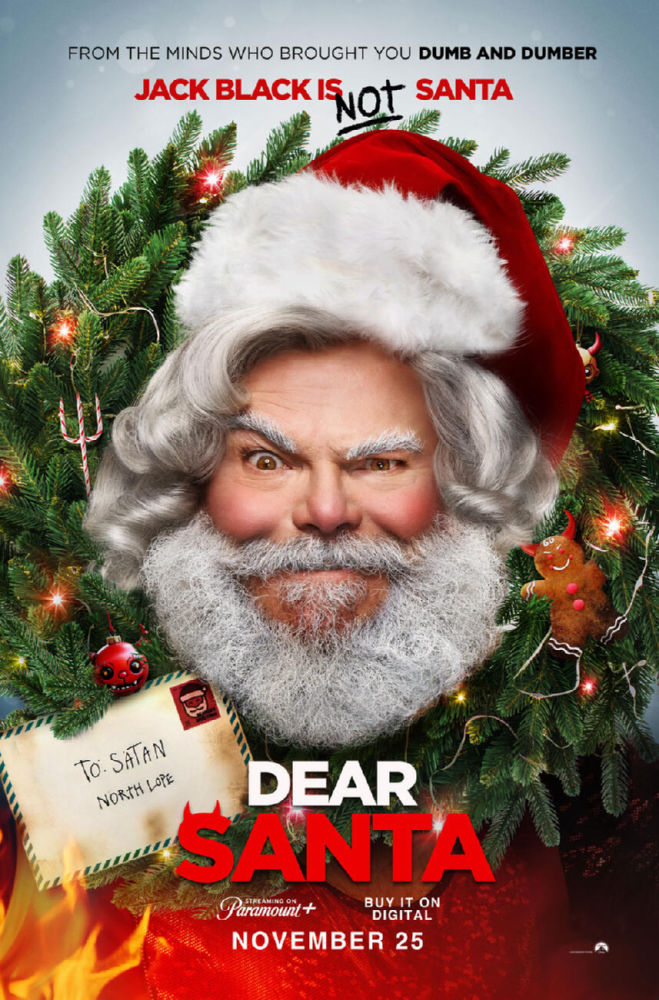
★★★★★★★★★★The setup for Dear Santa rests on a single misspelling that brings the wrong kind of visitor into a family Christmas, and the film treats that hook as enough to carry most of its running time. Jack Black plays the interloper with the usual broad energy, turning every small request into something that upends the household in quick succession. Some of the early disruptions land with a dry sort of timing, especially when the visitor messes with the decorations or the dinner table without any real malice beyond boredom. After a while, though, the same pattern repeats with only minor changes in who gets caught up, and the energy starts to flatten out rather than build.
The kid at the center never feels like more than a device to move the story along, and the adults around him react in ways that stay just inside the line of believable without ever pushing into anything sharper. Family arguments flare up over the chaos, then settle back into a kind of weary acceptance that never quite earns the sentiment it aims for at the end. There is an attempt to give the visitor a bit of backstory that might explain the mischief, but it arrives late and does not change how the earlier scenes play. The result is a movie that feels longer than it needs to be once the initial novelty passes.
Holiday comedies often lean on the idea that one outsider can expose the small hypocrisies in seasonal routines, and this one tries the same move without adding much new to the formula. The physical gags stay simple, usually involving food or presents or music gone slightly wrong, and they rarely escalate beyond what a viewer has seen in similar films. The supporting cast fills the required roles, parents, siblings, and neighbors, without any standout moments that shift the tone. By the time the story circles back to the original wish list, the momentum has already faded, leaving the resolution to carry more weight than the preceding scenes have earned.
One thing that stands out is how little the film seems interested in exploring what the boy actually wants beyond the surface requests. The wishes function mostly as set pieces rather than windows into the family, so the emotional stakes remain low even when things get loud. That choice keeps the tone light, which might be the point, yet it also leaves the viewer with the sense that the movie could have been trimmed by twenty minutes without losing anything essential. The direction stays functional, moving from one disruption to the next without much visual invention or lingering detail that might have made the setting feel lived-in.
In the end the film sits in a middle space where it is neither especially sharp nor outright dull. It delivers the expected amount of seasonal disorder without overstaying its welcome in any single scene, but it also never finds a second gear once the premise is established. For anyone looking for something undemanding around the holidays it passes the time, though it is easy to imagine forgetting most of the details shortly after it ends.