



 MOVIE · 2024
Civil War IS WOKE
In the midst of a U.
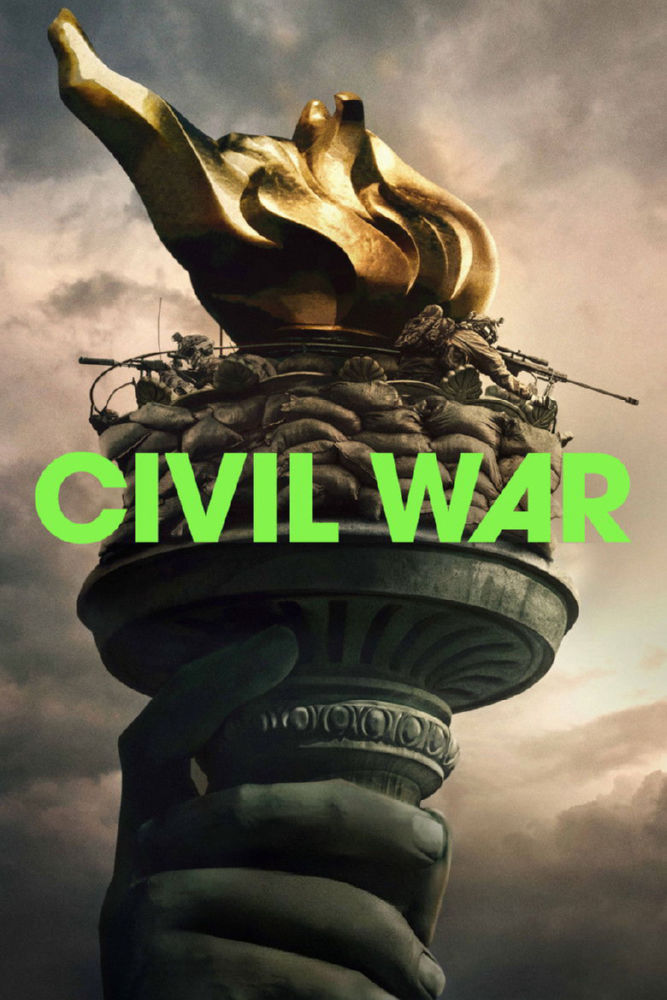
S. civil war, four reporters make the dangerous trip to the capital to interview the president before he is overthrown.
WHAT CRITERIA MAKES IT WOKE?


Oops! Is this show WOKE?
Only an account holder or member can file. Cite a scene, a line, or a pattern. Other account holders +1 or −1 that argument, once each. The show is not WOKE until enough of them have given a +1. Enough −1s remove the write-up, and it is no longer shown.
Sign in to file a woke label. One of each criterion per member.
Comments and reviews
Report a mistake
Same rule as woke labels: one report, a written reason, and the community +1 or −1 it — once per member. A net +5 applies the change. Editors can hold it for review, or apply it immediately.
No mistake reports yet.
Sign in to report a mistake. One report per field, per member.
Member review
June Pell Member
Oct 11, 2026
★★★★★★★★★★Civil War sat with me longer than I expected, mostly because of how it keeps the camera tight on the people holding the lenses instead of explaining the mess around them. Lee Smith is a veteran combat photographer who has already seen too much overseas, and she agrees to one more run from New York toward Washington with a small press team while secessionist forces close in and the president still holds the capital. Joel rides along as the fellow reporter, Sammy is the older New York Times hand, and they pick up Jessie, the eager young freelancer who keeps pushing for the shot even when it costs her. I noticed right away that Lee functions as the experienced leader of the group. She is the one guiding the younger journalists through the combat zones, deciding when to stop, when to push forward, and how to handle the sudden firefights and checkpoints. The film puts her in that position of quiet authority, the hardened professional making the key calls while the others orbit her judgment. It is the kind of setup that feels deliberate, the strong woman at the center whose instincts keep the team moving.
That choice shapes the whole tone. The movie never really stops to fill in why the country split the way it did or what each side actually wants beyond the regional labels. California and Texas have thrown in together against the federal side, Florida is unstable, and that is about as much political texture as you get. You are left to project your own assumptions onto the empty space, which some people will call restraint and others will call a dodge. For me it made the journey feel more like a series of set pieces than a story with roots. The group drives through towns that still look like ordinary American places until a sniper opens up or a militia stops them and the normalcy cracks. Those juxtapositions work; the familiar roads and gas stations turned into killing grounds create a chill that lingers. The sound design especially locks you in from the first frames, every distant crack and sudden silence doing more work than any speech could.
Kirsten Dunst carries a lot of that weight. She plays Lee as someone who has learned to keep moving past the bodies, and you can see the cost in how she tries to shield Jessie without fully admitting she is doing it. Jessie’s hunger for the perfect frame keeps testing that protectiveness, and the tension between them is one of the more honest threads. The Jesse Plemons sequence lands hard because it refuses to explain itself; it just sits there as pure dread. Moments like that give the film its brutal edge. At the same time the characters themselves stay thin. We get little functioning backstory beyond the professional masks they wear, so the emotional turns sometimes feel like they arrive because the plot needs them rather than because we have lived with these people long enough to feel the weight. It becomes an exposition-driven road trip from hell with a pretty clear end point once they commit to reaching the capital, and the nihilism of that objective starts to show.
I kept wanting more texture around the before and after, the ordinary lives that got interrupted or the larger forces that made the war inevitable. Instead the film stays locked on the journalists’ craft and the moral fog of documenting horror while trying not to become part of it. That focus can be absorbing when the set pieces hit, the firefights and the sudden executions and the way the camera lingers on faces that have stopped reacting. It is full of striking images and a few genuinely heartbreaking deaths that arrive without warning. Yet the whole thing also feels calculated in places, as if the disturbing visuals were lined up to produce a specific reaction rather than simply allowed to happen. In spite of its pretensions it sometimes plays like a derivative affair that knows exactly which buttons to press.
What stays with me is the way Lee’s leadership frames every decision. She is the one who has already absorbed the lessons of foreign wars and now applies them to the home front, steering the younger ones and absorbing the hits so they can keep shooting. That dynamic gives the movie its spine, but it also flattens some of the surrounding humanity. Joel’s adrenaline and Sammy’s weary competence feel secondary to her orbit. The film wants to talk about the personal transformation required to keep doing this work, the way you have to harden yourself to tell stories that cannot be ignored, yet it rarely lets anyone soften long enough for that transformation to feel earned. I walked away impressed by the craft and the sustained tension, less convinced that the silence on the actual causes of the conflict was as profound as it pretends to be. A 3.5 feels right: strong enough in the moment to hold attention, thin enough afterward that the questions it raises never quite settle into answers. The atmosphere haunts, the performances hold, and the central portrait of Lee as the guide through the chaos is impossible to miss once you notice it. That is the film I saw.