
Find a mistake?
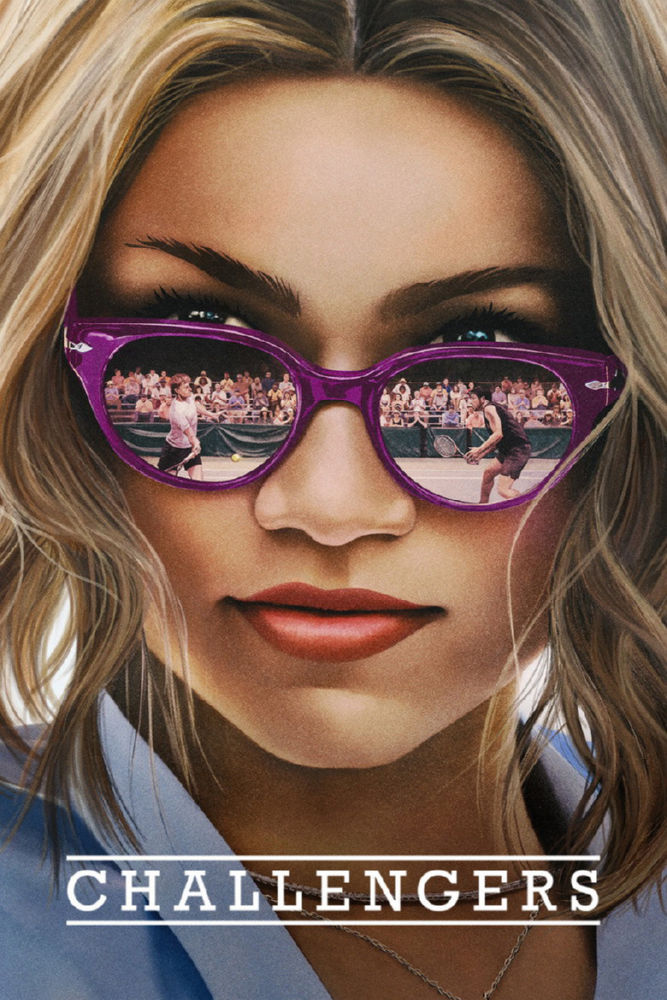


 MOVIE · 2024
Challengers IS WOKE
–
Not ratedCommunity rating
Label it
IS WOKE
No summary on file yet. Know this one? Tell us.
WHAT CRITERIA MAKES IT WOKE?

Oops! Is this show WOKE?
Only an account holder or member can file. Cite a scene, a line, or a pattern. Other account holders +1 or −1 that argument, once each. The show is not WOKE until enough of them have given a +1. Enough −1s remove the write-up, and it is no longer shown.
Sign in to file a woke label. One of each criterion per member.
Comments and reviews
Report a mistake
Same rule as woke labels: one report, a written reason, and the community +1 or −1 it — once per member. A net +5 applies the change. Editors can hold it for review, or apply it immediately.
No mistake reports yet.
Sign in to report a mistake. One report per field, per member.
Member review
Wes Calder Member
Sep 24, 2026
★★★★★★★★★★Challengers sat on my list for a while because tennis movies usually bore me stiff. I finally put it on and it turned out better than expected, though not by a wide margin. The setup is simple enough: a former player named Tashi who never got her full run coaches her husband Art while her old flame Patrick keeps circling. Ambition and leftover want get mixed into every practice and hotel hallway. That triangle is the whole engine, and it runs on pure friction.
What works is how little the film pretends the relationships are healthy. Tashi does not soften for anyone. She treats both men like pieces on a board she still wants to control after her own body quit on her. Art has the titles and the nicer life but looks emptied out by it. Patrick is the one still living out of bags, still swinging hard, still convinced he can force his way back into the center. The junior-tournament stretch early on sets the tone without overexplaining. You see the three of them figure out the power balance in real time, and it stays messy from there.
I liked the match sequences more than I thought I would. The camera gets in close and the editing treats rallies like arguments instead of sports highlights. You feel the points matter because the people playing them are using the score to settle older scores. That said, the movie leans hard on style. The soundtrack thumps and swells like it is trying to do half the emotional work. Sometimes it lands. Other times it just announces that a big feeling is supposed to be happening. Guadagnino’s camera loves sweat and hotel rooms and the way bodies occupy space when nobody is talking. Fine. It does not always need to linger quite so long.
Zendaya keeps Tashi sharp rather than likable. She never asks for sympathy and the movie never hands her any. That choice helps. Mike Faist and Josh O’Connor play the two sides of the same hunger well enough that you understand why neither man can quite walk away. The dialogue stays clipped. Nobody monologues about what tennis means to them. They just keep showing up and testing who still has leverage. I appreciated that. Too many sports stories stop for speeches. This one mostly keeps moving.
Where it loses me a little is the length and the circularity. Once you understand the pattern—Tashi nudges, Art doubts, Patrick provokes—the film repeats the beat with diminishing returns. A couple of the later confrontations feel like they exist because the runtime needed another charged scene rather than because the characters had somewhere new to go. The flashbacks do their job without becoming a second movie, which is a relief, but they also underline how little the present-day versions have changed. That may be the point. It still left me checking the clock once or twice.
Sex is part of the currency here, not a side note. The film treats it the same way it treats a break point: something to win or lose with. I did not mind that approach. It fits the competitiveness. What I minded was the occasional sense that the heat was being staged for its own sake, a little too polished, a little too aware of its own cool. The better moments are the quieter ones where someone realizes they have been played and just sits with it.
I came away thinking the movie knows exactly what it is selling—attractive people weaponizing desire and talent against each other—and it sells it cleanly enough. It does not pretend to be deeper than that triangle and the court. For a night when you want something stylish and a bit mean, it does the job. I would not call it essential or particularly rewatchable. The central dynamic holds interest for most of the running time and then levels off. Performances are solid without anyone disappearing into the role. Direction has flair that sometimes tips into showing off. That combination lands me right around the middle-high mark. Three and a half feels honest. I was never bored, never fully pulled under, and I walked away still thinking about how Tashi never really lets either man rest. That stuck more than the final score did.
If you like your sports dramas tangled up with personal score-settling and you can tolerate a soundtrack that refuses to sit still, this will pass the time without insulting you. If you need the characters to grow into better people or the plot to surprise you late, you will probably leave a little flat. I sat in the middle of those two reactions and that is where the rating settled.