



 MOVIE · 2022
Black Panther: Wakanda Forever IS WOKE
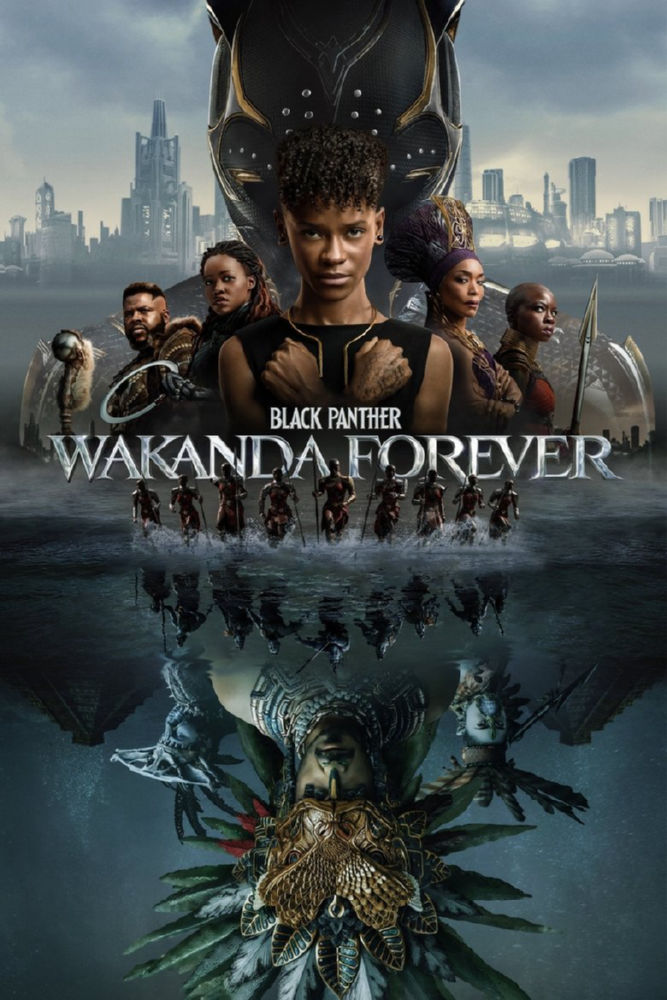
Queen Ramonda, Shuri, M’Baku, Okoye and the Dora Milaje fight to protect their nation from intervening world powers in the wake of King T’Challa’s death.
As the Wakandans strive to embrace their next chapter, the heroes must band together with the help of War Dog Nakia and Everett Ross and forge a new path for the kingdom of Wakanda.
WHAT CRITERIA MAKES IT WOKE?




Oops! Is this show WOKE?
Only an account holder or member can file. Cite a scene, a line, or a pattern. Other account holders +1 or −1 that argument, once each. The show is not WOKE until enough of them have given a +1. Enough −1s remove the write-up, and it is no longer shown.
Sign in to file a woke label. One of each criterion per member.
Comments and reviews
Report a mistake
Same rule as woke labels: one report, a written reason, and the community +1 or −1 it — once per member. A net +5 applies the change. Editors can hold it for review, or apply it immediately.
No mistake reports yet.
Sign in to report a mistake. One report per field, per member.
Member review
Stu Kline Member
Oct 11, 2026
★★★★★★★★★★Black Panther: Wakanda Forever sat with me as a solid but uneven Marvel outing. I went in knowing Chadwick Boseman’s absence would hang over everything, and the film does treat that loss with real weight. The quiet moments around the family land better than a lot of the bigger set pieces. Still, it never quite shakes the feeling that the story is being steered harder than it needs to be.
What stood out right away is how the plot opens with Queen Ramonda and the Dora Milaje holding sole governing authority after T’Challa’s death. Female succession gets framed as the central path forward for Wakanda, and the movie doesn’t leave much room for any other arrangement. Ramonda runs the diplomatic side while the warriors back her. Angela Bassett carries those scenes with real force; she is easily the strongest presence on screen. But the setup itself feels like a deliberate choice rather than a natural consequence of grief.
Shuri then directly assumes the Black Panther mantle and leads combat operations against the external threats. Meanwhile male figures like M’Baku stay in supporting council roles. He gets a few sharp lines and some physical presence, yet the film keeps him off the main decision-making track. That pattern is hard to miss once you notice it. Shuri’s arc is meant to be about processing her brother’s death and stepping up, and Letitia Wright sells the anger and the tech-brain side of it. The suit and the fights are fine. I just never bought her as the finished article in the suit the way the story wants me to. She still feels like she’s playing catch-up, and the movie insists she’s already there.
Namor and Talokan are the best new pieces. The underwater world looks sharp, the mythology has some teeth, and Tenoch Huerta gives the character real edge. The tension between isolation and surface-world pressure could have carried a tighter film. Instead the script keeps expanding. Riri Williams gets dropped in with her own genius-inventor track, and it pulls focus from the grief story the movie keeps claiming is the point. A lot of special effects and action fill the runtime, and some of those sequences hit hard. The overall length still drags when the side plots start stacking.
There are digs and tones that pull you out. Surface-world powers get painted with a broad brush, and the script leans into certain cultural jabs that feel less like world-building and more like checklist scoring. I kept thinking the film could have stayed inside Wakanda’s mourning and the new underwater threat without needing every extra layer of messaging. The end-credit joke lands especially flat if you’re not already on board with the rest.
Grief as love persevering is the idea the movie wants to leave you with, and in spots it works. The tribute side is sincere. Boseman is missed, and the film knows it. Yet the story also has to introduce vast new worlds and complicated characters while locking in that female-led succession path and Shuri’s combat leadership over the men who used to share the load. Those choices sit on top of the emotional core rather than growing out of it. You end up watching two movies at once: one about a family and a nation trying to stand again, and another about who gets to hold the mantle and the throne by design.
I landed at 3.5. The craft is there, Bassett and Huerta elevate their scenes, and the action keeps moving. The bogged-down middle and the heavy-handed power shifts keep it from feeling like a clean follow-up. It honors the hero in places and then undercuts its own momentum with the way it rearranges the board. I would watch parts of it again for the performances and the Talokan stuff. I would not need the full package a second time. Decent movie that could have trusted its simpler strengths more than the framework it chose to push.