
Find a mistake?
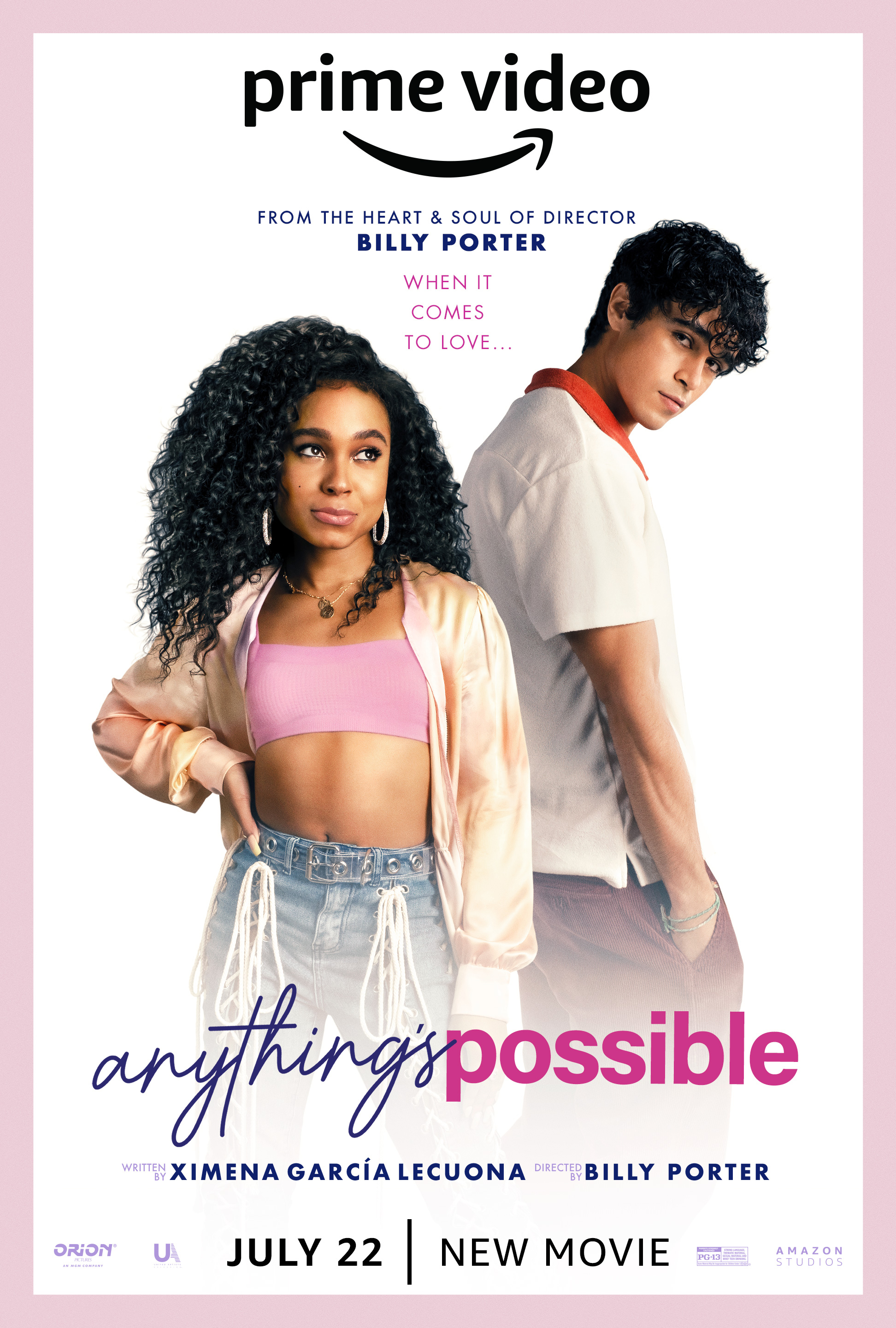


 MOVIE · 2022
Anything’s Possible IS WOKE
–
Not ratedCommunity rating
Label it
IS WOKE
No summary on file yet. Know this one? Tell us.
WHAT CRITERIA MAKES IT WOKE?



Oops! Is this show WOKE?
Only an account holder or member can file. Cite a scene, a line, or a pattern. Other account holders +1 or −1 that argument, once each. The show is not WOKE until enough of them have given a +1. Enough −1s remove the write-up, and it is no longer shown.
Sign in to file a woke label. One of each criterion per member.
Comments and reviews
Report a mistake
Same rule as woke labels: one report, a written reason, and the community +1 or −1 it — once per member. A net +5 applies the change. Editors can hold it for review, or apply it immediately.
No mistake reports yet.
Sign in to report a mistake. One report per field, per member.
Member review
Peg Harlan Member
Sep 30, 2026
★★★★★★★★★★Anything’s Possible sits in that middle space where the bones of an ordinary high-school romance are solid enough to carry you through a couple of hours, yet the whole thing keeps circling back to one fact about the lead until you start wishing the story trusted itself more. Kelsa is a senior, open about being transgender, and she ends up paired with Khal, the kind of popular classmate who usually gets written as either a shallow trophy or a secret softie. Here he’s mostly just a kid figuring out what he wants. They share classes, bump into each other in hallways, hang around after school, and the relationship grows the way those things sometimes do—slow, a little clumsy, full of the usual checks with friends and parents. Her best friend does not take it well at first, partly because she had her own eye on him. That triangle is familiar and, to the movie’s credit, it never turns cartoonish.
I kept thinking they used to make them like this: two people circling each other, deciding how much of their private lives to put on the table, learning when to push and when to back off. The acting is clean. Nobody is chewing scenery. Kelsa comes across as steady rather than saintly, which helps. Khal is likable without being rewritten into some pure vessel of enlightenment. The everyday texture—homework, family check-ins, the small awkwardness of new couples—gives the film a pulse that pure messaging usually kills. You can sit with it and feel the senior-year pressure without being lectured every five minutes.
Still, the center of gravity never really leaves her identity. It is not that the film hides it; it is that the identity keeps doing work the characters and plot should be doing on their own. Moments that could have been about trust or timing or simple teenage fear get pulled back toward the same explanatory loop. I am not asking for the movie to pretend she is someone else. I am saying a romance lives or dies on whether two specific people click, and here the click sometimes feels secondary to the statement that the click is allowed. When dissent appears, it is usually framed as the short-sighted or the cruel rather than as genuine confusion or principle. That flattens things. Ordinary disagreement gets treated like a menu choice gone wrong, and the people who hesitate are the ones who need correcting. You feel the air go out of certain scenes because the film already knows who is right.
There is also the simple fact that these are high-school seniors. The story keeps the physical side relatively restrained, which I appreciated, but the framing still puts young people inside a romantic and occasionally charged space while the camera and dialogue lean hard on the adult conversation about identity. That combination sits uneasy for me. It is not graphic, yet it pushes the weight of grown-up categories onto kids who are still finishing algebra and planning prom. I do not need every teen film to be chastely Victorian; I just notice when the sexual and political currents are aimed at an age group that has enough on its plate already.
What keeps the rating from dropping lower is the craft. Scenes between Kelsa and her closer friends have a lived-in feel. The writing does not always reach for the biggest speech. Small supports and small stumbles matter more than big speeches. You get the sense the people who made it actually watched teenagers talk instead of inventing dialogue for a press release. That is rarer than it should be. The score stays out of the way. The photography does not scream “important film.” For stretches it just works as a boy-meets-girl story where the girl happens to be MtoF trans, and those stretches are the ones I liked best. When it remembers that, the movie earns its keep. When it forgets and starts treating sex as a selectable setting rather than a given reality, the gears grind.
I landed at three stars because the good parts are genuinely good and the weaker parts never quite sink to pure lecture. It is watchable. It is better acted and better paced than a lot of the message-first projects that come down the pipe. Yet it never fully trusts that a romance between two particular people is interesting enough on its own. Identity keeps stepping forward to do the heavy lifting, and the room for ordinary doubt shrinks. That pattern is common now, and it leaves me wanting the version that would have existed if the filmmakers had simply followed the characters instead of the checklist. I would not call it a waste of time. I also would not call it free of the habits that make so many recent teen stories feel smaller than they should. Three stars feels honest: solid craft, real moments, and a persistent tug toward making the identity the engine rather than the people. That is enough to keep it from either extreme.