
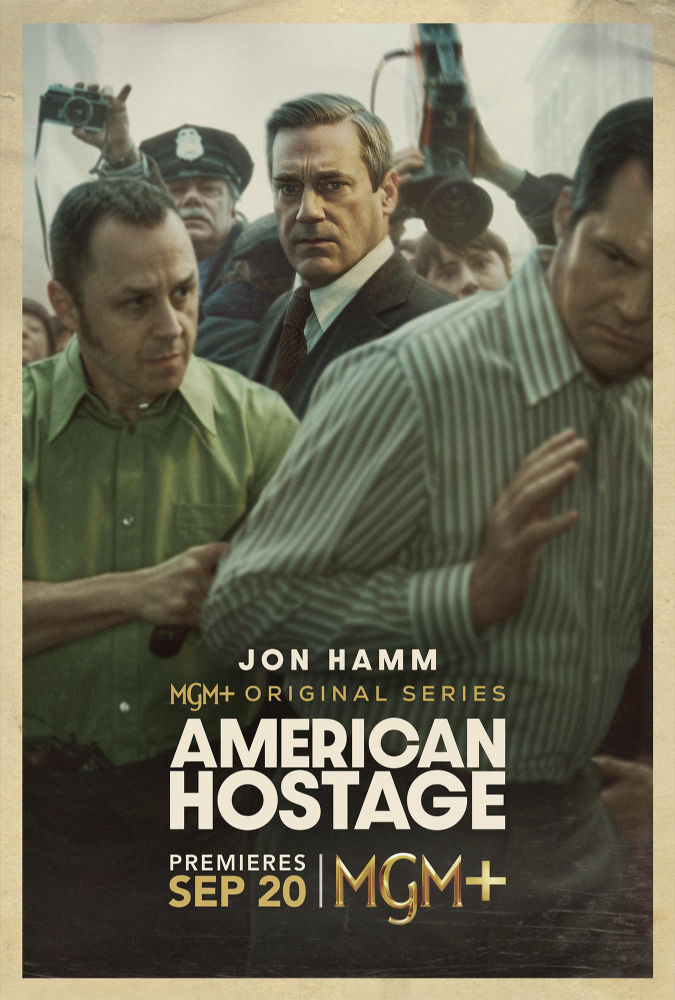


 TV · 2026
American Hostage
Radio reporter Fred Heckman is forced into a live on-air standoff when hostage-taker Tony Kiritsis demands airtime on his Indianapolis news program, turning a routine broadcast into a life-or-death crisis.
American Hostage follows Fred Heckman, a trusted Indianapolis radio reporter whose popular news program suddenly becomes the center of a violent crisis. Heckman is on air when Tony Kiritsis seizes control of the situation and insists on being interviewed live, holding a captive and refusing to release him until his demands are heard by the city. Heckman must keep the microphone open, manage the caller’s escalating threats, and decide how much to air while police scramble outside the studio. Colleagues feed him updates and try to coach him through the minutes, yet every question risks inflaming Kiritsis further. The broadcast stretches on as listeners across Indianapolis realize a real hostage drama is unfolding in real time on their radios. Heckman stays at the desk, balancing journalistic duty against the immediate danger to the man Kiritsis is holding.
As the hours pass, Kiritsis tightens his grip on the narrative, using Heckman’s show to air grievances and issue new conditions while the captive remains in peril. Heckman presses for details that might help authorities locate them, yet he also has to keep Kiritsis talking so the situation does not collapse into silence or worse. Station staff and law-enforcement liaisons cycle through the control room with conflicting advice about cutting the feed or letting the interview continue. Heckman’s calm on-air demeanor begins to fray as the personal stakes become clear and the hostage’s fate hangs on every exchange. Relationships inside the newsroom strain under the pressure of live decisions that no training fully prepared them for. The standoff reaches its critical turns through the voices alone, with Heckman still at the microphone as the final demands and outcomes play out for everyone listening.
Creator: Jon Hamm, Giovanni Ribisi
Oops! Is this show WOKE?
Only an account holder or member can file. Cite a scene, a line, or a pattern. Other account holders +1 or −1 that argument, once each. The show is not WOKE until enough of them have given a +1. Enough −1s remove the write-up, and it is no longer shown.
Sign in to file a woke label. One of each criterion per member.
Comments and reviews
Report a mistake
Same rule as woke labels: one report, a written reason, and the community +1 or −1 it — once per member. A net +5 applies the change. Editors can hold it for review, or apply it immediately.
No mistake reports yet.
Sign in to report a mistake. One report per field, per member.
Member review
Wes Calder Member
Oct 22, 2026
★★★★★★★★★★American Hostage sits in that awkward spot where a real incident gets stretched into a multi-episode series and you can feel the material straining a little. Fred Heckman is the radio guy everyone in Indianapolis trusts, the steady voice on the morning news, and then Tony Kiritsis walks in and turns the whole broadcast into a standoff with a hostage and a list of demands. The premise is simple enough that it almost doesn’t need more than a tight feature, but they go the limited-series route and mostly make it work by keeping the focus narrow.
What held my attention was the pressure inside the studio. Heckman has to keep talking, keep the mic live, while the man on the other end of the line is holding someone’s life and getting more agitated by the minute. Colleagues are feeding him notes and trying to coach him without making it obvious, police are outside doing their thing, and every question he asks could tip the situation. The show doesn’t dress that up with fancy editing or score swells. It just lets the minutes pile up and lets you sit with how thin the line is between professional habit and actual danger. I found myself thinking about how ordinary the setup feels until it isn’t. A routine news hour, a familiar desk, the same coffee mug, and suddenly none of it is routine.
The performances stay mostly grounded. Heckman comes across as a man who has spent years perfecting calm delivery and now has to use that skill for something it was never meant for. Kiritsis is volatile without turning into a cartoon. You get why the city is listening and why the people in the control room are sweating. There are stretches where the writing leans a bit too hard on the real-time tension, repeating the same standoff beats, and you start wondering if they needed quite so many episodes to cover what was essentially one long, ugly afternoon. Still, the core idea—that a local radio show becomes the only channel a desperate man will use—lands with enough weight that I didn’t check out.
I kept noticing how little the series tries to make anyone a pure hero or pure monster. Heckman isn’t performing bravery; he’s just trying not to make things worse while the clock runs. The hostage is mostly a presence you feel rather than a character who gets a big speech. That restraint is probably what keeps it from tipping into melodrama. At the same time, the show sometimes feels like it’s circling the same room without finding a new angle. You get the updates from outside, the whispered advice, the caller’s escalating threats, and then it loops again. A tighter cut would have helped. Three and a half stars feels right because the central situation is strong and the acting doesn’t oversell it, but the middle hours could lose some fat without losing the point.
There’s a quiet stretch late where Heckman has to decide how much of the conversation stays on the air versus what gets cut for the safety of the people in the room. That decision isn’t framed as a big moral speech. It’s just a guy weighing seconds against a life and knowing the whole city is hearing whatever he chooses to leave open. I liked that the series trusted the audience to sit with that without underlining it. You don’t need a monologue about the power of the press when the power is already sitting there in the open mic and the silence between sentences.
Production-wise it looks like what it is: a 1970s radio station with practical sets and practical lighting. No glossy flashbacks, no invented subplots that drag in family trauma for every supporting character. A few side characters get thin writing, the kinds of colleagues who exist mainly to hand Heckman a note or look worried through the glass. That’s fine for the runtime they chose, but it does leave the edges feeling a little unfinished. I didn’t need a deep dive into every producer’s home life; I just wanted the main thread to stay sharp all the way through.
If you’ve ever worked a job where the ordinary tools suddenly become the only tools that matter, the series will feel familiar in a low-key way. The headset, the board, the red light that means you’re live—all of it turns into something else once a gun and a demand enter the picture. The show understands that without needing to shout about it. I walked away thinking about how thin the membrane is between a regular broadcast day and a crisis that rewrites the whole afternoon. That stuck with me more than any single plot turn.
It isn’t a perfect piece of television. Some episodes drift. A couple of supporting turns feel like placeholders. The ending wraps up the immediate standoff cleanly enough but leaves a few procedural threads hanging in a way that feels more like they ran out of runway than like deliberate ambiguity. Still, the central idea is solid and the lead work is honest enough that I didn’t resent the time. Three and a half is where I landed because the tension is real when they let it breathe, and because they mostly avoid turning a local nightmare into prestige-television theater. It’s the kind of show that does its job without insisting you congratulate it for doing so. I’ll probably remember the open mic and the sound of the clock more than I’ll remember any particular monologue, and that feels about right for the material.