
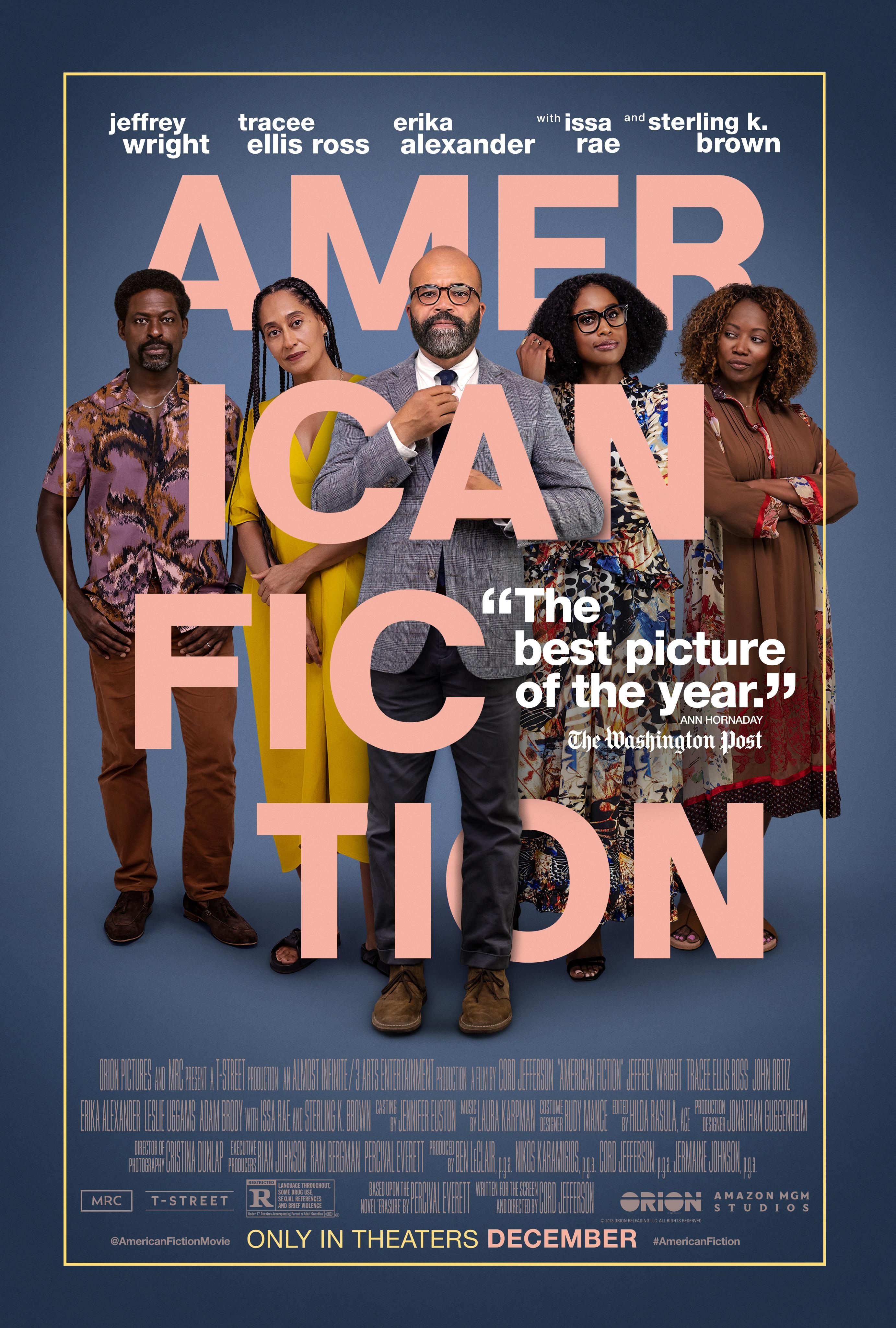



 MOVIE · 2023
American Fiction IS WOKE
A novelist fed up with the establishment profiting from "Black" entertainment uses a pen name to write a book that propels him into the heart of hypocrisy and the madness he claims to disdain.
WHAT CRITERIA MAKES IT WOKE?



Oops! Is this show WOKE?
Only an account holder or member can file. Cite a scene, a line, or a pattern. Other account holders +1 or −1 that argument, once each. The show is not WOKE until enough of them have given a +1. Enough −1s remove the write-up, and it is no longer shown.
Sign in to file a woke label. One of each criterion per member.
Comments and reviews
Report a mistake
Same rule as woke labels: one report, a written reason, and the community +1 or −1 it — once per member. A net +5 applies the change. Editors can hold it for review, or apply it immediately.
No mistake reports yet.
Sign in to report a mistake. One report per field, per member.
Member review
Toni Briggs Member
Oct 9, 2026
★★★★★★★★★★American Fiction sat with me longer than most satires do, partly because Jeffrey Wright makes Monk so watchable and partly because the industry hypocrisy it skewers still feels current. Wright is outstanding the whole way through—prickly, tired, sharp enough to cut himself—and Sterling K. Brown matches him as the newly divorced brother who refuses to play the quiet supporting role. Tracee Ellis Ross and Leslie Uggams land their moments too, especially once the family pressure starts stacking up after the early loss that hits harder than I expected. The movie keeps sliding between dry laughs and real ache without announcing the gear shifts, and that mix is much more amusing than the setup first suggests; the humor gets woven into the heavier stretches instead of sitting on top of them like a joke track.
What I kept noticing, and what pushed this past simple comedy for me, is how bluntly the film shows the publishing side demanding a certain product. Monk’s thoughtful books get passed over again and again because they do not center the expected trauma, crime, and poverty that the market has decided equals Black authenticity. That pressure is not a side joke; it is the engine. Editors and the people handing out praise treat those stories as the price of entry and of success. He finally snaps and dashes off the most cartoonish gang-and-ghetto manuscript he can stand, sticks a thuggish pen name on it, and watches the whole machine light up. White editors and award judges immediately call the over-the-top stereotypes the most authentic depiction of Black life they have encountered. That sequence is funny until it is not. The film lets you sit with how easily the distorted praise lands and how little anyone questions it once the book fits the slot they already built.
I liked that Monk does not become a pure hero or a pure cynic. He is short-tempered, sometimes selfish, and still recognizably human once he is back home dealing with his mother’s fading memory and his brother’s messy new freedom. The family scenes could have felt like padding, and a couple of them do slow the satirical momentum, but they also keep the movie from turning into a pure industry roast. You see why he is angry without the script handing you a speech about it. The university leave, the festival panel that goes badly, the sudden need to care for Agnes—these pieces give the parody its weight. Without them the fake book would just be a clever stunt. With them you understand the exhaustion that produced it.
Cord Jefferson’s first feature has a clear target and mostly sticks the landing. The publishing meetings and the award-circuit absurdity are the sharpest parts; every time a white tastemaker gushes over the crude manuscript as raw truth, the movie is doing exactly what it set out to do. I did not need the film to lecture me on any of this. Showing the repeated demand for trauma-crime-poverty stories as the cost of being taken seriously, then showing those same gatekeepers crown the fake version as authentic, is enough. It is uncomfortable in the right way. Some of the later plot mechanics get a little busy once the ruse has to be maintained, and the dual track of family drama and industry farce does not always share the same rhythm, but Wright holds the center so well that the seams bother me less than they might have.
I walked out wanting to see more of Wright’s work, which is its own kind of recommendation. Brown’s performance as Cliff is the other standout—he brings a loose, lived-in energy that keeps the home scenes from turning into pure duty. The movie never pretends the satire solves anything. It just holds up the mirror long enough for the reflection to get awkward. That is why I gave it four stars instead of something safer in the middle. It is funny, it is pointed, and it refuses to sand down the part where the people who claim to care most about representation are the ones most eager to buy the stereotype when it arrives gift-wrapped. The range of feelings it pulls off in under two hours is real; the sadness never fully leaves, yet the laughs keep arriving right on top of it. That balance is harder than it looks, and American Fiction mostly gets it right without congratulating itself for the effort.